九
| ||||||||
Translingual
| Stroke order | |||
|---|---|---|---|
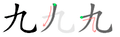 | |||
| Stroke order | |||
|---|---|---|---|
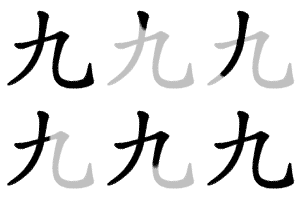 | |||
Han character
九 (radical 5, 乙+1, 2 strokes, cangjie input 大弓 (KN), four-corner 40017, composition ⿻丿乙)
Derived characters
References
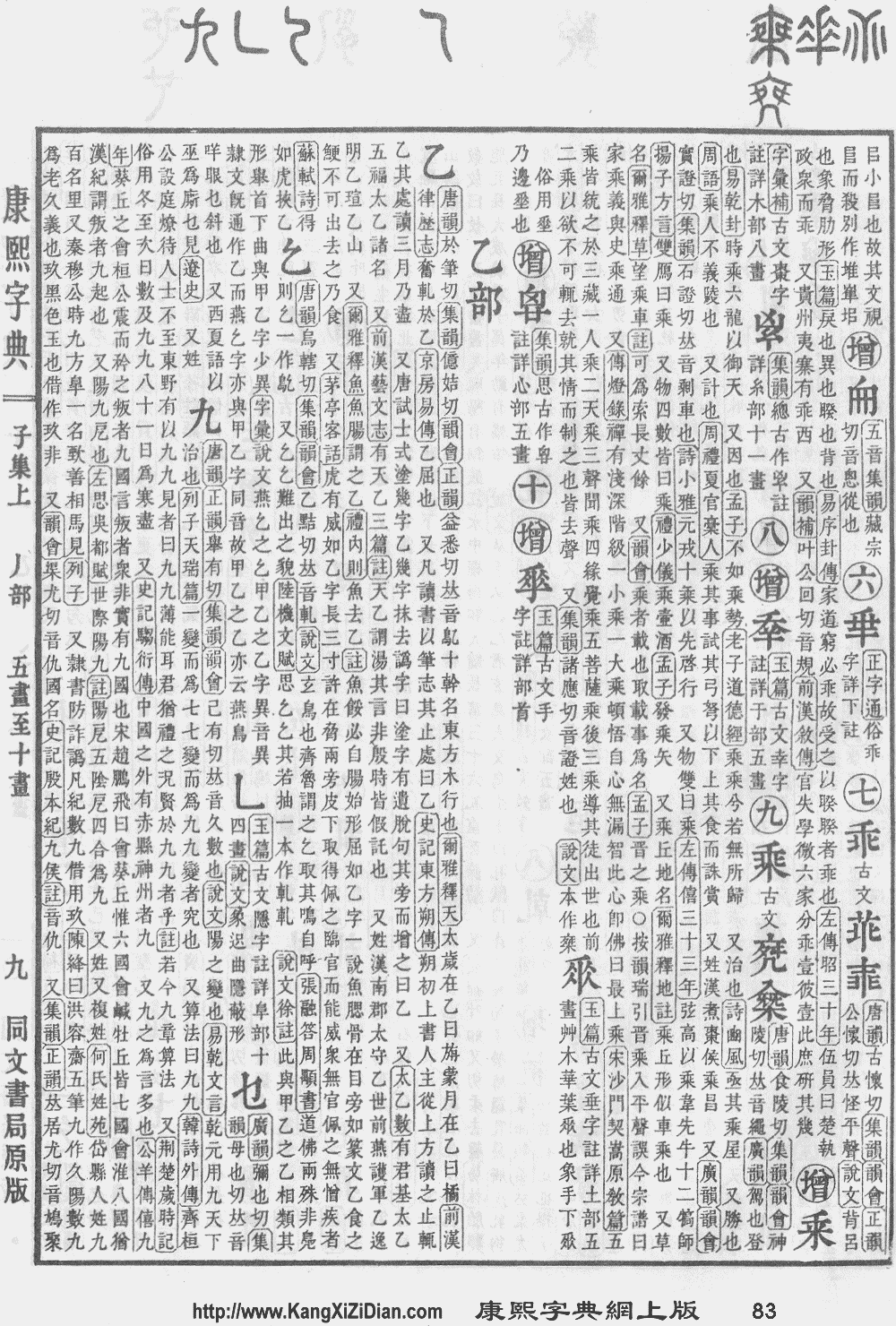
- KangXi: page 83, character 19
- Dai Kanwa Jiten: character 167
- Dae Jaweon: page 168, character 2
- Hanyu Da Zidian: volume 1, page 48, character 5
- Unihan data for U+4E5D
Chinese
| simp. and trad. |
九 | |
|---|---|---|
| alt. forms | 玖 financial 𠔀 𢌬 𣲄 | |
Glyph origin
| Historical forms of the character 九 | ||||||||||||||||||||||||||||||||||||||||||||||||||||||||||||||||||||||||||||||||||||||
|---|---|---|---|---|---|---|---|---|---|---|---|---|---|---|---|---|---|---|---|---|---|---|---|---|---|---|---|---|---|---|---|---|---|---|---|---|---|---|---|---|---|---|---|---|---|---|---|---|---|---|---|---|---|---|---|---|---|---|---|---|---|---|---|---|---|---|---|---|---|---|---|---|---|---|---|---|---|---|---|---|---|---|---|---|---|---|
| Shang | Western Zhou | Warring States | Shuowen Jiezi (compiled in Han) | Liushutong (compiled in Ming) | ||||||||||||||||||||||||||||||||||||||||||||||||||||||||||||||||||||||||||||||||||
| Oracle bone script | Bronze inscriptions | Chu Slip and silk script | Small seal script | Transcribed ancient scripts | ||||||||||||||||||||||||||||||||||||||||||||||||||||||||||||||||||||||||||||||||||
 |
 |
 |
 |
 | ||||||||||||||||||||||||||||||||||||||||||||||||||||||||||||||||||||||||||||||||||
||||
|
References: Mostly from Richard Sears' Chinese Etymology site (authorisation),
| ||||||||||||||||||||||||||||||||||||||||||||||||||||||||||||||||||||||||||||||||||||||


| Characters in the same phonetic series (九) (Zhengzhang, 2003) | |
|---|---|
| Old Chinese | |
| 尻 | *kʰuː |
| 訄 | *kʰuː, *kʰu, *ɡu |
| 艽 | *krɯːw, *qʰrɯːw, *ɡu, *ɡʷrɯw |
| 虓 | *qʰruː |
| 鳩 | *ku |
| 勼 | *ku |
| 九 | *kuʔ |
| 究 | *kus |
| 仇 | *ɡu |
| 鼽 | *ɡu |
| 犰 | *ɡu |
| 叴 | *ɡu |
| 厹 | *ɡu |
| 頄 | *ɡu, *ɡʷrɯw |
| 朹 | *ɡu, *kʷrɯwʔ |
| 馗 | *ɡu, *ɡʷrɯw |
| 扏 | *ɡu |
| 訅 | *ɡu |
| 釚 | *ɡu |
| 肍 | *ɡu |
| 軌 | *kʷrɯwʔ |
| 宄 | *kʷrɯwʔ |
| 氿 | *kʷrɯwʔ |
| 匭 | *kʷrɯwʔ |
| 泦 | *kuɡ |
| 旭 | *qʰʷoɡ |
Pictogram (象形) – a stylized hand, with bent wrist/forearm (hence the hook stroke at lower right). Earlier forms resemble 手, 寸. The original meaning of the glyph was “elbow”, which is now written 肘 (OC *tkuʔ).
After the meaning “elbow” was forgotten, 九 was taken to symbolize a fist tightening to bump up against something; thus, there is a metaphorical bumping up of nine against ten, which is the last number when counting on one's fingers.
Etymology
From Proto-Sino-Tibetan *d/s-kəw. Compare Tibetan དགུ (dgu).
Pronunciation
Definitions
九
- nine
- (figuratively) many
- (weather) each of the nine nine-day periods from the winter solstice
See also
| Chinese numbers | ||||||||||||||||
|---|---|---|---|---|---|---|---|---|---|---|---|---|---|---|---|---|
| 0 | 1 | 2 | 3 | 4 | 5 | 6 | 7 | 8 | 9 | 10 | 102 | 103 | 104 | 108 | 1012 | |
| Normal (小寫/小写) |
〇 | 一 | 二 | 三 | 四 | 五 | 六 | 七 | 八 | 九 | 十 | 百 | 千 | 萬/万 | 億/亿 | 兆 (Taiwan) 萬億/万亿 (Mainland China) |
| Financial (大寫/大写) |
零 | 壹 | 貳/贰 | 參/叁 | 肆 | 伍 | 陸/陆 | 柒 | 捌 | 玖 | 拾 | 佰 | 仟 | |||
Compounds
|
|
|
Descendants
Others:
Japanese
| < 8 | 9 | 10 > |
|---|---|---|
| Cardinal : 九 | ||
Kanji
Readings
Compounds
- 九夏 (kyūka)
- 九官鳥 (kyūkanchō, “a mina or mynah bird”)
- 九牛一毛 (kyū gyū ichi mō, “nine cows one hair (a drop in the ocean)”)
- 九九 (kuku), 九々 (kuku, “Multiplication table”)
- 九月 (kugatsu, “September”)
- 九死 (kyūshi, “near death, nearly dead, a close shave”)
- 九州 (Kyūshū, “the Kyūshū region of Japan”)
- 九重 (kokonoe)
- 九寸五分 (kusun gobu, “a short sword, a dagger”)
- 九星 (kyūsei)
- 九折 (kyūsetsu)
- 九泉 (kyūsen, “the nether world”)
- 九地 (kyūchi)
- 九天 (kyūten, “the Ninth Heaven (the highest of heavens)”)
- 九拝 (kyūhai)
- 九分 (kubu)
- 九輪 (kurin)
- 九六 (kunroku)
Etymology 1
From Early Middle Chinese. Goon, the initial reading when first borrowed into Japanese.
Pronunciation
Alternative forms
Number
Noun
Etymology 2
From Middle Chinese. Kan'on, a later reading. Borrowed after palatalisation occurred in Middle Chinese.
Pronunciation
Number
Noun
九 (hiragana きゅう, rōmaji kyū, historical hiragana きう)
- nine
- an indeterminate large number, a myriad, a great many
- (divination) the number of yang, in opposition to 六 (roku, “six”) as the number of yin
Alternative forms
- (large number): 究
Etymology 3
From Old Japanese.
Pronunciation
Number
九 (hiragana ここの, rōmaji kokono)
Etymology 4
/kokono/ → /kono/
Abbreviation of Old Japanese kokono (“nine”).
Pronunciation
Number
- nine
- ひい、ふう、みい、…なな、やあ、この、とお
- hī, fū, mī, …nana, yā, kono, tō
- one, two, three, ... seven, eight, nine, ten
- ひい、ふう、みい、…なな、やあ、この、とお
Alternative forms
Usage notes
Generally only used when counting out loud, as in the example above. In writing, usually found spelled out in hiragana as この to make the reading unambiguous.
References
- The Japan Times (March 17, 2010). You can count on the tales behind number-kanji. Accessed March 23, 2010.
Korean
Hanja
九 • (gu)
Compounds
Vietnamese
Han character
九 (cửu)
- This term needs a translation to English. Please help out and add a translation, then remove the text
{{rfdef}}.