胡
| ||||||||
Translingual
| Stroke order | |||
|---|---|---|---|
 | |||
Han character
胡 (radical 130, 肉+5, 9 strokes, cangjie input 十口月 (JRB), four-corner 47620, composition ⿰古月)
References
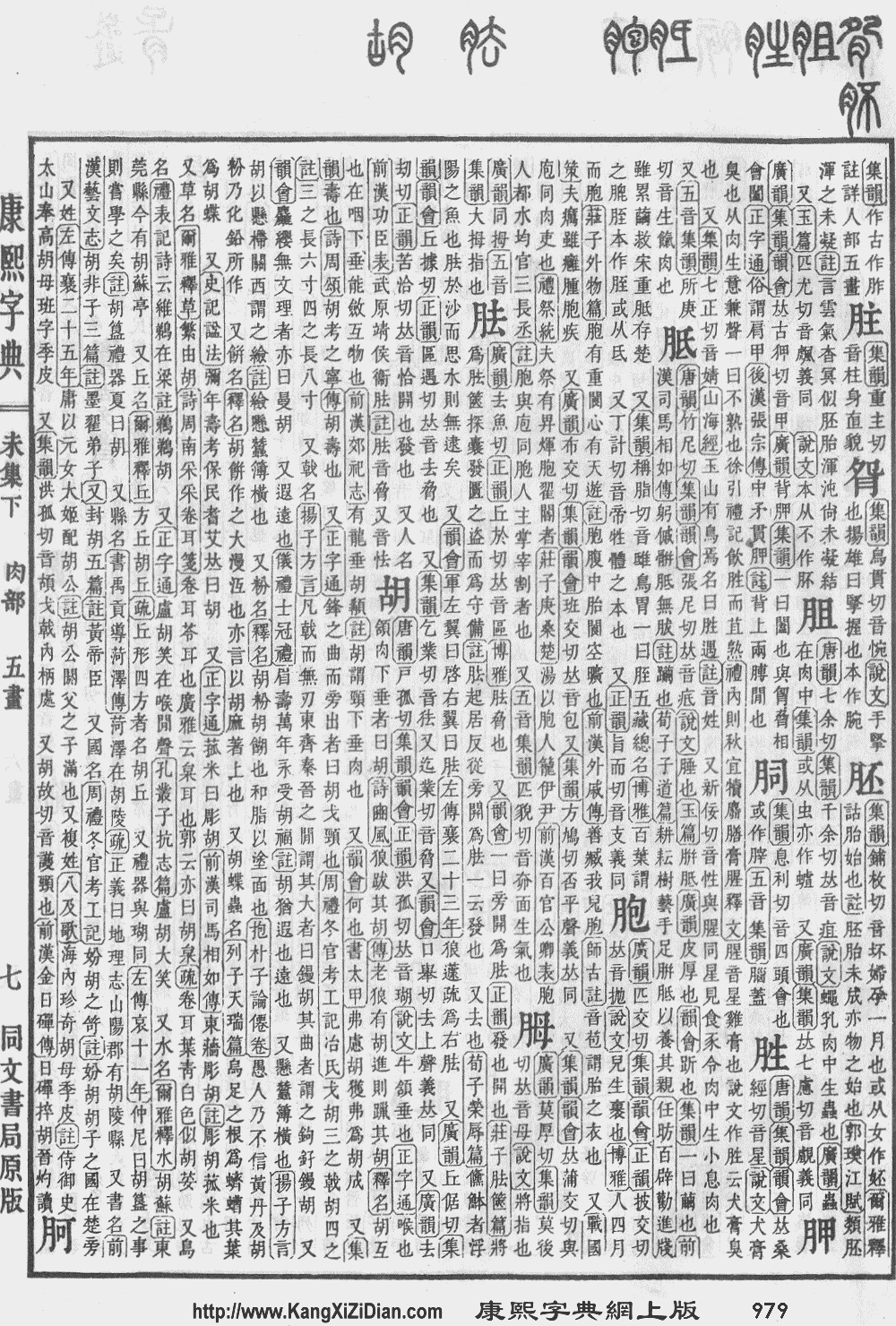
- KangXi: page 979, character 12
- Dai Kanwa Jiten: character 29400
- Dae Jaweon: page 1431, character 4
- Hanyu Da Zidian: volume 3, page 2056, character 8
- Unihan data for U+80E1
Chinese
Glyph origin
| Historical forms of the character 胡 | |
|---|---|
| Shuowen Jiezi (compiled in Han) | Liushutong (compiled in Ming) |
| Small seal script | Transcribed ancient scripts |
 |
 |
| Characters in the same phonetic series (古) (Zhengzhang, 2003) | |
|---|---|
| Old Chinese | |
| 箇 | *kaːls |
| 個 | *kaːls |
| 居 | *kɯ, *kas |
| 橭 | *kaː, *kʰaː |
| 嫴 | *kaː |
| 姑 | *kaː |
| 辜 | *kaː |
| 酤 | *kaː, *kaːs, *ɡaːʔ |
| 蛄 | *kaː |
| 鴣 | *kaː |
| 沽 | *kaː, *kaːʔ, *kaːs |
| 盬 | *kaː, *kaːʔ |
| 古 | *kaːʔ |
| 罟 | *kaːʔ |
| 估 | *kaːʔ |
| 鈷 | *kaːʔ |
| 詁 | *kaːʔ |
| 牯 | *kaːʔ |
| 故 | *kaːs |
| 固 | *kaːs |
| 稒 | *kaːɡs |
| 痼 | *kaːɡs |
| 錮 | *kaːɡs |
| 鯝 | *kaːɡs |
| 棝 | *kaːɡs |
| 凅 | *kaːɡs |
| 枯 | *kʰaː |
| 軲 | *kʰaː |
| 跍 | *kʰaː |
| 骷 | *kʰaː |
| 苦 | *kʰaːʔ, *kʰaːs |
| 葫 | *qʰaː, *ɡaː |
| 餬 | *ɡaː |
| 瑚 | *ɡaː |
| 湖 | *ɡaː |
| 鶘 | *ɡaː |
| 猢 | *ɡaː |
| 醐 | *ɡaː |
| 糊 | *ɡaː |
| 箶 | *ɡaː |
| 蝴 | *ɡaː |
| 胡 | *ɡaː |
| 瓳 | *ɡaː |
| 怙 | *ɡaːʔ |
| 祜 | *ɡaːʔ |
| 岵 | *ɡaːʔ |
| 婟 | *ɡaːʔ, *ɡaːɡs |
| 楛 | *ɡaːʔ |
| 据 | *ka |
| 裾 | *ka |
| 琚 | *ka |
| 椐 | *ka, *kas, *kʰa |
| 鶋 | *ka |
| 蜛 | *ka |
| 崌 | *ka |
| 涺 | *ka |
| 腒 | *ka, *ɡa |
| 鋸 | *kas |
| 倨 | *kas |
| 踞 | *kas |
| 涸 | *ɡaːɡ |
Phono-semantic compound (形聲, OC *ɡaː) : phonetic 古 (OC *kaːʔ) + semantic ⺼.
Etymology 1
| simp. and trad. |
胡 | |
|---|---|---|
Pronunciation
Definitions
胡
- † wattle; dewlap (fleshy lobe hanging from the head or neck of animals)
- † wattle-like object, such as pendent parts on implements
- † how; why; what
- (historical) barbarian; a generic term for any non-Han peoples who lived to the north and west of China's borders
- (historical) countries and peoples in the Western Regions, including Persia, Daqin, and in Pre-Tang texts, India
- (by extension) introduced from the northern or western non-Han peoples or from abroad; non-Chinese; foreign; imported
- (music) Short for 胡琴 (húqín, “huqin; general term for two-stringed bowed instruments with origins in the western non-Han peoples”).
- (historical) (~國) State of Hu in the Spring and Autumn Period in modern-day Anhui, conquered by the State of Chu in 496 BCE
- † black; dark-skinned
- † far; great; senior
- outrageously; recklessly; wildly; foolishly
- A surname.
Compounds
Derived terms from 胡
|
|
|
Etymology 2
| For pronunciation and definitions of 胡 – see 鬍 (“beard; moustache; whiskers”). (This character, 胡, is the simplified form of 鬍.) |
Notes:
|
Etymology 3
| For pronunciation and definitions of 胡 – see 衚. (This character, 胡, is the simplified and variant traditional form of 衚.) |
Notes:
|
Etymology 4
| For pronunciation and definitions of 胡 – see 葫 (“garlic”). (This character, 胡, is the second-round simplified form of 葫.) |
Notes:
|
Etymology 5
| For pronunciation and definitions of 胡 – see 猢. (This character, 胡, is the second-round simplified form of 猢.) |
Notes:
|
Etymology 6
| For pronunciation and definitions of 胡 – see 蝴 (“butterfly”). (This character, 胡, is the second-round simplified form of 蝴.) |
Notes:
|
Etymology 7
| For pronunciation and definitions of 胡 – see 糊 (“paste; to apply a mixture; etc.”). (This character, 胡, is the second-round simplified form of 糊.) |
Notes:
|
Japanese
Kanji
胡
(“Jinmeiyō” kanji used for names)
- This term needs a translation to English. Please help out and add a translation, then remove the text
{{rfdef}}.
Readings
Compounds
Korean
Hanja
胡 • (ho) (hangeul 호, revised ho, McCune–Reischauer ho, Yale ho)
- This term needs a translation to English. Please help out and add a translation, then remove the text
{{rfdef}}.
Vietnamese
Han character
- This term needs a translation to English. Please help out and add a translation, then remove the text
{{rfdef}}.
This article is issued from
Wiktionary.
The text is licensed under Creative Commons - Attribution - Sharealike.
Additional terms may apply for the media files.