交
| ||||||||
See also: 𝌕
Translingual
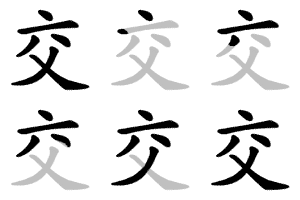
| Stroke order | |||
|---|---|---|---|
 | |||
Han character
交 (radical 8, 亠+4, 6 strokes, cangjie input 卜金大 (YCK), four-corner 00408, composition ⿱亠父)
Derived characters
References
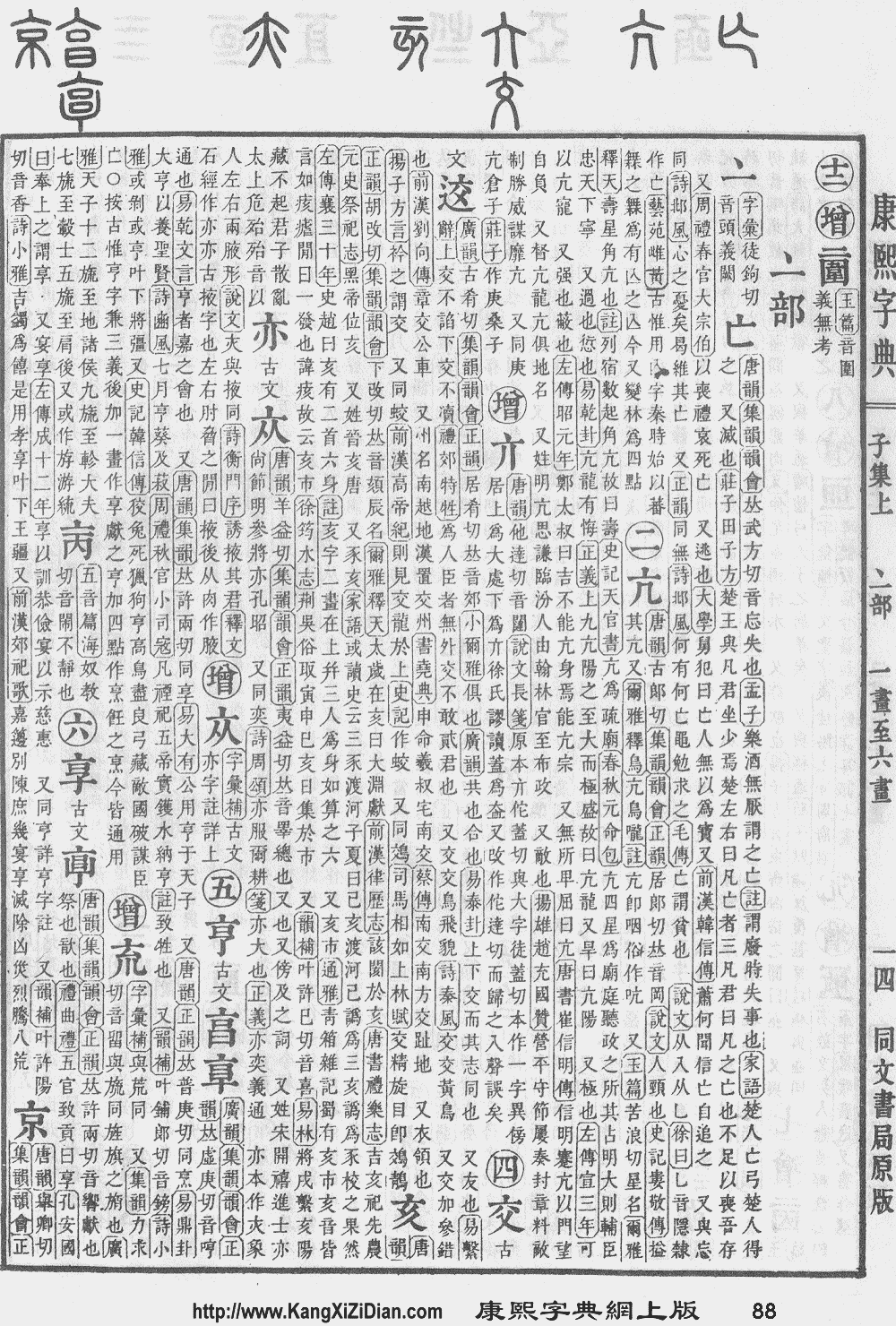
- KangXi: page 88, character 6
- Dai Kanwa Jiten: character 291
- Dae Jaweon: page 185, character 10
- Hanyu Da Zidian: volume 1, page 282, character 1
- Unihan data for U+4EA4
Chinese
| simp. and trad. |
交 | |
|---|---|---|
Glyph origin
| Historical forms of the character 交 | ||||||||||||||||||||||
|---|---|---|---|---|---|---|---|---|---|---|---|---|---|---|---|---|---|---|---|---|---|---|
| Western Zhou | Shuowen Jiezi (compiled in Han) | Liushutong (compiled in Ming) | ||||||||||||||||||||
| Bronze inscriptions | Small seal script | Transcribed ancient scripts | ||||||||||||||||||||
 |
 |
 | ||||||||||||||||||||
||
|
References: Mostly from Richard Sears' Chinese Etymology site (authorisation),
| ||||||||||||||||||||||


| Characters in the same phonetic series (交) (Zhengzhang, 2003) | |
|---|---|
| Old Chinese | |
| 烄 | *keːws, *kreːwʔ |
| 礮 | *pʰreːws |
| 交 | *kreːw |
| 郊 | *kreːw |
| 茭 | *kreːw, *kreːwʔ, *ɡreːwʔ |
| 蛟 | *kreːw |
| 鮫 | *kreːw |
| 鵁 | *kreːw |
| 咬 | *kreːw, *ŋɡreːwʔ, *qreːw |
| 鉸 | *kreːw, *kreːwʔ, *kreːws |
| 佼 | *kreːw, *kreːwʔ, *ɡreːwʔ |
| 詨 | *kreːw, *qʰreːws, *ɡreːws |
| 絞 | *kreːwʔ |
| 狡 | *kreːwʔ |
| 姣 | *kreːwʔ, *ɡreːw |
| 筊 | *kreːwʔ, *ɡreːw |
| 校 | *kreːws, *ɡreːws |
| 珓 | *kreːws |
| 跤 | *kʰreːw |
| 頝 | *kʰreːw |
| 骹 | *kʰraːw |
| 齩 | *ŋɡreːwʔ |
| 洨 | *ɡreːw |
| 胶 | *ɡreːw |
| 效 | *ɡreːws |
| 効 | *ɡreːws |
| 傚 | *ɡreːws |
| 皎 | *keːwʔ |
| 恔 | *keːwʔ |
| 晈 | *keːwʔ |
| 窔 | *qeːws |
| 駮 | *pqreːwɢ |
Pictogram (象形) – a human with crossed legs.
Etymology 1
Pronunciation
Definitions
交
- to intersect; to cross
- to hand over; to turn in; to submit
- to make (friends)
- 交男朋友 ― jiāonánpéngyǒu ― to get a boyfriend
- 16th tetragram of the Taixuanjing; "contact"
- (obsolete) Alternative form of 跤.
Compounds
Derived terms from 交
|
|
|
Etymology 2
| For pronunciation and definitions of 交 – see 跤 (“tumble; fall; leg; foot; lower limb; etc.”). (This character, 交, is the second-round simplified form of 跤.) |
Notes:
|
Japanese
Kanji
交
Readings
Compounds
Compounds
- 入交 (irimajiri)
- 援交 (enkō)
- 外交 (gaikō)
- 交交 (kōkō), 交々 (kōkō)
- 国交 (kokkō)
- 交交 (komogomo), 交々 (komogomo)
- 混交 (konkō)
- 社交 (shakō)
- 修交 (shūkō)
- 手交 (shukō)
- 深交 (shinkō)
- 親交 (shinkō)
- 情交 (jōkō)
- 性交 (seikō)
- 絶交 (zekkō)
- 団交 (dankō)
- 断交 (dankō)
- 直交 (chokkō)
- 通交 (tsūkō)
- 肉交 (nikukō): sexual intercourse
- 復交 (fukkō)
- 友交 (yūkō)
- 乱交 (rankō)
- 旧交 (kyūkō)
- 斜交 (shakō)
- 交易 (kōeki)
- 交角 (kōkaku)
- 交感 (kōkan)
- 交換 (kōkan)
- 交歓 (kōkan), 交驩 (kōkan)
- 交誼 (kōgi)
- 交響 (kōkyō)
- 交互 (kōgo)
- 交合 (kōgō)
- 交差 (kōsa), 交叉 (kōsa)
- 交際 (kōsai)
- 交錯 (kōsaku)
- 交渉 (kōshō)
- 交情 (kōjō)
- 交譲 (kōjō)
- 交織 (kōshoku)
- 交信 (kōshin)
- 交声曲 (kōseikyoku): cantata
- 交接 (kōsetsu)
- 交戦 (kōsen)
- 交替 (kōtai), 交代 (kōtai)
- 交通 (kōtsū)
- 交点 (kōten)
- 交読 (kōdoku)
- 交配 (kōhai)
- 交番 (kōban)
- 交尾 (kōbi)
- 交付 (kōfu)
- 交附 (kōfu)
- 交友 (kōyū)
- 交遊 (kōyū), 交游 (kōyū)
- 交絡 (kōraku)
- 交流 (kōryū)
- 交霊 (kōrei)
- 交媾 (kōkō): sexual intercourse
- 交詢 (kōjun)
Related terms
Korean
Hanja
交 • (gyo) (hangeul 교, revised gyo, McCune–Reischauer kyo)
- This term needs a translation to English. Please help out and add a translation, then remove the text
{{rfdef}}.
Vietnamese
Han character
交 (giao)
- This term needs a translation to English. Please help out and add a translation, then remove the text
{{rfdef}}.
This article is issued from
Wiktionary.
The text is licensed under Creative Commons - Attribution - Sharealike.
Additional terms may apply for the media files.