七
| ||||||||
Translingual
| Stroke order | |||
|---|---|---|---|
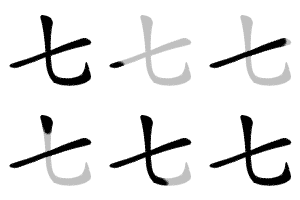 | |||
| Stroke order | |||
|---|---|---|---|
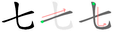 | |||
Han character
七 (radical 1, 一+1, 2 strokes, cangjie input 十山 (JU), four-corner 40710, composition ⿻乚一)
Descendants
See also
References
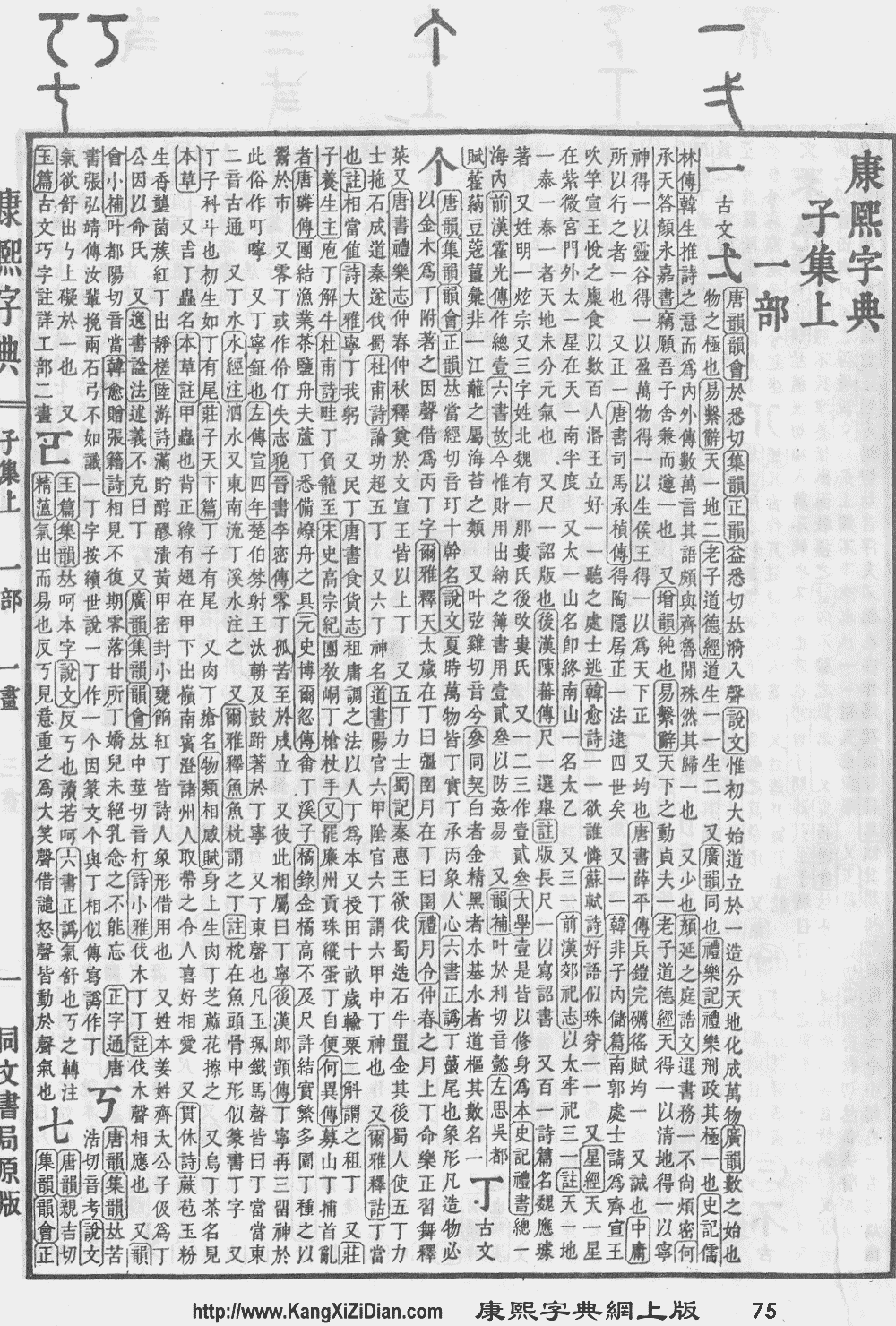
- KangXi: page 75, character 7
- Dai Kanwa Jiten: character 6
- Hanyu Da Zidian: volume 1, page 3, character 3
- Unihan data for U+4E03
Chinese
| simp. and trad. |
七 | |
|---|---|---|
| alt. forms | 柒 financial 𠀁 ancient | |
Glyph origin
| Historical forms of the character 七 | |||||||||||||||||||||||||||||||||
|---|---|---|---|---|---|---|---|---|---|---|---|---|---|---|---|---|---|---|---|---|---|---|---|---|---|---|---|---|---|---|---|---|---|
| Shang | Western Zhou | Warring States | Shuowen Jiezi (compiled in Han) | Liushutong (compiled in Ming) | |||||||||||||||||||||||||||||
| Oracle bone script | Bronze inscriptions | Chu Slip and silk script | Qin slip script | Small seal script | Transcribed ancient scripts | ||||||||||||||||||||||||||||
 |
 |
 |
 |
 |
 | ||||||||||||||||||||||||||||
|||||
|
References: Mostly from Richard Sears' Chinese Etymology site (authorisation),
| |||||||||||||||||||||||||||||||||


| Characters in the same phonetic series (七) (Zhengzhang, 2003) | |
|---|---|
| Old Chinese | |
| 切 | *sn̥ʰiːds, *sn̥ʰiːd |
| 砌 | *sʰiːds |
| 沏 | *sʰiːd |
| 七 | *sn̥ʰid |
| 柒 | *sn̥ʰid |
| 叱 | *n̥ʰjid |
The character 七 was originally a picture of a vertical line and a horizontal line bisecting each other, meaning something like, “cut and throw away the remainder”. 切 (OC *sn̥ʰiːds, *sn̥ʰiːd) represents the graphical meaning.
The top-most horizontal stroke is done from left to right. The vertical line and bottom-most horizontal line are done as one stroke, from top-left to bottom-right.
Etymology
From Proto-Sino-Tibetan *s-ni-s (“seven”).
Pronunciation
Definitions
七
Compounds
|
|
|
Descendants
Others:
See also
| Chinese numbers | ||||||||||||||||
|---|---|---|---|---|---|---|---|---|---|---|---|---|---|---|---|---|
| 0 | 1 | 2 | 3 | 4 | 5 | 6 | 7 | 8 | 9 | 10 | 102 | 103 | 104 | 108 | 1012 | |
| Normal (小寫/小写) |
〇 | 一 | 二 | 三 | 四 | 五 | 六 | 七 | 八 | 九 | 十 | 百 | 千 | 萬/万 | 億/亿 | 兆 (Taiwan) 萬億/万亿 (Mainland China) |
| Financial (大寫/大写) |
零 | 壹 | 貳/贰 | 參/叁 | 肆 | 伍 | 陸/陆 | 柒 | 捌 | 玖 | 拾 | 佰 | 仟 | |||
Japanese
| < 6 | 7 | 8 > |
|---|---|---|
| Cardinal : 七 | ||
Kanji
Readings
Compounds
- 七々日 (shichishichinichi), 七七日 (shichishichinichi), 七七日 (nanananoka), 七七日 (nanananuka):
- 七回忌 (shichikaiki):
- 七角形 (shichikakkei): heptagon
- 七月 (shichigatsu): July
- 七賢 (shichiken):
- 七絃琴 (shichigenkin):
- 七言絶句 (shichigonzekku):
- 七言律詩 (shichigonrisshi):
- 七五三 (shichigosan)
- 七五調 (shichigochō):
- 七光 (nanahikari):
- 七三 (shichisan):
- 七重 (nanae):
- 七色 (nanairo): the seven prismatic colors
- 七星 (shichisei): Ursa Major
- 七生 (shichishō):
- 七草 (nanakusa):
- 七堂伽藍 (shichidōgaran):
- 七道 (shichidō):
- 七難 (shichinan):
- 七不思議 (Nan Fushigi):
- 七福神 (shichifukujin):
- 七宝 (shippō): the "seven treasures;" (Buddhism)
- 七味 (shichimi):
- 七面体 (shichimentai):
- 七面鳥 (shichimenchō): turkey
- 七夜 (nanayo):
- 七夕 (tanabata), 七夕 (shichiseki):
- 七曜 (shichiyō):
- 七厘 (shichirin), 七輪 (shichirin):
- 七竈 (nanakamado):
- 七つ子 (shichi tsushi): septuplets
Pronunciation 1
Noun
Related terms
- See below (related terms for pronunciation 2)
Pronunciation 2
Noun
七 (hiragana しち, rōmaji shichi)
Related terms
Number
七 (hiragana しち, rōmaji shichi, alternative reading なな, rōmaji nana)
Usage notes
- なな (nana) is used instead of しち (shichi) in conversation because しち (shichi) is considered unlucky.
Korean
Hanja
七 • (chil)
Old Japanese
Numeral
| < 6 | 7 | 8 > |
|---|---|---|
| Cardinal : 七 Ordinal : 七 | ||
七 (nana)
Descendants
- Japanese: 七 (nana)
References
- 古事記歌謡 (Kojiki kayō)
Vietnamese
Han character
七 (thất)
- This term needs a translation to English. Please help out and add a translation, then remove the text
{{rfdef}}.