斷
See also: 断 and 𝌢
| ||||||||
Translingual
Han character
斷 (radical 69, 斤+14, 18 strokes, cangjie input 女戈竹一中 (VIHML), four-corner 22721, composition ⿰㡭斤)
References
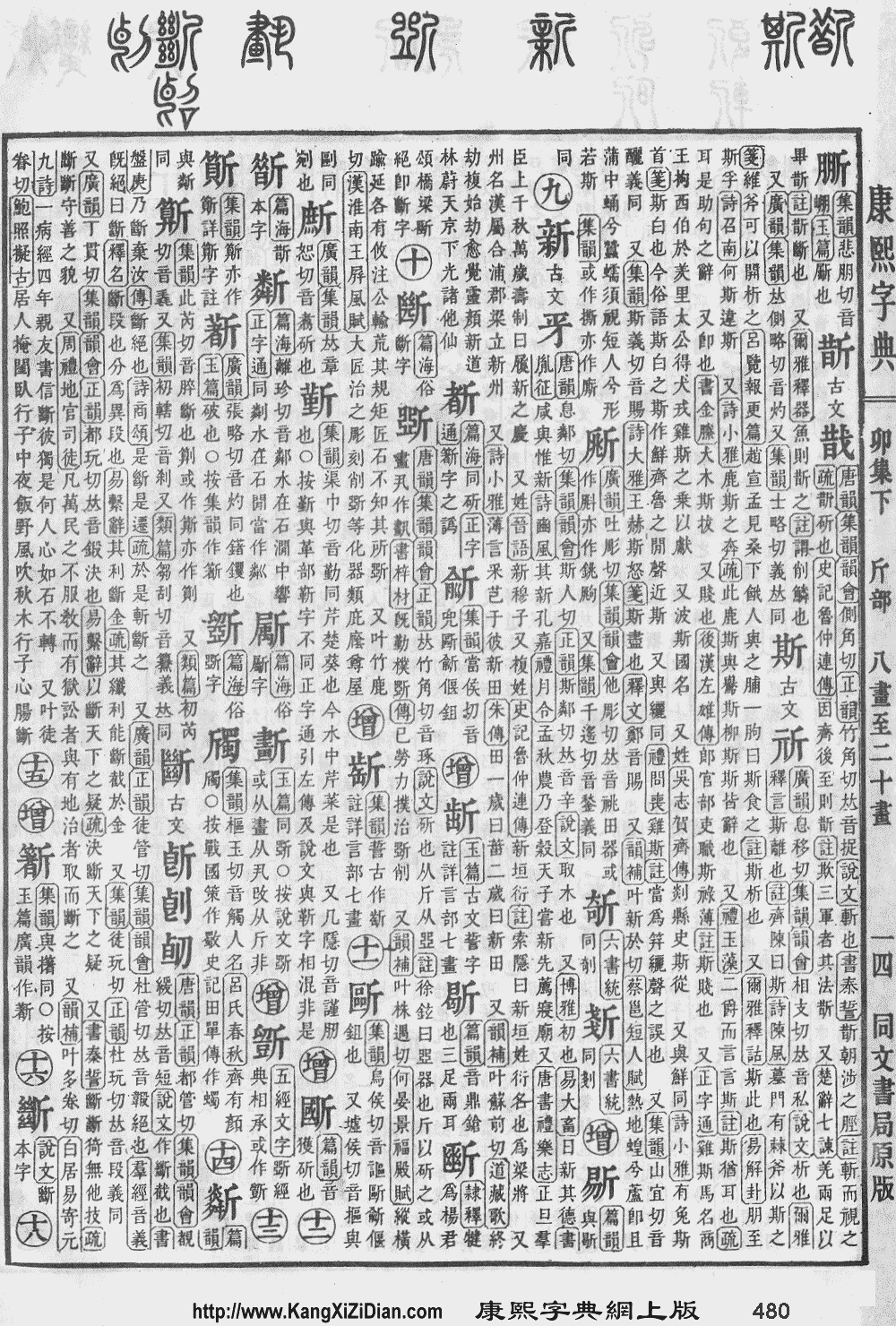
- KangXi: page 480, character 35
- Dai Kanwa Jiten: character 13611
- Dae Jaweon: page 841, character 22
- Hanyu Da Zidian: volume 3, page 2028, character 13
- Unihan data for U+65B7
Chinese
| trad. | 斷 | |
|---|---|---|
| simp. | 断 | |
| alt. forms | 𣃔 | |
Glyph origin
| Historical forms of the character 斷 | ||
|---|---|---|
| Western Zhou | Warring States | Shuowen Jiezi (compiled in Han) |
| Bronze inscriptions | Chu Slip and silk script | Small seal script |
 |
 |
 |
Ideogrammic compound (會意) : 𢇍 (“to cut”) + 斤 (“axe”).
Before the Qin dynasty, this character was written as 𠸿 or 𠜷.
Pronunciation 1
Definitions
斷
Pronunciation 2
Definitions
斷
- to judge; to decide; to determine; to settle
- (used in the negative) absolutely; definitely; decidedly
- 29th tetragram of the Taixuanjing; "decisiveness"
Compounds
Derived terms from 斷
|
|
|
Japanese
| 断 | |
| 斷 |
Kanji
斷
(uncommon “Hyōgai” kanji, kyūjitai kanji, shinjitai form 断)
Readings
Korean
Hanja
斷 • (dan) (hangeul 단, revised dan, McCune–Reischauer tan, Yale tan)
Vietnamese
Han character
- This term needs a translation to English. Please help out and add a translation, then remove the text
{{rfdef}}.
This article is issued from
Wiktionary.
The text is licensed under Creative Commons - Attribution - Sharealike.
Additional terms may apply for the media files.