死
| ||||||||
Translingual
Han character
| Stroke order | |||
|---|---|---|---|
 | |||
死 (radical 78, 歹+2, 6 strokes, cangjie input 一弓心 (MNP), four-corner 10212, composition ⿸歹匕 or ⿱一⿰夕匕)
References
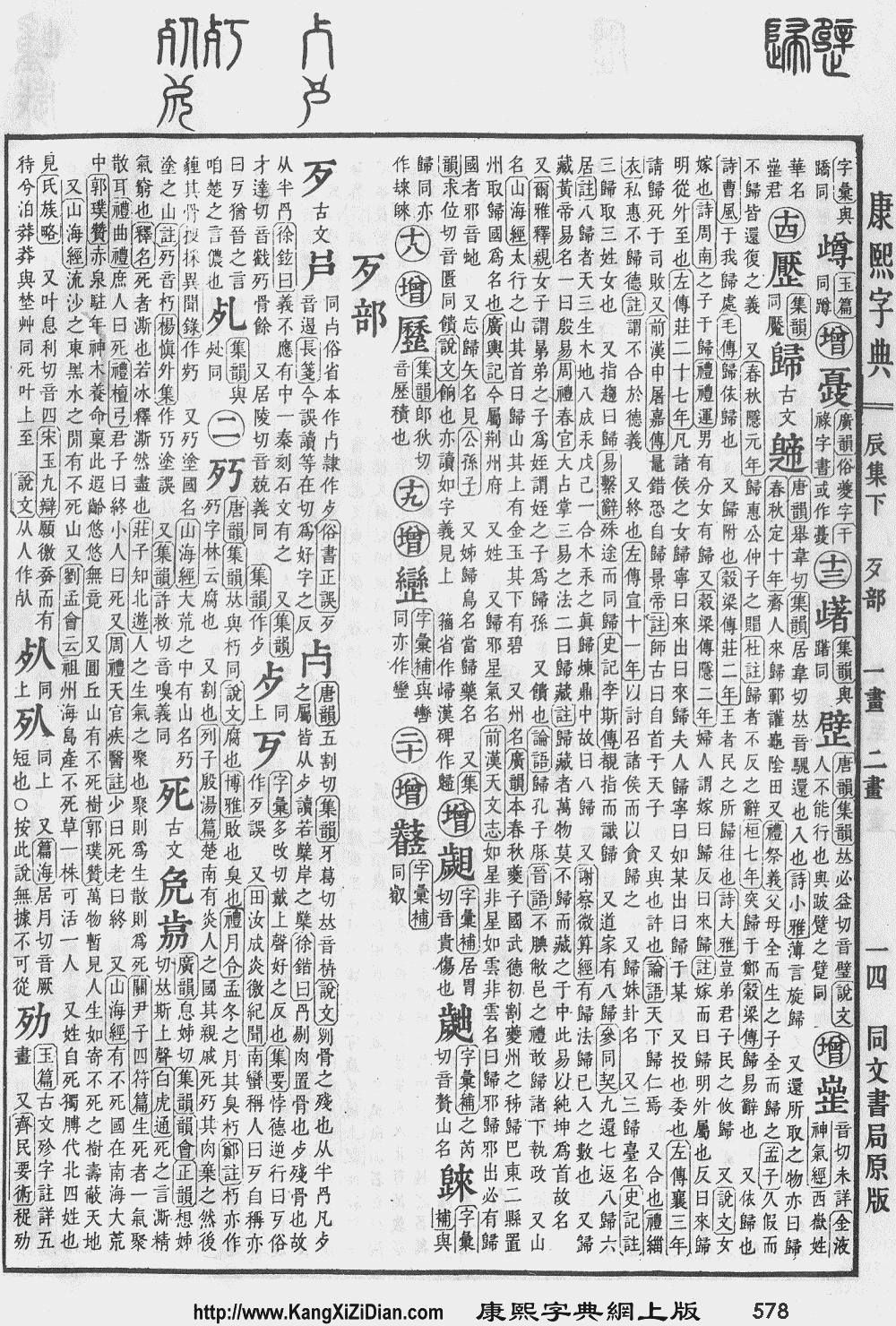
- KangXi: page 578, character 22
- Dai Kanwa Jiten: character 16365
- Dae Jaweon: page 970, character 7
- Hanyu Da Zidian: volume 2, page 1380, character 6
- Unihan data for U+6B7B
Chinese
| simp. and trad. |
死 | |
|---|---|---|
| alt. forms | 𣦸 𣦹 𠒁 𠑾 𦭀 | |
Glyph origin
| Historical forms of the character 死 | ||||
|---|---|---|---|---|
| Shang | Western Zhou | Warring States | Shuowen Jiezi (compiled in Han) | Liushutong (compiled in Ming) |
| Oracle bone script | Bronze inscriptions | Chu Slip and silk script | Small seal script | Transcribed ancient scripts |
 |
 |
 |
 |
 |
Etymology
From Proto-Sino-Tibetan *səj.
Pronunciation
Definitions
死
- to die; death; dead
- inactive
- (only in compounds) deadly; fatal; killing
- (colloquial or Teochew) very; bloody; totally
- (offensive) damned; damn
- (slang, offensive) to disappear; to go
- (Cantonese) persistently; stubbornly
Usage notes
- The adjective 死 ("dead, inactive, etc.") can not be used as a predicative adjective. The sentence *這隻狗死 generally does not mean "This dog is dead". For the meaning "is dead", usually the verb 死 in the perfect aspect ("to have died") is used instead:
- The verb 死 ("to die") lacks a present meaning and denotes either past (in perfect aspect) or future (not in perfect aspect) events. It can not be modified by the progressive aspect marker 正在 (zhèngzài) or 著/着 (zhe).
Synonyms
Compounds
Derived terms from 死
|
|
|
Japanese
Kanji
死
Readings
Etymology 1
Appears to be a conflation of Middle Chinese 死 (sijX) (compare modern Mandarin reading sǐ) with an Old Japanese root that happened to have a similar pronunciation to the Middle Chinese and was probably cognate with 去る (saru, “to go, to go away”).
In kanji compounds, this would be considered as on'yomi; on its own, this could be considered as either on'yomi or kun'yomi.
Pronunciation
Noun
| Kanji in this term |
|---|
| 死 |
| し Grade: 3 |
| on’yomi |
Derived terms
Derived terms
- 死因 (shiin): cause of death
- 死王 (shiō): a dead king
- 死王 (Shiō): the Buddhist king of the dead
- 死火 (shika): a dead flame, a fire that has gone out; (Buddhism) the flame of death
- 死火山 (shikazan): an extinct volcano
- 死花 (shika): paper flowers used for a funeral
- 死花花 (shikabana): a decoration used at funerals consisting of white paper fringes on vertical stakes
- 死貨 (shika): a currency that is no longer circulated; any asset that is hoarded and not circulated
- 死海 (Shikai): the Dead Sea
- 死灰 (shikai): cold, dead ashes; the ashes remaining after cremation
- 死界 (shikai): the underworld, the world of the dead; a blind spot, somewhere out of view
- 死骸 (shigai): a corpse, a cadaver; a carcass
- 死角 (shikaku): a blind spot, somewhere out of view; dead ground where launched projectiles do not fall
- 死学 (shigaku): a field of study that has no practical use
- 死活 (shikatsu): life and death
- 死勘定 (shi kanjō): a dead account, a trading account that has no activity
- 死期 (shiki), 死期 (shigo): the time of death, the moment of one's death
- 死球 (shikyū): in baseball, a pitch that hits the batter, resulting in a free walk
- 死去 (shikyo): one's death, one's passing
- 死境 (shikyō): one's place of death; a deadly place
- 死菌 (shikin): a dead bacterium or inactive virus used as the basis for a vaccine
- 死句 (shiku): a plain phrase or line in a poem, containing no implied meanings; (Buddhism) an ascetic's unsaid words or phrases, due to mental mistakes
- 死苦 (shiku): (Buddhism) the sufferings of death
- 死刑 (shikei): capital punishment, the death penalty, execution
- 死結 (shiketsu): a kind of fragrant wood used in incense that is only fragrant years after harvesting
- 死後 (shigo): the time after one's death
- 死語 (shigo): a dead language
- 死罪 (shizai): a capital crime, a capital punishment
- 死屍 (shishi): a dead body, a corpse
- 死守 (shishu): defense to the last man
- 不死 (fushi): undying, immortality
- 不老不死 (furō fushi): agelessness and immortality
- 死所 (shisho): a place of death, the place where one dies
- 死生 (shishō), 死生 (shisei): life and death
- 死相 (shisō): an appearance as if one were already dead, the shadow of death, the look of death
- 死蔵 (shizō): putting something away and never using it
- 死地 (shichi): a dead place; a place so dangerous that one expects to die there
- 死闘 (shitō): a fight to the death
- 死人 (shinin): a dead personl; a corpse
- 死者 (shisha): the dead
- 死体 (shitai): a cadaver
- 死物 (shibutsu): something unused, useless, or unusable
- 死文 (shibun): a dead law, a law that is on the books but never enforced; a document that is purely formal and empty of meaning
- 死別 (shibetsu): bereavement
- 死没 (shibotsu): death, dying
- 死命 (shimei): life and death, fate
- 死霊 (shiryō), 死霊 (shirei): the spirit of a dead person, a ghost
- 死力 (shiryoku): strength or exertion as if one were avoiding imminent death: with all one's might
- 死去 (shikyo): passing, death
- 死刑 (shikei): the death penalty, execution
- 死傷 (shishō): a mortal wound or injury, casualty
- 死亡 (shibō): passing, death
- 死滅 (shimetsu): extinction, dying out
- 頓死 (tonshi): sudden death
Verb
| Kanji in this term |
|---|
| 死 |
| し Grade: 3 |
| on’yomi |
死する (hiragana しする, rōmaji shi suru)
Conjugation
Conjugation of "死する" (See Appendix:Japanese verbs.)
| Stem forms | ||||
|---|---|---|---|---|
| Imperfective (未然形) | 死し | しし | shi shi | |
| Continuative (連用形) | 死し | しし | shi shi | |
| Terminal (終止形) | 死する | しする | shi suru | |
| Attributive (連体形) | 死する | しする | shi suru | |
| Hypothetical (仮定形) | 死すれ | しすれ | shi sure | |
| Imperative (命令形) | 死せよ¹ 死しろ² |
しせよ¹ ししろ² |
shi seyo¹ shi shiro² | |
| Key constructions | ||||
| Passive | 死される | しされる | shi sareru | |
| Causative | 死させる 死さす |
しさせる しさす |
shi saseru shi sasu | |
| Potential | 死できる | しできる | shi dekiru | |
| Volitional | 死しよう | ししよう | shi shiyō | |
| Negative | 死しない | ししない | shi shinai | |
| Negative continuative | 死せず | しせず | shi sezu | |
| Formal | 死します | しします | shi shimasu | |
| Perfective | 死した | しした | shi shita | |
| Conjunctive | 死して | しして | shi shite | |
| Hypothetical conditional | 死すれば | しすれば | shi sureba | |
| ¹ Written imperative ² Spoken imperative | ||||
Synonyms
- See Thesaurus:死ぬ
Etymology 2
| Kanji in this term |
|---|
| 死 |
| し(に) Grade: 3 |
| kun’yomi |
The 連用形 (ren'yōkei, “stem form”) of verb 死ぬ (shinu, “to die”).[1][4]
Pronunciation
Noun
死 (hiragana しに, rōmaji shini)
Derived terms
Derived terms
- 死後 (shiniato): the time after one's death, particularly referring to the time after the death of one's spouse
- 死一倍 (shiniichibai): a kind of loan whereby the borrower must repay double the loan amount upon the death of the borrower's parents and subsequent inheritance of parental assets
- 死軍 (shinīkusa): a fight to the death
- 死絵 (shinie): a print or poster of a famous actor created on the occasion of that actor's death, noting the actor's posthumous name, place of burial, and time of death
- 死顔 (shinigao): the face or facial expression of a dead person
- 死覚悟 (shinikakugo): being prepared to die, readiness to die
- 死学問 (shinigakumon): a field of study that has no practical use
- 死掛 (shinikake): dying, the act of dying
- 死金 (shinigane): money saved in reserve to cover the costs of one's own death; money that is hoarded but not used; money spent to no effect, wasted money
- 死神 (shinigami): the god of death, Death
- 死極 (shinigiwame): determination or resolution to die
- 死狂 (shinigurui): crazy enough to die; crazy because one is unready to die and fears death
- 死気 (shinige): a sense of death, deathliness
- 死業 (shinigō): the karma of one's previous life that causes one's death in this life; a death attributed to karma
- 死外 (shinihazure): the act of just barely avoiding death
- 死花 (shinibana): posthumous fame or honor; an exceptional and memorable way of dying
Prefix
死 (hiragana しに, rōmaji shini-)
- bloody, stupid, goddamn
- Used as a negative or pejorative intensifier.
Derived terms
Derived terms
- 死戯 (shinitawake): bloody foolishness, goddamn messing around
References
- 1 2 3 2006, 大辞林 (Daijirin), Third Edition (in Japanese), Tōkyō: Sanseidō, →ISBN
- ↑ 1998, NHK日本語発音アクセント辞典 (NHK Japanese Pronunciation Accent Dictionary) (in Japanese), Tōkyō: NHK, →ISBN
- ↑ 1997, 新明解国語辞典 (Shin Meikai Kokugo Jiten), Fifth Edition (in Japanese), Tōkyō: Sanseidō, →ISBN
- ↑ 1988, 国語大辞典(新装版) (Kokugo Dai Jiten, Revised Edition) (in Japanese), Tōkyō: Shogakukan
Korean
Hanja
死 • (sa)
- die
- death
Vietnamese
Han character
- This term needs a translation to English. Please help out and add a translation, then remove the text
{{rfdef}}.
Compounds
This article is issued from
Wiktionary.
The text is licensed under Creative Commons - Attribution - Sharealike.
Additional terms may apply for the media files.