没
See also: 沒
| ||||||||
Translingual
| Stroke order | |||
|---|---|---|---|
 | |||
| Stroke order | |||
|---|---|---|---|
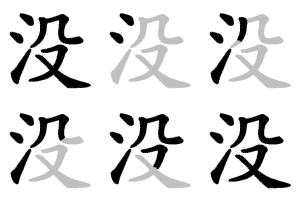 | |||
| Japanese | 没 |
|---|---|
| Simplified | 没 |
| Traditional | 沒 |
Glyph origin
Variant of 沒. Also used in Japanese shinjitai and simplified Chinese.
Han character
没 (radical 85 水+4, 7 strokes, cangjie input 水竹弓水 (EHNE), composition ⿰氵殳)
Related characters
- 沒 (Traditional form of 没)
References
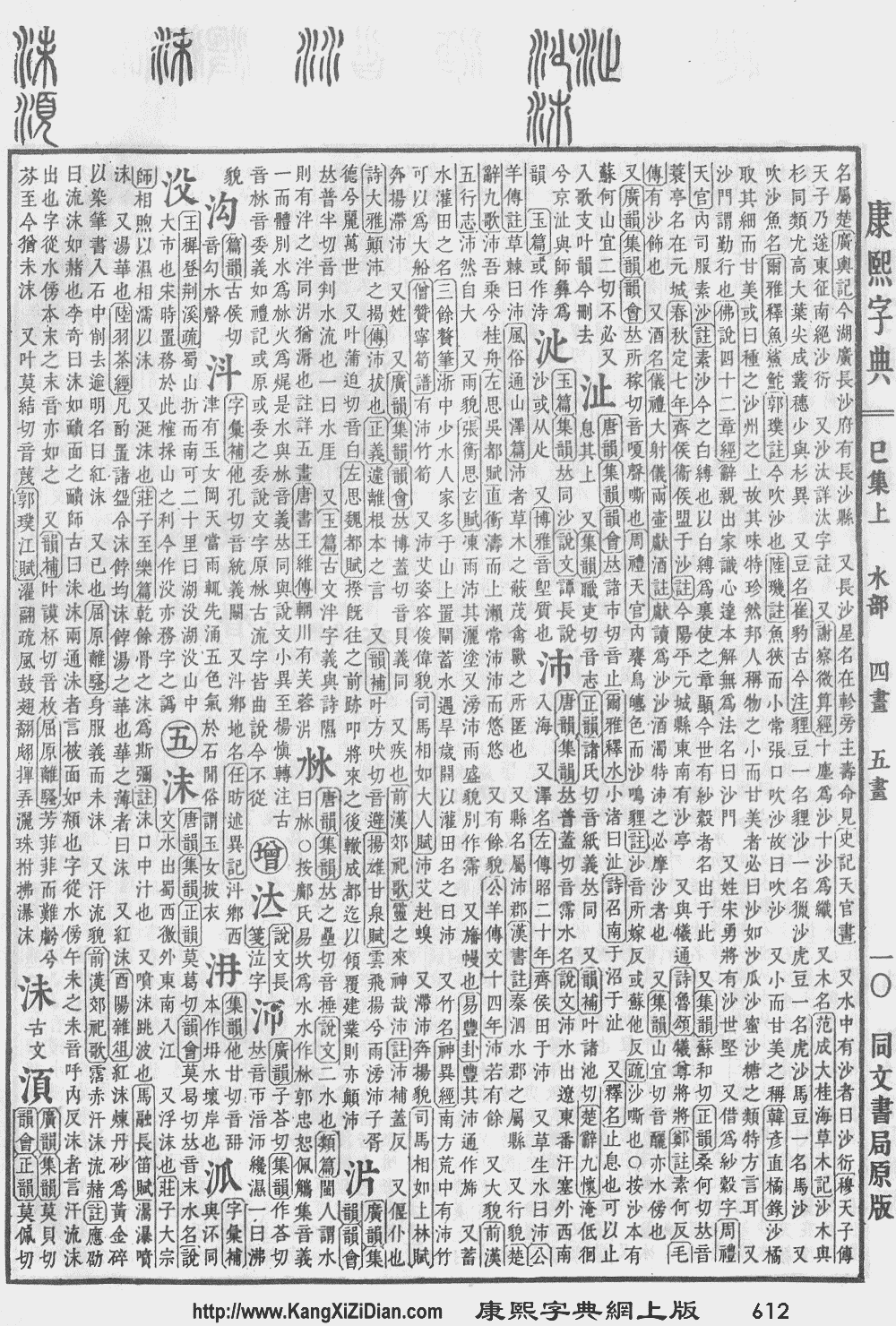
- KangXi: not present, would follow page 612, character 12
- Dai Kanwa Jiten: character 17233
- Dae Jaweon: page 1005, character 15
- Hanyu Da Zidian: volume 3, page 1570, character 7
- Unihan data for U+6CA1
Chinese
| For pronunciation and definitions of 没 – see 沒 (“not have; there is not; to be without; be not so ... as; etc.”). (This character, 没, is the simplified and variant form of 沒.) |
Notes:
|
Japanese
Kanji
没
Readings
Compounds
- 死没 (shibotsu): death
- 戦没 (senbotsu): death in battle
- 病没 (byōbotsu): death by illness
- 没収 (bosshū): confiscation; forfeiture
Vietnamese
Han character
- This term needs a translation to English. Please help out and add a translation, then remove the text
{{rfdef}}.
References
This article is issued from
Wiktionary.
The text is licensed under Creative Commons - Attribution - Sharealike.
Additional terms may apply for the media files.