年
| ||||||||
| ||||||||
Translingual
| Stroke order | |||
|---|---|---|---|
 | |||
| Stroke order | |||
|---|---|---|---|
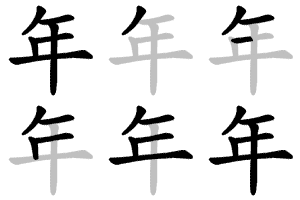 | |||
Han character
年 (radical 51, 干+3, 6 strokes, cangjie input 人手 (OQ), four-corner 80500, composition ⿻午厂)
References
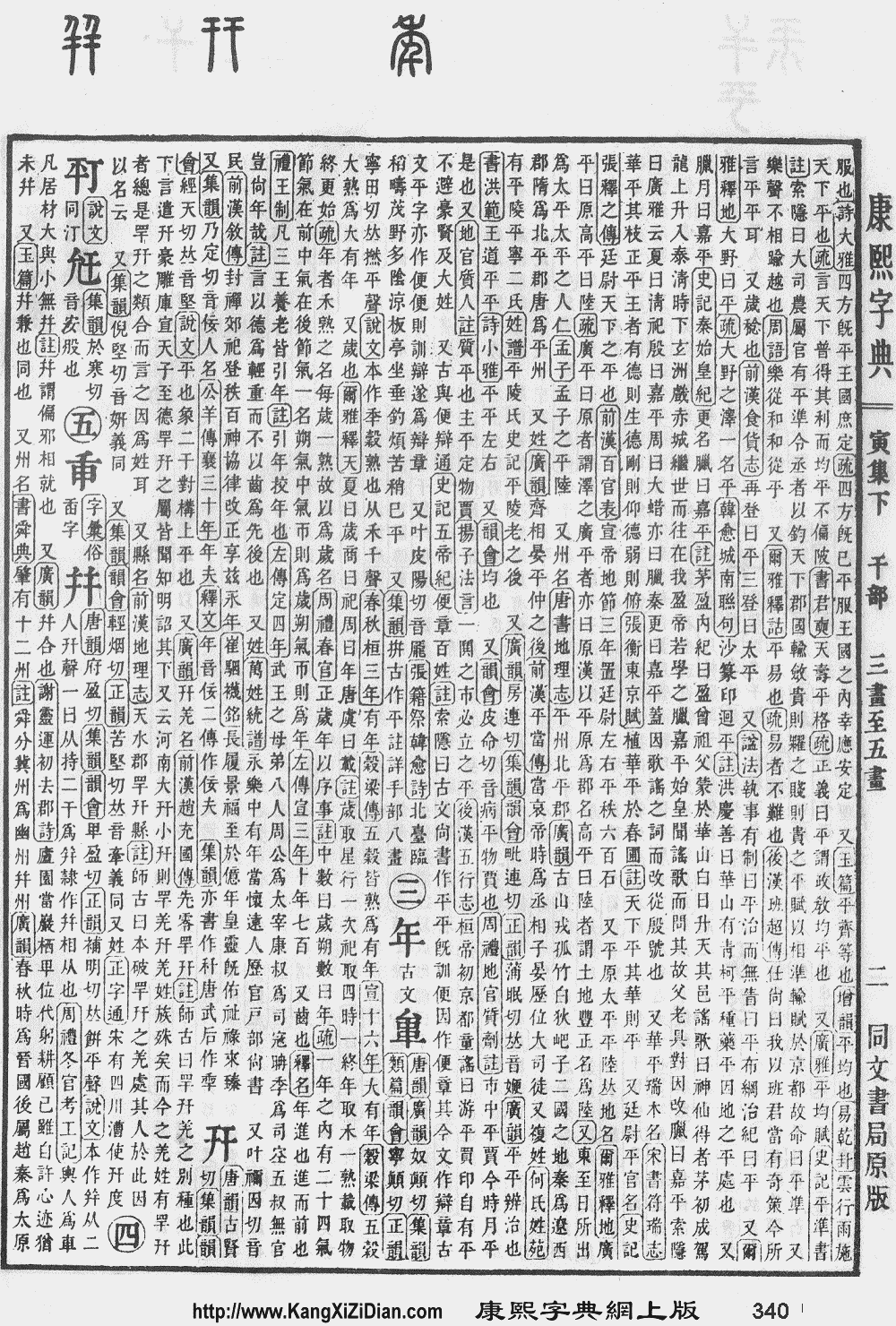
- KangXi: page 340, character 1
- Dai Kanwa Jiten: character 9168
- Dae Jaweon: page 648, character 2
- Hanyu Da Zidian: volume 1, page 37, character 6
- Unihan data for U+5E74
Chinese
Glyph origin
| Historical forms of the character 年 | ||||||||
|---|---|---|---|---|---|---|---|---|
| Shang | Western Zhou | Spring and Autumn | Warring States | Shuowen Jiezi (compiled in Han) | Liushutong (compiled in Ming) | Libian (compiled in Qing) | ||
| Bronze inscriptions | Oracle bone script | Bronze inscriptions | Bronze inscriptions | Chu Slip and silk script | Qin slip script | Small seal script | Transcribed ancient scripts | Clerical script |
 |
 |
 |
 |
 |
 |
 |
 |
 |
In the oracle bone script and early bronze inscriptions, it was originally 秂, an ideogrammic compound (會意) and phono-semantic compound (形聲, OC *niːŋ) : semantic 禾 (“wheat; grain”) + phonetic 人 (OC *njin, “person”) – a person carrying wheat on his back – harvest.
In bronze inscriptions after the Western Zhou period, a stroke was often added to 人 to give 千 (OC *sn̥ʰiːn), which still acted as a phonetic component, and this form (秊) was inherited by later scripts. The current form is inherited from the clerical script, where libian (隸變) has occurred.
Etymology
| simp. and trad. |
年 | |
|---|---|---|
| alt. forms | 秊 | |
From Proto-Sino-Tibetan *s-ni(ː)ŋ ~ *s-nik (“year”).
Pronunciation
Definitions
年
- year (in generic contexts)
- 2012年 ― 2012 nián ― the year of 2012
- harvest
- annual
- age
- period of life
- period (in history)
- New Year
- things for the New Year
- Classifier for years.
- A surname.
Usage notes
- Although 年 is the generic term for year, years of age are typically expressed in 歲/岁 (suì), a separate system based on the duodecennial orbital period of Jupiter. Ages in 歲/岁 (suì) are traditionally reckoned using the Chinese lunar calendar, beginning with 1 at the moment of birth and increasing not during birthdays but at the Chinese New Year.
See also
Compounds
|
|
|
Japanese
Kanji
Readings
Compounds
Etymology 1
| Kanji in this term |
|---|
| 年 |
| ねん Grade: 1 |
| on’yomi |
From Middle Chinese 年 (nen, “year”). Compare modern Mandarin reading nián, Hakka ngièn, Cantonese nin4.
Pronunciation
Counter
Noun
- a year
- 年に一度
- nen ni ichido
- once a year
- 年に一度
Suffix
Etymology 2
| Kanji in this term |
|---|
| 年 |
| とし Grade: 1 |
| kun’yomi |
/to2si/ invalid IPA characters (2) → /tosi/ → /toɕi/
From Old Japanese. Originally referred to grain, particularly rice, and by extension, the year's harvest.[2]
Pronunciation
Alternative forms
Noun
Derived terms
Etymology 3
| Kanji in this term |
|---|
| 年 |
| とせ Grade: 1 |
| kun’yomi |
/to2se/ invalid IPA characters (2) → /tose/
From Old Japanese.[2] Likely a shift in pronunciation from toshi.
Pronunciation
Suffix
年 (hiragana とせ, rōmaji -tose)
- (obsolete) used to count years
- c. 759, Man'yōshū (book 5, poem 880), text :
- 阿麻社迦留、比奈尓伊都等世、周麻比都都、美夜故能提夫利、和周良延尓家利
- Amazakaru, hina ni itsu tose, sumahitsutsu, miyako no teburi, wasuraenikeri
- While living five years in the far-remote countryside, I wound up forgetting the manners of the capital
- 阿麻社迦留、比奈尓伊都等世、周麻比都都、美夜故能提夫利、和周良延尓家利
- c. 759, Man'yōshū (book 5, poem 880), text :
References
Korean
Hanja
年 (eumhun 해 년 (hae nyeon), South Korea 해 연 (hae yeon))