瓜
| ||||||||
Translingual
| Stroke order | |||
|---|---|---|---|
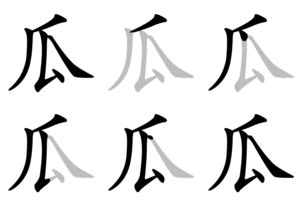 | |||
Han character
瓜 (radical 97 瓜+0, in Chinese 5 strokes, in Japanese 6 strokes, cangjie input 竹女戈人 (HVIO), four-corner 72230)
- Kangxi radical #97, ⽠.
Derived characters
References
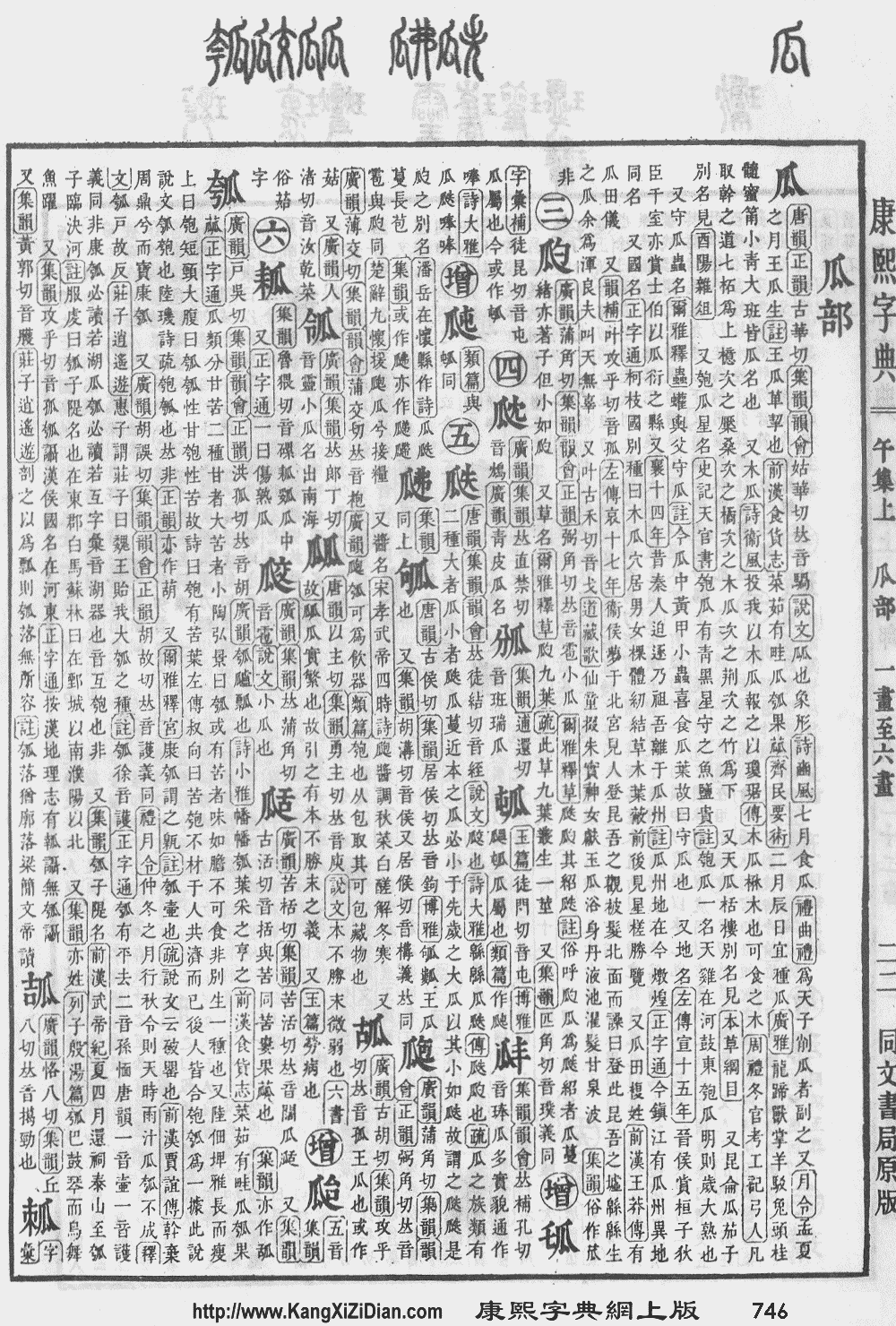
- KangXi: page 746, character 1
- Dai Kanwa Jiten: character 21371
- Dae Jaweon: page 1154, character 14
- Hanyu Da Zidian: volume 4, page 2654, character 1
- Unihan data for U+74DC
Chinese
| simp. and trad. |
瓜 | |
|---|---|---|
| alt. forms | 苽 | |
Glyph origin
| Historical forms of the character 瓜 | ||
|---|---|---|
| Western Zhou | Shuowen Jiezi (compiled in Han) | Liushutong (compiled in Ming) |
| Bronze inscriptions | Small seal script | Transcribed ancient scripts |
 |
 |
 |
| Characters in the same phonetic series (瓜) (Zhengzhang, 2003) | |
|---|---|
| Old Chinese | |
| 瓜 | *kʷraː |
| 坬 | *kʷraːs |
| 窊 | *qʷraː, *qʷraːs |
| 畖 | *qʷraː |
| 搲 | *qʷraːs |
| 攨 | *qʷraːs |
| 孤 | *kʷaː |
| 苽 | *kʷaː |
| 胍 | *kʷaː |
| 泒 | *kʷaː |
| 呱 | *kʷaː |
| 觚 | *kʷaː |
| 柧 | *kʷaː |
| 罛 | *kʷaː |
| 軱 | *kʷaː |
| 菰 | *kʷaː |
| 箛 | *kʷaː |
| 狐 | *ɡʷaː |
| 弧 | *ɡʷlaː |
Pronunciation
Definitions
瓜
Compounds
|
|
|
Japanese
Kanji
(“Jinmeiyō” kanji used for names)
Readings
- Goon: け (ke)←くゑ (kwe, historical)
- Kan’on: か (ka)←くわ (kwa, historical)
- Kun: うり (uri, 瓜)
Compounds
Etymology
| Kanji in this term |
|---|
| 瓜 |
| うり Jinmeiyō |
| kun’yomi |
From Old Japanese. Found in the Man'yōshū, compiled some time after 759 CE.
Possibly derived as the 連用形 (ren'yōkei, “continuative or stem form”) of verb 熟る (uru, “to ripen”), modern form 熟れる (ureru).
Possibly cognate with Korean 오이 (oi, “cucumber”); compare other terms in the Japonic family, such as Kikai 瓜 (ui) and Yoron 瓜 (ui).
Pronunciation
Noun
瓜 (hiragana うり, katakana ウリ, rōmaji uri)
Usage notes
As with many terms that name organisms, this term is often spelled in katakana, especially in biological contexts, as ウリ.
Idioms
- 瓜の蔓には茄子はならぬ (uri no tsuru ni wa nasubi wa naranu): “an eggplant won't grow on a gourd vine” → like father, like son, or the apple does not fall far from the tree
- 瓜を二つに割ったよう (uri o futatsu ni watta yō), 瓜を二つに割りたる如し (uri o futatsu ni waritaru gotoshi): “like a gourd split in two” → like two peas in a pod
- 瓜二つ (uri futatsu): “two gourds” → like two peas in a pod
- 瓜を二つに割らずそのまま (uri o futatsu ni warazu sono mama): “like a gourd that hasn't even been split in two” → like two peas in a pod, more emphatically
References
Kikai
Kanji
瓜 (hiragana うい, romaji ui)
Etymology
Cognate with mainland Japanese 瓜 (uri, “gourd, squash, melon”).
Noun
瓜 (hiragana うい, romaji ui)
Compounds
Korean
Hanja
瓜 • (gwa)
Vietnamese
Han character
- This term needs a translation to English. Please help out and add a translation, then remove the text
{{rfdef}}.
Yoron
Etymology
Cognate with mainland Japanese 瓜 (uri, “gourd, squash, melon”).
Kanji
瓜 (hiragana うい, romaji ui)
Noun
瓜 (hiragana うい, romaji ui)