過
See also: 过
| ||||||||
Translingual
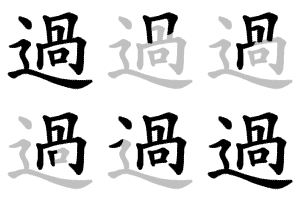
| Stroke order | |||
|---|---|---|---|
 | |||
| Japanese | 過 |
|---|---|
| Simplified | 过 |
| Traditional | 過 |
Alternative forms
Note that the box in the upper part of 咼 differs in simplified Chinese – in simplified Chinese fonts it is on the left, while in Japanese and traditional Chinese it is on the right.
Han character
過 (radical 162, 辵+8 in Chinese, 辵+9 in Japanese, 11 strokes in Chinese, 12 strokes in Japanese, cangjie input 卜月月口 (YBBR), four-corner 37302, composition ⿺辶咼)
References
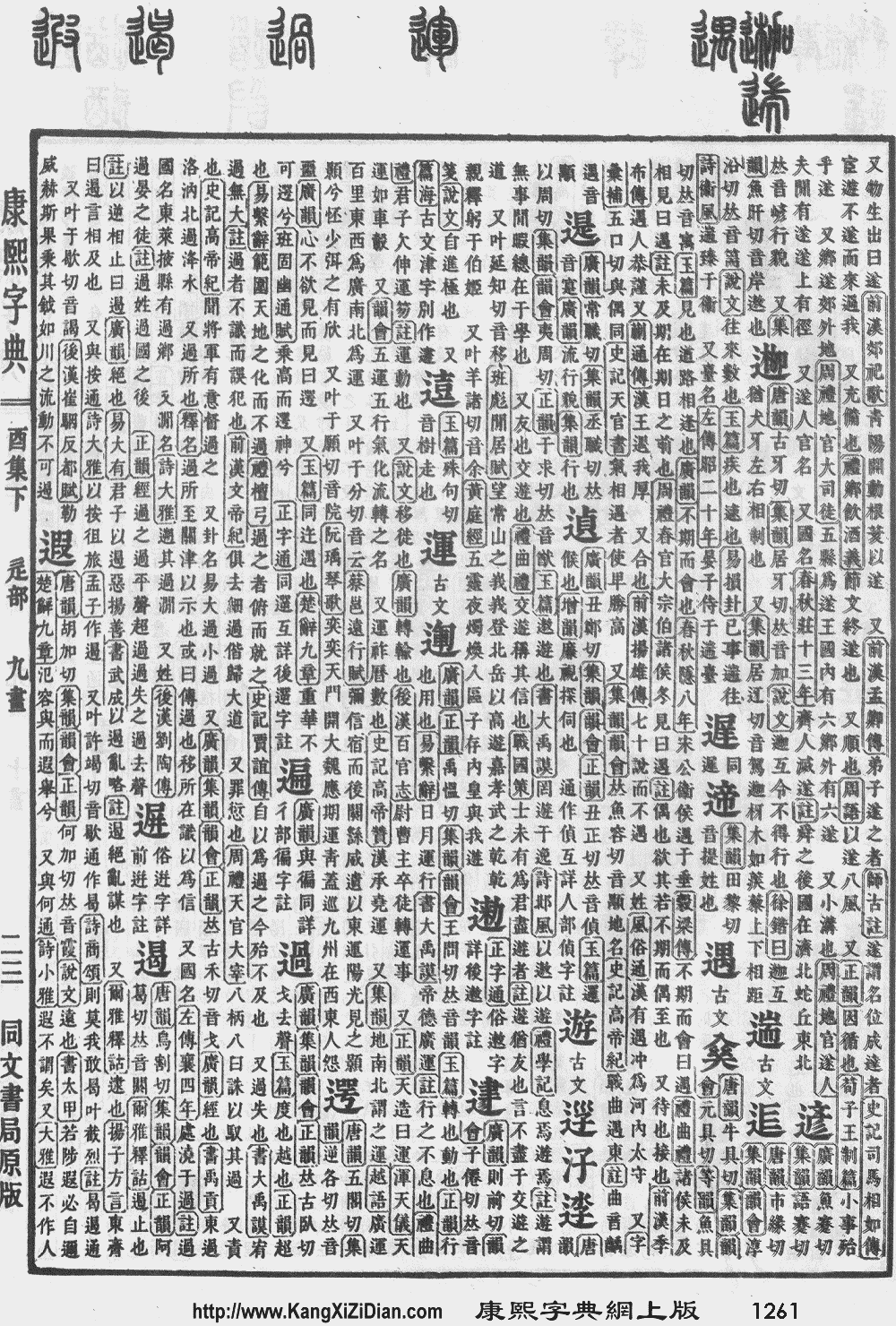
- KangXi: page 1261, character 22
- Dai Kanwa Jiten: character 39002
- Dae Jaweon: page 1753, character 6
- Hanyu Da Zidian: volume 6, page 3849, character 8
- Unihan data for U+904E
Chinese
| trad. | 過 | |
|---|---|---|
| simp. | 过 | |
| alt. forms | 𬨨 | |
Glyph origin
| Historical forms of the character 過 | |||
|---|---|---|---|
| Western Zhou | Warring States | Shuowen Jiezi (compiled in Han) | |
| Bronze inscriptions | Chu Slip and silk script | Qin slip script | Small seal script |
 |
 |
 |
 |
| Characters in the same phonetic series (冎) (Zhengzhang, 2003) | |
|---|---|
| Old Chinese | |
| 碢 | *l'oːl |
| 腡 | *ɡ·roːl, *kʷroːl |
| 過 | *kloːl, *kloːls |
| 渦 | *kloːl, *qloːl |
| 鍋 | *kloːl |
| 楇 | *kloːl, *ɡloːls |
| 瘑 | *kloːl |
| 緺 | *koːl, *kroːl, *kʷroːl |
| 堝 | *kloːl |
| 濄 | *kloːl, *qloːl |
| 鐹 | *kloːlʔ, *kloːls |
| 薖 | *kʰloːl |
| 簻 | *kʰloːl, *kr'oːl |
| 禍 | *ɡloːlʔ |
| 窩 | *qloːl |
| 萵 | *qloːl |
| 檛 | *kr'oːl |
| 膼 | *kr'oːl |
| 蝸 | *kroːl, *kʷroːl |
| 媧 | *kroːl, *kʷroːl |
| 騧 | *kroːl, *kʷroːl |
| 冎 | *kroːlʔ |
| 剮 | *kroːlʔ |
| 諣 | *qʰroːls, *qʰʷroːls |
| 歄 | *kʷroːl |
| 咼 | *kʰʷroːl |
| 喎 | *kʰʷroːl |
Phono-semantic compound (形聲, OC *kloːl, *kloːls) : semantic 辵 (“walk”) + phonetic 咼 (OC *kʰʷroːl).
Pronunciation 1
Definitions
過
- to cross; to pass; to go across; to pass through
- (of time) to pass by; to pass
- to spend time; to live
- to go over; to look at carefully; to go through
- to exceed; to surpass; to be over
- to pass an exam
- verbal complement
- adjectival complement
- too; excessively
- fault; blemish; mistake
Usage notes
Pronunciation 2
Definitions
過
- name of a creek
- name of an ancient state in modern Shandong
- A surname.
Pronunciation 3
Definitions
過
Compounds
Derived terms from 過
|
|
|
Descendants
Sino-Xenic (過):
Others:
- Hmong-Mien: *KʷajH (“to cross”)
- White Hmong: dhau
- Tai: *kwaːᴮ (“to cross over”)
Japanese
Kanji
過
Readings
- Goon: か (ka, Jōyō)←くわ (kwa, historical)
- Kan’on: か (ka, Jōyō)←くわ (kwa, historical)
- Kun: あやまつ (ayamatsu, 過つ, Jōyō); あやまち (ayamachi, 過ち, Jōyō); あやまち (ayamachi, 過); すぐ (sugu, 過ぐ); すぐす (sugusu, 過ぐす); すぐる (suguru, 過ぐる); すぎる (sugiru, 過ぎる, Jōyō); すぎ (sugi, 過); すごす (sugosu, 過ごす, Jōyō); すごす (sugosu, 過す); よぎる (yogiru, 過ぎる); よぎる (yogiru, 過る)
Korean
Hanja
過 • (gwa) (hangeul 과, revised gwa, McCune–Reischauer kwa, Yale kwa)
- 지날 과; last, past, have been, in time, later.
- 1.
- 2.
- 3.
- 4.
- 5.
- 1.
- 2.
- 3.
- 4.
- 5.
- 허물 과; an error, a fault, a misstep, a slip, a mistake.
- 기름통 과; an oil cask, an oilcan.
Vietnamese
Han character
- This term needs a translation to English. Please help out and add a translation, then remove the text
{{rfdef}}.
This article is issued from
Wiktionary.
The text is licensed under Creative Commons - Attribution - Sharealike.
Additional terms may apply for the media files.