低
| ||||||||
Translingual
| Stroke order | |||
|---|---|---|---|
 | |||
Han character
低 (radical 9, 人+5, 7 strokes, cangjie input 人竹心一 (OHPM) or 人竹女戈 (OHVI), four-corner 22240, composition ⿰亻氐)
References
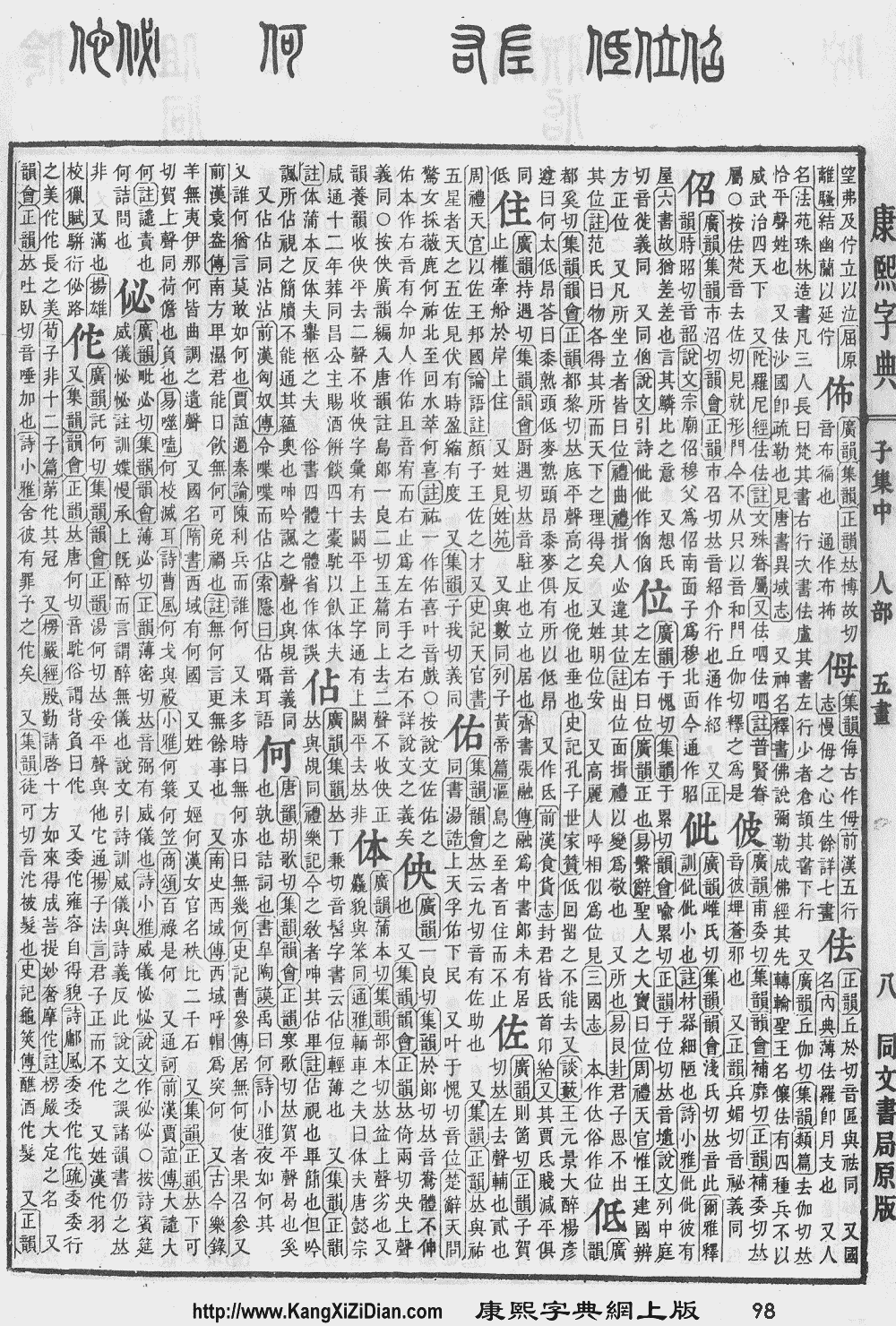
- KangXi: page 98, character 8
- Dai Kanwa Jiten: character 504
- Dae Jaweon: page 207, character 1
- Hanyu Da Zidian: volume 1, page 137, character 4
- Unihan data for U+4F4E
Chinese
| trad. | 低 | |
|---|---|---|
| simp. # | 低 | |
Glyph origin
| Historical forms of the character 低 | |
|---|---|
| |
|
References: Mostly from Richard Sears' Chinese Etymology site (authorisation),
|

| Characters in the same phonetic series (氐) (Zhengzhang, 2003) | |
|---|---|
| Old Chinese | |
| 低 | *tiːl |
| 氐 | *tiːl, *til |
| 袛 | *tiːl |
| 羝 | *tiːl |
| 眡 | *tiːl, *djilʔ |
| 岻 | *tiːl, *dil |
| 奃 | *tiːl |
| 趆 | *tiːl, *tiːls |
| 柢 | *tiːl, *tiːlʔ, *tiːls |
| 邸 | *tiːlʔ |
| 底 | *tiːlʔ |
| 詆 | *tiːlʔ, *diːl |
| 坻 | *tiːlʔ, *tjelʔ, *dil |
| 抵 | *tiːlʔ |
| 牴 | *tiːlʔ |
| 觝 | *tiːlʔ |
| 弤 | *tiːlʔ |
| 軧 | *tiːlʔ |
| 骶 | *tiːls |
| 砥 | *tjelʔ, *tjil, *tjilʔ, *tjils |
| 胝 | *til |
| 疷 | *til |
| 秪 | *til |
| 泜 | *dil |
| 蚳 | *dil |
| 彽 | *dil |
| 阺 | *dil |
| 貾 | *dil |
| 祗 | *tjil |
| 厎 | *tjilʔ, *tjɯʔ |
| 茋 | *tjilʔ |
| 鴟 | *tʰjil |
| 汦 | *kjeʔ, *tjil |
Phono-semantic compound (形聲, OC *tiːl) : semantic 亻 (“man, person”) + phonetic 氐 (OC *tiːl, *til) – a person lowering themselves, bowing.
Pronunciation
Definitions
低
Compounds
Derived terms from 低
|
|
|
See also
Japanese
Kanji
低
- low
- short
- humble
Readings
- Goon: たい (tai)
- Kan’on: てい (tei, Jōyō)
- Kun: ひくい (hikui, 低い, Jōyō); ひくまる (hikumaru, 低まる, Jōyō); ひくめる (hikumeru, 低める, Jōyō)
Korean
Hanja
低 • (jeo)
- 低廉 (저렴,jeoryeom) : cheap
- 低涑 (저속,jeosok) : slow
Vietnamese
Han character
- This term needs a translation to English. Please help out and add a translation, then remove the text
{{rfdef}}.
References
This article is issued from
Wiktionary.
The text is licensed under Creative Commons - Attribution - Sharealike.
Additional terms may apply for the media files.