右
| ||||||||
Translingual
| Stroke order | |||
|---|---|---|---|
 | |||
| Japanese stroke order | |||
|---|---|---|---|
 | |||
Han character
右 (radical 30, 口+2, 5 strokes, cangjie input 大口 (KR), four-corner 40600, composition ⿸𠂇口)
References
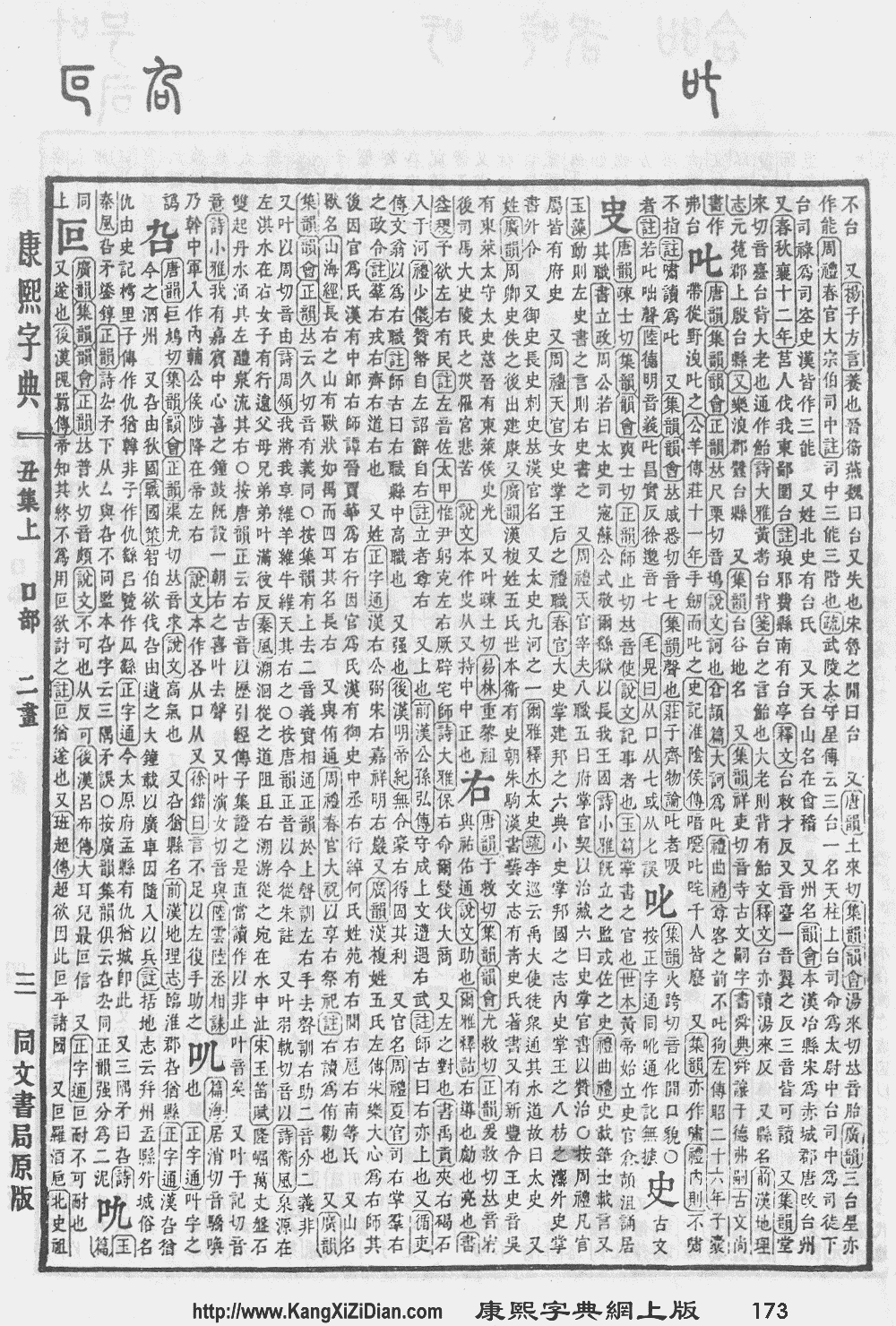
- KangXi: page 173, character 5
- Dai Kanwa Jiten: character 3250
- Dae Jaweon: page 385, character 1
- Hanyu Da Zidian: volume 1, page 569, character 1
- Unihan data for U+53F3
Chinese
| simp. and trad. |
右 | |
|---|---|---|
Glyph origin
| Historical forms of the character 右 | ||
|---|---|---|
| Western Zhou | Shuowen Jiezi (compiled in Han) | Liushutong (compiled in Ming) |
| Bronze inscriptions | Small seal script | Transcribed ancient scripts |
 |
 |
 |
| Characters in the same phonetic series (又) (Zhengzhang, 2003) | |
|---|---|
| Old Chinese | |
| 絠 | *kɯːʔ |
| 醢 | *qʰɯːʔ |
| 珛 | *qʰʷɯs |
| 栯 | *ɢʷɯʔ, *qʷɯ |
| 有 | *ɢʷɯʔ |
| 友 | *ɢʷɯʔ |
| 右 | *ɢʷɯʔ, *ɢʷɯs |
| 宥 | *ɢʷɯs |
| 囿 | *ɢʷɯs, *ɡʷɯ |
| 侑 | *ɢʷɯs |
| 酭 | *ɢʷɯs |
| 姷 | *ɢʷɯs |
| 又 | *ɢʷɯs |
| 佑 | *ɢʷɯs |
| 祐 | *ɢʷɯs |
| 賄 | *qʰʷɯːʔ |
| 蛕 | *qʰʷɯːʔ, *ɡʷɯː |
| 烠 | *ɡʷɯː |
| 倄 | *ɢraːw, *ɢʷɯːʔ |
| 鮪 | *ɢʷɯʔ |
| 洧 | *ɢʷɯʔ |
| 痏 | *ɢʷɯʔ |
| 郁 | *qʷɯ |
| 戫 | *qʷɯ |
| 哊 | *ɡʷɯ |
Originally 又 (OC *ɢʷɯs, “right hand”) in the oracle bone script.
In bronze inscriptions, a 口 (“mouth; speech”) component was added, perhaps with the intention of indicating the use of 又 (OC *ɢʷɯs, “again”) is a phonetic loan. In other words, the current form is a phono-semantic compound (形聲, OC *ɢʷɯʔ, *ɢʷɯs) : phonetic 又 (OC *ɢʷɯs) + semantic 口.
Etymology
From Proto-Sino-Tibetan *g-(j/r)a (“right (hand)”).
Pronunciation 1
Definitions
右
- right (direction)
- west; areas to the west
- (historical) right side as the side of precedence
- (politics) right-wing
- A surname.
Antonyms
- 左 (zuǒ, “left”)
Pronunciation 2
Definitions
右
Compounds
Japanese
Kanji
右
Readings
| Kanji in this term |
|---|
| 右 |
| みぎ Grade: 1 |
| kun’yomi |
Noun
- (direction) the right
- 1999 July 22, “封印されし者の右足 [Right Leg of the Sealed One]”, in Vol.4 (in Japanese), Konami:
- 封印された右足。封印を解くと、無限の力を得られる。
- Fūinsareta migiashi. Fūin o toku to, mugen no chikara o erareru.
- A sealed right leg. Whosoever breaks the seal shall earn infinite power.
- 封印された右足。封印を解くと、無限の力を得られる。
-
- above statement; foregoing
- (politics) the right wing; a rightist
Antonyms
Derived terms
- 右側 (migigawa)
- 右利き (migikiki)
- 右手 (migite)
- 右左 (migihidari)
- 右上 (migiue)
- 右下 (migishita)
- 右に同じ (migi ni onaji, “ditto”)
Korean
Hanja
右 • (u)
- This term needs a translation to English. Please help out and add a translation, then remove the text
{{rfdef}}.
Vietnamese
Han character
右 (hữu)
- This term needs a translation to English. Please help out and add a translation, then remove the text
{{rfdef}}.
This article is issued from
Wiktionary.
The text is licensed under Creative Commons - Attribution - Sharealike.
Additional terms may apply for the media files.