秋
| ||||||||
Translingual
| Stroke order | |||
|---|---|---|---|
 | |||
| Stroke order | |||
|---|---|---|---|
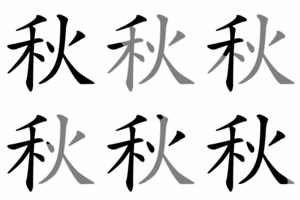 | |||
Han character
秋 (radical 115, 禾+4, 9 strokes, cangjie input 竹木火 (HDF), four-corner 29980, composition ⿰禾火)
Derived characters
- 鍬, 𤋦
References
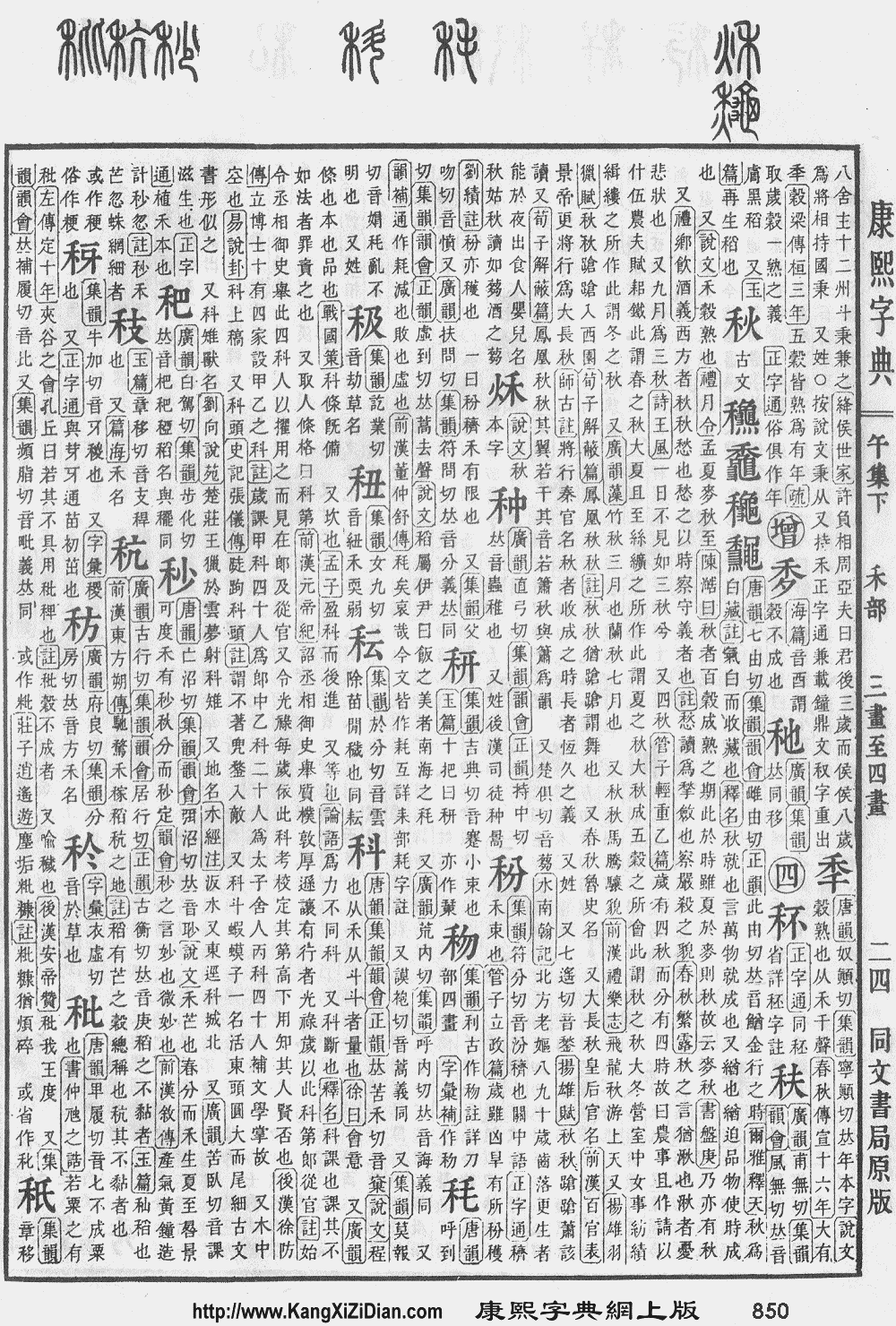
- KangXi: page 850, character 6
- Dai Kanwa Jiten: character 24940
- Dae Jaweon: page 1273, character 2
- Hanyu Da Zidian: volume 4, page 2595, character 5
- Unihan data for U+79CB
Chinese
Etymology 1
| simp. and trad. |
秋 | |
|---|---|---|
| alt. forms | ||
Glyph origin
| Historical forms of the character 秋 | |||||
|---|---|---|---|---|---|
| Shang | Warring States | Shuowen Jiezi (compiled in Han) | Liushutong (compiled in Ming) | ||
| Bronze inscriptions | Oracle bone script | Chu Slip and silk script | Qin slip script | Small seal script | Transcribed ancient scripts |
 |
 |
 |
 |
 |
 |
| Characters in the same phonetic series (秋) (Zhengzhang, 2003) | |
|---|---|
| Old Chinese | |
| 鍫 | *sʰew |
| 篍 | *sʰiw, *sʰiws, *sʰɯw |
| 愀 | *sʰiwʔ, *zɯwʔ |
| 湫 | *ʔsliwʔ, *ʔsɯw, *sʰɯw, *zɯwʔ |
| 揪 | *ʔsɯw |
| 揫 | *ʔsɯw |
| 啾 | *ʔsɯw |
| 鬏 | *ʔsɯw |
| 秋 | *sʰɯw |
| 鰍 | *sʰɯw |
| 楸 | *sʰɯw |
| 秌 | *sʰɯw |
| 鞦 | *sʰɯw |
| 鶖 | *sʰɯw |
| 萩 | *sʰɯw |
| 甃 | *ʔsrɯws |
| 醔 | *sʰrɯw |
| 愁 | *zrɯw |
| 僽 | *zrɯws |
Ideogrammic compound (會意) : 禾 (“grain”) + 火 (“fire”). The oracle bone forms and bronze inscriptions show the pictogram (象形) of a cricket.
Pronunciation
Definitions
秋
See also
| Seasons in Chinese · 四季 (sìjì, “four seasons”) (layout · text) | |||
|---|---|---|---|
| 春 (chūn, “spring”) | 夏 (xià, “summer”) | 秋 (“fall; autumn”) | 冬 (dōng, “winter”) |
Compounds
Derived terms from 秋
|
|
|
Etymology 2
| For pronunciation and definitions of 秋 – see 鞦 (“tr=-”). (This character, 秋, is the simplified form of 鞦.) |
Notes:
|
Japanese
Kanji
秋
Readings
Compounds
Etymology
| Kanji in this term |
|---|
| 秋 |
| あき Grade: 2 |
| kun’yomi |
From Old Japanese. Likely cognate with 明き (aki, “bright”), 赤 (aka, “red”), 飽きる (akiru, “to become full up”, possibly in reference to the harvest), 空く (aku, “to become empty”), 開く (aku, “to open up”). However, the exact relationship of these terms remains unclear.
Pronunciation
Noun
Synonyms
Derived terms
Derived terms
- 秋山 (akiyama): a mountain in autumn
See also
| Seasons in Japanese · 四季 (shiki, “four seasons”) (layout · text) | |||
|---|---|---|---|
| 春 (haru, “spring”) | 夏 (natsu, “summer”) | 秋 (aki, “fall; autumn”) | 冬 (fuyu, “winter”) |
References
Korean
Hanja
秋 • (chu)
- This term needs a translation to English. Please help out and add a translation, then remove the text
{{rfdef}}.
Vietnamese
Han character
秋 (thu)
- This term needs a translation to English. Please help out and add a translation, then remove the text
{{rfdef}}.
This article is issued from
Wiktionary.
The text is licensed under Creative Commons - Attribution - Sharealike.
Additional terms may apply for the media files.