目
| ||||||||
Translingual
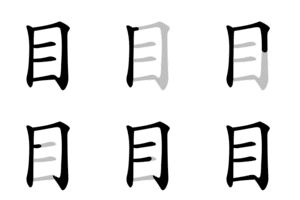
| Stroke order | |||
|---|---|---|---|
 | |||
Han character
目 (radical 109, 目+0, 5 strokes, cangjie input 月山 (BU), four-corner 60101)
- Kangxi radical #109, ⽬.
Derived characters
- Index:Chinese radical/目
- 冒
References
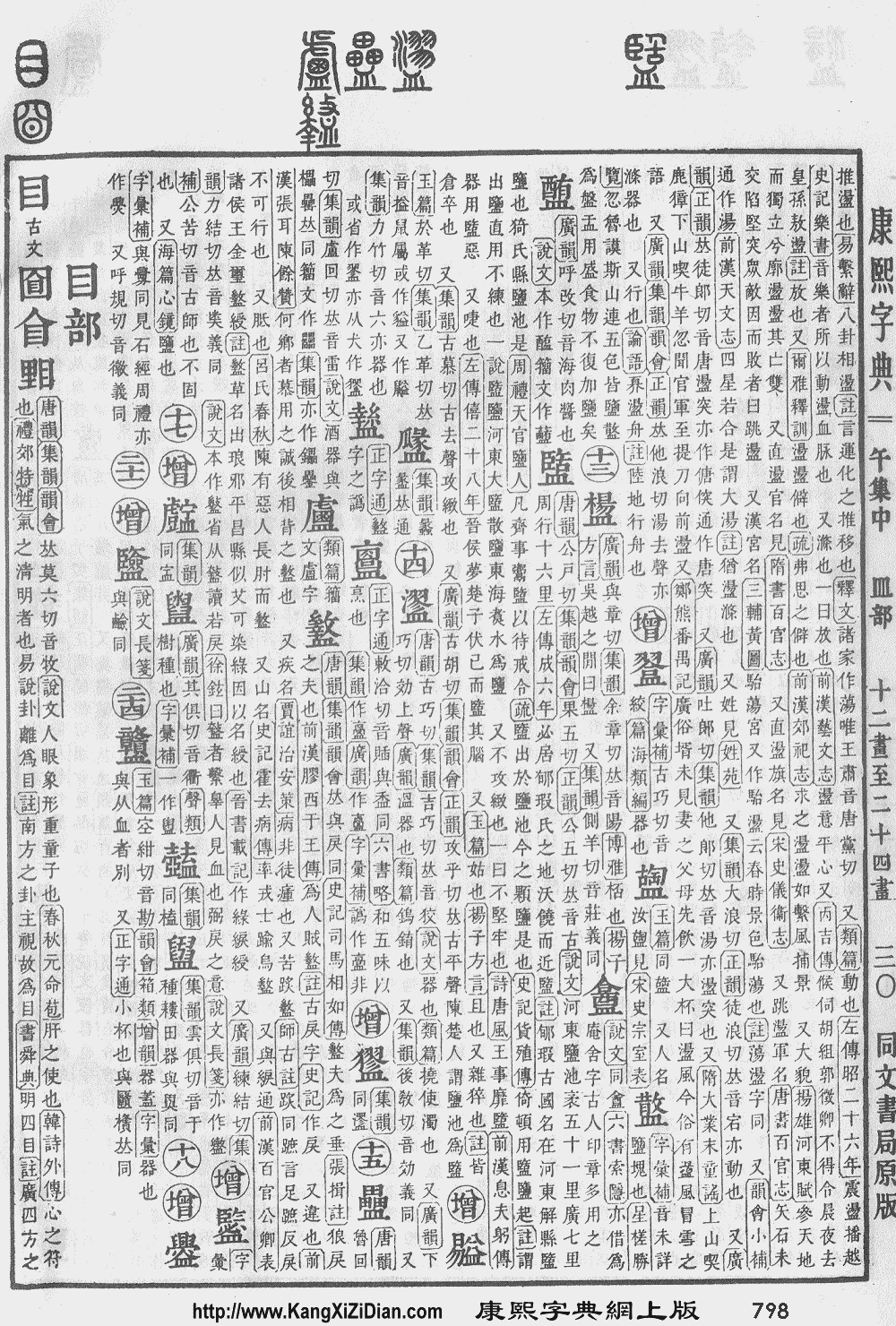
- KangXi: page 798, character 25
- Dai Kanwa Jiten: character 23105
- Dae Jaweon: page 1213, character 21
- Hanyu Da Zidian: volume 4, page 2467, character 1
- Unihan data for U+76EE
Chinese
| simp. and trad. |
目 | |
|---|---|---|
| alt. forms | 𥃦 𡇡 𥆤 | |
Glyph origin
| Historical forms of the character 目 | |||||
|---|---|---|---|---|---|
| Shang | Western Zhou | Warring States | Shuowen Jiezi (compiled in Han) | Liushutong (compiled in Ming) | |
| Oracle bone script | Bronze inscriptions | Qin slip script | Ancient script | Small seal script | Transcribed ancient scripts |
 |
 |
 |
 |
 |
 |
| Characters in the same phonetic series (目) (Zhengzhang, 2003) | |
|---|---|
| Old Chinese | |
| 瞐 | *mroːɡ |
| 苜 | *moːd, *muɡ |
| 目 | *muɡ |
Pictogram (象形) – human eye, now rotated 90 degrees. Compare the Egyptian hieroglyph 𓁹.
Etymology
From Proto-Sino-Tibetan *s-mjak ~ s-mik. Cognate with Tibetan མིག (mig, “eye”), Burmese မျက် (myak, “eye, face”).
Pronunciation
Definitions
目
- † (literary or Min) eye
- ⇒ 眼
- † eyesight
- † to look; to view; to see
- † to wink at
- † to judge; to comment on
- † opinion; viewpoint
- † to view as; to regard
- † hole; eyelet
- † item; entry
- † title; headline
- † section
- † list; catalogue; table of contents
- † name
- † target; goal
- † chief; head; leader
- (taxonomy) order
Synonyms
- (eye):
Compounds
|
|
|
Japanese
Kanji
Readings
Etymology 1
| Kanji in this term |
|---|
| 目 |
| ま Grade: 1 |
| kun’yomi |
From Old Japanese.[1] Older, unbound form of 目 (me2). Cognate with 見る (miru, “to see”). Never found in isolation in modern Japanese. Remains as the first syllable of various compounds.
Pronunciation
Noun
Derived terms
Etymology 2
| Kanji in this term |
|---|
| 目 |
| め Grade: 1 |
| kun’yomi |
⟨me2⟩ → *[məj] → /me/, [me]
From Old Japanese.[1] Shift from ma above, formed through fusion of 目 (ma, unbound form) + い (i, emphatic nominal particle). Now the modern Japanese term for eye.
May also be cognate with 芽 (me, “bud, shoot”),[1] perhaps from the “visually prominent feature” sense.
Pronunciation
Alternative forms
Noun
- an eye
- 目がかゆいです。
- Me ga kayui desu.
- My eyes feel itchy.
- 目がかゆいです。
- visually prominent feature of something:
- Short for 賽の目 (sai no me, “dice pip”).
- 2015 January 10, “悪魔のサイコロ [Demon’s Die]”, in 決闘者の栄光 -記憶の断片- side:武藤遊戯 [Duelist Road -Piece of Memory- side: Mutō Yūgi] (in Japanese), Konami:
- ①:サイコロを1回振る。相手フィールドのモンスターの攻撃力・守備力は、ターン終了時まで出た目の数×100ダウンする。
- Ichi: Saikoro o ikkai furu. Jibun fīrudo no monsutā no kōgekiryoku shubiryoku wa, tān shūryōji made deta me no kazu × hyaku appu suru.
- ①: Roll a die once. Until the end of this turn, the attack and defense strength of the monsters on your opponent’s field decreases by the result × 100.
- ①:サイコロを1回振る。相手フィールドのモンスターの攻撃力・守備力は、ターン終了時まで出た目の数×100ダウンする。
-
- experience
- Short for 賽の目 (sai no me, “dice pip”).
Derived terms
- 目垢 (meaka): eye gunk
- 目玉 (medama): eyeball
- 目糞 (mekuso), 目屎 (mekuso): eye gunk
- 盲 (mekura): blindness
- 横目 (yokome): sidelong glance
- 雪目 (yukime): snow blindness
- 茶目 (chame): playfulness
- 生真面目 (kimajime): person who is too serious
- 近眼 (chikame): nearsightedness
- 眼鏡 (megane): glasses
- 目付き (metsuki): look, expression of the eyes
- 片目 (katame): one eye
- 血眼 (chime): bloodshot eyes
- 遠眼鏡 (tōmegane): a telescope
- 黒眼鏡 (kuromegane): sunglasses, dark glasses
- 黒目 (kurome): a black iris, an eye with large pupils or irises
- 色眼鏡 (iromegane): colored glasses
- 虫眼鏡 (mushimegane): a magnifying glass
- 猫目石 (nekomeishi): a cat's eye (jewel)
- 目脂 (meyani): eye gunk
- 目尻 (mejiri): the corner of an eye
- 眼医者 (meisha): an eye doctor
- 眼鏡屋 (meganeya): an optician
- 眼鏡橋 (meganebashi): an arched bridge
- 赤目 (akame): red eyes
- パンダ目 (pandame): black eye
Suffix
Etymology 3
| Kanji in this term |
|---|
| 目 |
| もく Grade: 1 |
| on’yomi |
From Middle Chinese 目. Go'on, so likely an older borrowed reading. Compare modern Cantonese reading muk6, or modern Wu /mʊʔ¹²/.
Pronunciation
Noun
- (taxonomy) an order in biology: smaller than a class, bigger than a family
- a playing piece in a board game, a stone in the game of go
- a point in the game of go
Derived terms
- 目迎 (mokugei): turning one's gaze towards the direction from which someone is coming
- 目撃 (mokugeki): witnessing something
- 目今 (mokukon): also mokkon:
- 目算 (mokusan): eyeballing something, making a visual estimate or calculation of something
- 目視 (mokushi): looking at something with one's own eyes
- 目次 (mokuji): a table of contents
- 目笑 (mokushō): smiling with one's eyes; smiling at one another, catching another's eye and smiling or laughing
- 目睫 (mokushō): eyes and eyelashes; extremely close by
- 目睫の間 (mokushō no kan): the space between the eyes and eyelashes; extremely close by
- 目食耳視 (mokushoku jishi): "eating with one's eyes, looking with one's ears" → choosing foods based on what they look like instead of their taste, and choosing fashions based on what people say instead of how comfortable they are → all style and no substance
- 目銭 (mokusen): a kind of tax levied in the Kamakura and Muromachi periods; a tax on sake bottles; a property tax based on the area of agricultural land
- 目前 (mokuzen): right before one's eyes, right away, imminent, immediate
- 目送 (mokusō): following something or someone with one's eyes
- 目測 (mokusoku): eyeballing a distance or length
- 目代 (mokudai): an agent or executor of a lord starting from the late Heian period; an on-site official or deputy starting from the Kamakura period; a local administrator in the Edo period
- 目的 (mokuteki): intent, purpose, goal, objective
- 目途 (mokuto): mark, guide, target
- 目睹 (mokuto): uncommon alternative for mokugeki: witnessing something
- 目標 (mokuhyō): target, goal, aim; landmark
- 目礼 (mokurei): greeting or acknowledging someone with one's eyes
- 目録 (mokuroku): a list, a catalog
- 目論見 (mokuromi), 目論 (mokuromi): a plan, a scheme, a design, a plot
- 目論む (mokuromu): to plan, to scheme, to design, to plot
- 目割 (mokuware): a plot, conspiracy, or other hidden plan being exposed or found out
- 細目 (saimoku): details, particulars, breakdown
- 真面目 (shinmenmoku): also shinmenboku: the real appearance or worth of something; serious
- 新面目 (shinmenmoku): also shinmenboku: a new appearance or look for something
- 不面目 (fumenmoku): alternate reading for fumenboku: dishonor, loss of face
- 面目 (menmoku): alternate reading for menboku: one's honor, one's metaphorical face; external appearance
Verb
目する (hiragana もくする, rōmaji moku suru)
Conjugation
| Stem forms | ||||
|---|---|---|---|---|
| Imperfective (未然形) | 目し | もくし | moku shi | |
| Continuative (連用形) | 目し | もくし | moku shi | |
| Terminal (終止形) | 目する | もくする | moku suru | |
| Attributive (連体形) | 目する | もくする | moku suru | |
| Hypothetical (仮定形) | 目すれ | もくすれ | moku sure | |
| Imperative (命令形) | 目せよ¹ 目しろ² |
もくせよ¹ もくしろ² |
moku seyo¹ moku shiro² | |
| Key constructions | ||||
| Passive | 目される | もくされる | moku sareru | |
| Causative | 目させる 目さす |
もくさせる もくさす |
moku saseru moku sasu | |
| Potential | 目できる | もくできる | moku dekiru | |
| Volitional | 目しよう | もくしよう | moku shiyō | |
| Negative | 目しない | もくしない | moku shinai | |
| Negative continuative | 目せず | もくせず | moku sezu | |
| Formal | 目します | もくします | moku shimasu | |
| Perfective | 目した | もくした | moku shita | |
| Conjunctive | 目して | もくして | moku shite | |
| Hypothetical conditional | 目すれば | もくすれば | moku sureba | |
| ¹ Written imperative ² Spoken imperative | ||||
Etymology 4
| Kanji in this term |
|---|
| 目 |
| ぼく Grade: 1 |
| on’yomi |
From Middle Chinese 目. Kan'on, so likely a later borrowed reading. Compare modern Min Nan reading bo̍k.
Only used in compounds.
Pronunciation
Affix
- an eye
- a look or appearance
Derived terms
- 瞬目 (shunboku): the blink of an eye, a moment, an instant
- 真面目 (shinmenboku): alternate reading for shinmenmoku: the real appearance or worth of something; serious
- 新面目 (shinmenboku): alternate reading for shinmenmoku: a new appearance or look for something
- 不面目 (fumenboku): also fumenmoku: dishonor, loss of face
- 面目 (meiboku): alternate reading for menboku (see below)
- 面目 (menboku): also menmoku: one's honor, one's metaphorical face; external appearance
References
Korean
Hanja
References
Northern Amami-Oshima
Etymology
Kanji
Noun
Okinawan
Etymology
Kanji
Noun
Derived terms
Southern Amami-Oshima
Etymology
Kanji
Noun
Derived terms
Toku-No-Shima
Etymology
Kanji
Noun
Vietnamese
Han character
- This term needs a translation to English. Please help out and add a translation, then remove the text
{{rfdef}}.