明
See also: 日月
| ||||||||
Translingual
| Stroke order | |||
|---|---|---|---|
 | |||
Han character
明 (radical 72, 日+4, 8 strokes, cangjie input 日月 (AB), four-corner 67020, composition ⿰日月)
References
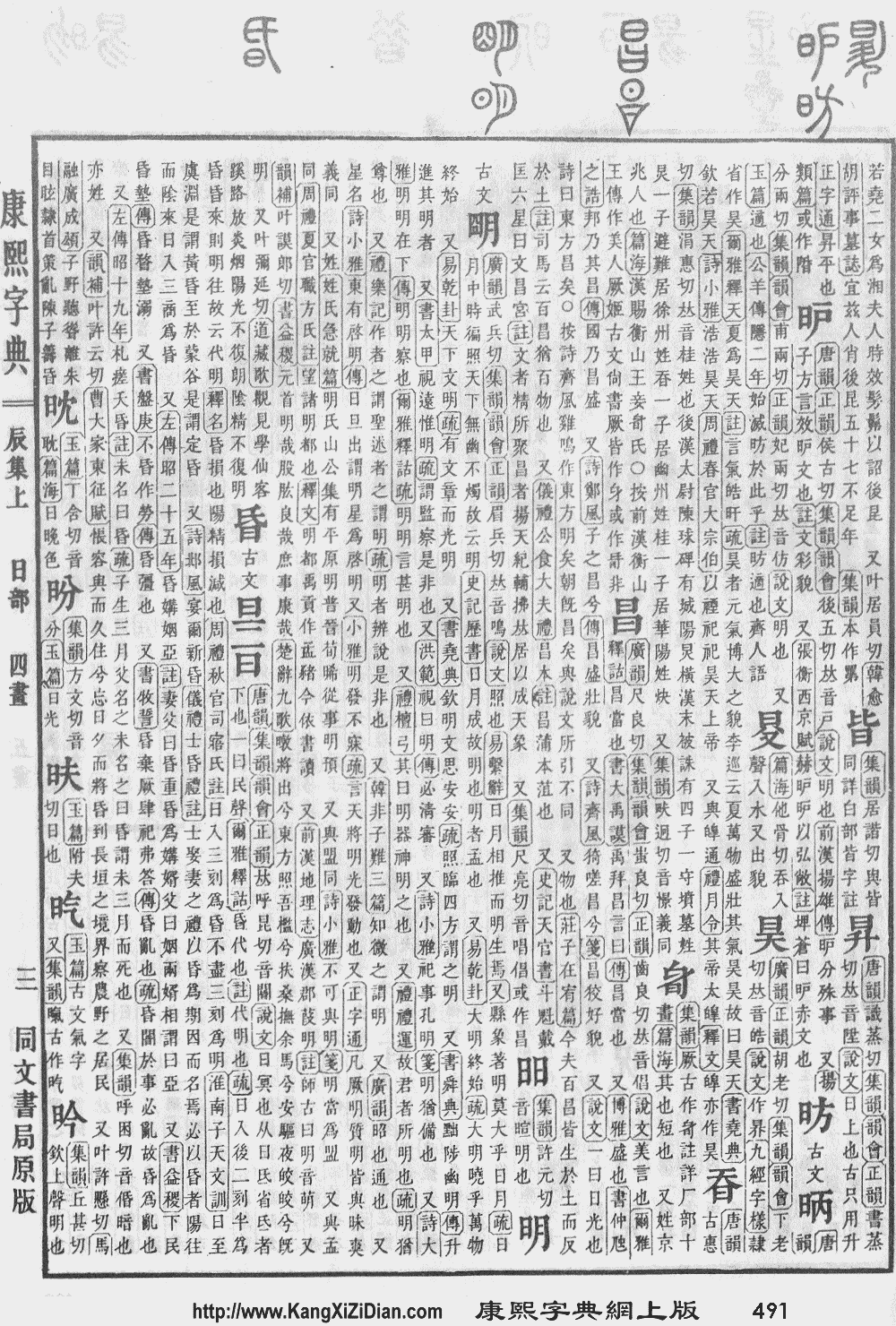
- KangXi: page 491, character 12
- Dai Kanwa Jiten: character 13805
- Dae Jaweon: page 852, character 18
- Hanyu Da Zidian: volume 2, page 1491, character 8
- Unihan data for U+660E
Chinese
| simp. and trad. |
明 | |
|---|---|---|
| alt. forms | 朙 眀 𤰾 | |
Glyph origin
| Historical forms of the character 明 | ||||
|---|---|---|---|---|
| Shang | Western Zhou | Warring States | Shuowen Jiezi (compiled in Han) | Liushutong (compiled in Ming) |
| Oracle bone script | Bronze inscriptions | Chu Slip and silk script | Small seal script | Transcribed ancient scripts |
 |
 |
 |
 |
 |
| Characters in the same phonetic series (明) (Zhengzhang, 2003) | |
|---|---|
| Old Chinese | |
| 莔 | *mraːŋ, *qʰɯd |
| 明 | *mraŋ |
| 盟 | *mraŋ, *mraːŋs |
| 萌 | *mreːŋ |
| 奣 | *ʔmraːŋʔ |
Ideogrammic compound (會意) : 日 (“sun”) + 月 (“moon”) – the sun just rising and the moon not yet set – dawn (天明). Alternatively, it may be interpreted as two bright celestial bodies – bright. This form was already found in the oracle bone script and was prevalent throughout the eras.
Three other forms were found in the oracle bone script:
- 朙 < 囧 (“window”) + 月 – the moon shining through a window – moonlight. This form was also prevalent in the ancient scripts and was considered to be the standard form in Shuowen. See this form's entry for its historical forms.
- 眀 < 目 (“eye”) + 月 – bright eyes. This form was rarely attested, so it is still uncertain whether this form is actually equivalent to 明. It reappeared in the bamboo script of the Qin dynasty, but this was probably a corruption of 朙.
- 𤰾 < 田 + 月 – probably a corruption of the above forms.
Pronunciation
Definitions
明
- bright; light; brilliant
- clear; limpid
- tomorrow
- next; following
- to understand
- (~朝) Ming dynasty
- A surname, listed as #111 on the Baijiaxing
- (~母) (phonology) a Middle Chinese initial and the 'Phags-pa script letter ꡏ (m-)
See also
Compounds
Derived terms from 明
|
|
|
Japanese
Kanji
明
Readings
- Goon: みょう (myō, Jōyō)←みやう (myau, historical)
- Kan’on: めい (mei, Jōyō)
- Tōon: みん (min)
- Kun: あかるい (akarui, 明るい, Jōyō); あきらか (akiraka, 明らか, Jōyō); あける (akeru, 明ける, Jōyō); あかす (akasu, 明かす, Jōyō); あくる (akuru, 明くる, Jōyō); あからむ (akaramu, 明らむ, Jōyō); あかり (akari, 明かり, Jōyō); あかるむ (akarumu, 明るむ, Jōyō); あく (aku, 明く, Jōyō)
- Nanori: あ (a); あか (aka); あかり (akari); あかる (akaru); あき (aki); あきら (akira); あけ (ake); あける (akeru); きよし (kiyoshi); くに (kuni); さとし (satoshi); てる (teru); とおる (tōru); とし (toshi); なお (nao); のり (nori); はじめ (hajime); はる (haru); ひろ (hiro); み (mi); みつ (mitsu); よし (yoshi)
Compounds
Derived terms
Proper noun
明 (hiragana あきら, rōmaji Akira)
- A male given name
Korean
Hanja
明 • (myeong) (hangeul 명, revised myeong, McCune–Reischauer myŏng, Yale myeng)
- This term needs a translation to English. Please help out and add a translation, then remove the text
{{rfdef}}.
Vietnamese
Han character
明 (minh)
- This term needs a translation to English. Please help out and add a translation, then remove the text
{{rfdef}}.
This article is issued from
Wiktionary.
The text is licensed under Creative Commons - Attribution - Sharealike.
Additional terms may apply for the media files.