唐
| ||||||||
Translingual
Han character
唐 (radical 30, 口+7, 10 strokes, cangjie input 戈中口 (ILR), four-corner 00267, composition ⿸广⿱肀口)
Derived characters
References
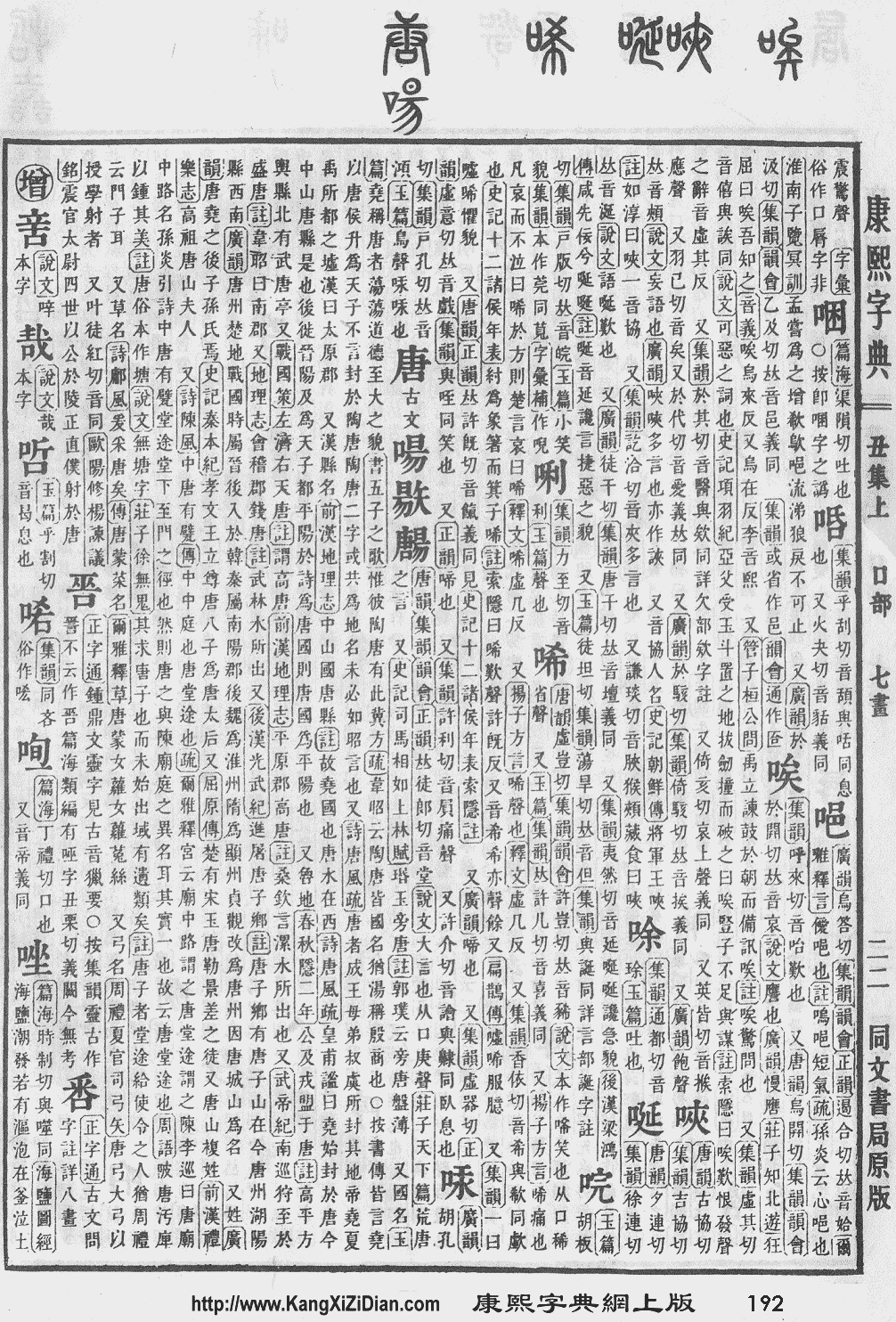
- KangXi: page 192, character 12
- Dai Kanwa Jiten: character 3709
- Dae Jaweon: page 411, character 20
- Hanyu Da Zidian: volume 1, page 633, character 5
- Unihan data for U+5510
Chinese
| simp. and trad. |
唐 | |
|---|---|---|
Glyph origin
| Characters in the same phonetic series (庚) (Zhengzhang, 2003) | |
|---|---|
| Old Chinese | |
| 唐 | *ɡl'aːŋ |
| 煻 | *l'aːŋ |
| 糖 | *l'aːŋ |
| 搪 | *l'aːŋ |
| 蓎 | *l'aːŋ |
| 瑭 | *l'aːŋ |
| 餹 | *l'aːŋ |
| 篖 | *l'aːŋ |
| 螗 | *l'aːŋ |
| 塘 | *l'aːŋ |
| 鶶 | *l'aːŋ |
| 赯 | *l'aːŋ |
| 磄 | *l'aːŋ |
| 溏 | *l'aːŋ |
| 傏 | *l'aːŋ |
| 鎕 | *l'aːŋ |
| 榶 | *l'aːŋ |
| 嵣 | *l'aːŋʔ, *l'aːŋs |
| 庚 | *kraːŋ |
| 賡 | *kraːŋ |
| 鹒 | *kraːŋ |
| 康 | *kʰlaːŋ |
| 穅 | *kʰlaːŋ |
| 糠 | *kʰlaːŋ |
| 槺 | *kʰlaːŋ |
| 漮 | *kʰlaːŋ |
| 躿 | *kʰlaːŋ |
| 慷 | *kʰlaːŋʔ |
Phono-semantic compound (形聲, OC *ɡl'aːŋ) : phonetic 庚 (OC *kraːŋ) + semantic 口 (“mouth”) – to exaggerate, to boast. 唐 and 庚 were near-homophones in Old Chinese.
Pronunciation
Definitions
唐
- † to exaggerate; to boast
- † exaggerative; boastful
- † vast; wide; extensive
- † road inside temple
- † in vain; to no avail
- 50th tetragram of the Taixuanjing
- (~朝) Tang Dynasty
- (figuratively) China
- A surname.
See also
Compounds
Japanese
Kanji
Readings
(Can we verify(+) this pronunciation?)
Compounds
Etymology 1
| Kanji in this term |
|---|
| 唐 |
| とう Grade: S |
| on’yomi |
/tau/ → /tɔː/ → /toː/
From Middle Chinese 唐 (MC dɑŋ).
Pronunciation
Noun
唐 (hiragana とう, rōmaji tō, historical hiragana たう)
Derived terms
Idioms
- 唐へ投げ銀 (tō e nage-gane)
Proper noun
唐 (hiragana とう, rōmaji Tō, historical hiragana たう)
- (historical) name of various Chinese dynasties:
- the Tang dynasty (618-907 CE)
- the 後唐 (Kōtō, “Later Tang”) (923-937 CE)
- the 後唐 (Nantō, “Southern Tang”) (937–976 CE)
- (dated) China in general
Derived terms
Etymology 2
| Kanji in this term |
|---|
| 唐 |
| から Grade: S |
| kun’yomi |
From Old Japanese.
Shift from 漢 (Kara), the name of China during the Han dynasty (202 BCE-220 CE), the use of this kanji signifies the transition to the Tang dynasty.
Originally meant "China" during the Tang dynasty and "elements imported from China", then later expanded to mean "foreign lands in general" and "elements imported from foreign lands".
Pronunciation
Prefix
唐 (hiragana から, rōmaji kara-)
Derived terms
Noun
Proper noun
- (formal, dated) the name of China during the Tang dynasty (618-907 CE}
Derived terms
See also
- 漢 (Kara, usually "China in the Han dynasty")
- 韓 (Kara, usually "Korea")
- 加羅, 伽羅, 迦羅 (Kara, “the Gaya confederacy”, original derivation)
- 呉 (Kure, “China during the Wu dynasty”)
Etymology 3
| Kanji in this term |
|---|
| 唐 |
| もろこし Grade: S |
| kun’yomi |
⟨mo2ro2 ko1si⟩ → ⟨moro2ko1si⟩ → */morəkosi/ → /morokoɕi/
From Old Japanese, first attested in the Man'yōshū (c. 753 CE).
Originally a compound of 諸 (moro-, prefix meaning "many") + 越 (koshi), the 連用形 (ren'yōkei, “stem or continuative form”) of 越す (kosu, “to cross (over)”),[2] by reinterpretation of kun-reading 越 (koshi) from on-reading of 越 (Etsu, “(state of) Yue”).[3]
Pronunciation
Alternative forms
Noun
唐 (hiragana もろこし, rōmaji morokoshi)
Derived terms
Proper noun
唐 (hiragana もろこし, rōmaji Morokoshi)
References
Korean
Hanja
唐 • (dang) (hangeul 당, McCune–Reischauer tang)
- Tang dynasty
- Chinese
Vietnamese
Han character
唐 (Đường, đường, đằng, đàng, giềng)
- This term needs a translation to English. Please help out and add a translation, then remove the text
{{rfdef}}.