萌
See also: 萠
| ||||||||
Translingual
Han character
萌 (radical 140, 艸+8, 11 strokes, cangjie input 廿日月 (TAB), four-corner 44627, composition ⿱艹明)
Derived characters
- 𢅆, 橗, 𫄁, 𬠫, 𧾆, 𬝡, 𢡗
References
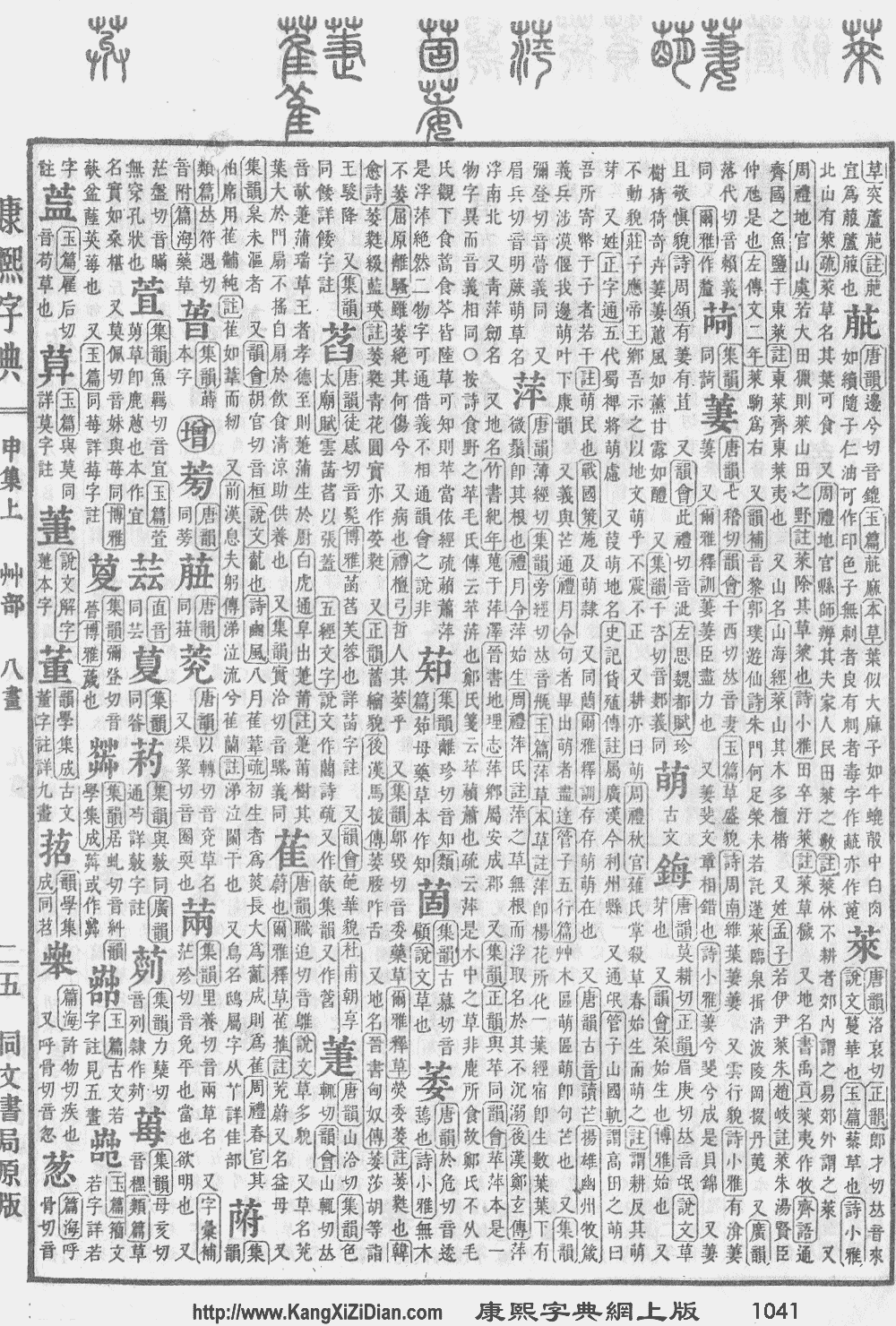
- KangXi: page 1041, character 5
- Dai Kanwa Jiten: character 31265
- Dae Jaweon: page 1499, character 26
- Hanyu Da Zidian: volume 5, page 3233, character 14
- Unihan data for U+840C
Chinese
| trad. | 萌 | |
|---|---|---|
| simp. # | 萌 | |
Glyph origin
| Characters in the same phonetic series (明) (Zhengzhang, 2003) | |
|---|---|
| Old Chinese | |
| 莔 | *mraːŋ, *qʰɯd |
| 明 | *mraŋ |
| 盟 | *mraŋ, *mraːŋs |
| 萌 | *mreːŋ |
| 奣 | *ʔmraːŋʔ |
Phono-semantic compound (形聲, OC *mreːŋ) : semantic 艸 (“grass; plant”) + phonetic 明 (OC *mraŋ).
Etymology
- “to bud; to begin”
- Compare Lepcha ᰖᰮ (mlam, “shoots that sprout from stump of tree”) (Schuessler, 2007).
Pronunciation
Definitions
萌
Compounds
|
Japanese
Kanji
萌
(“Jinmeiyō” kanji used for names)
- showing symptom
- sprout, bud, malt
- fascination; infatuation
Readings
- Goon: みょう (myō)←みやう (myau, historical)
- Kan’on: もう (mō)←まう (mau, historical)
- Kan’yōon: ほう (hō)←はう (fau, historical); ぼう (bō)←ばう (bau, historical)
- Kun: きざし (kizashi, 萌し); きざす (kizasu, 萌す); めばえ (mebae, 萌); もえ (moe, 萌); もえる (moeru, 萌える)←もゆ (moyu, historical)
- Nanori: ほの (hono)
Proper noun
- A female given name.
Korean
Hanja
萌 • (maeng) (hangeul 맹, revised maeng, McCune–Reischauer maeng, Yale mayng)
- This term needs a translation to English. Please help out and add a translation, then remove the text
{{rfdef}}.
Vietnamese
Han character
- This term needs a translation to English. Please help out and add a translation, then remove the text
{{rfdef}}.
This article is issued from
Wiktionary.
The text is licensed under Creative Commons - Attribution - Sharealike.
Additional terms may apply for the media files.