晉
See also: 晋
| ||||||||
Translingual
| Japanese | 晋 |
|---|---|
| Simplified | 晋 |
| Traditional | 晉 |
Han character
晉 (radical 72, 日+6, 10 strokes, cangjie input 一戈戈日 (MIIA), four-corner 10601, composition ⿱⿳一⿰厶厶一日)
References
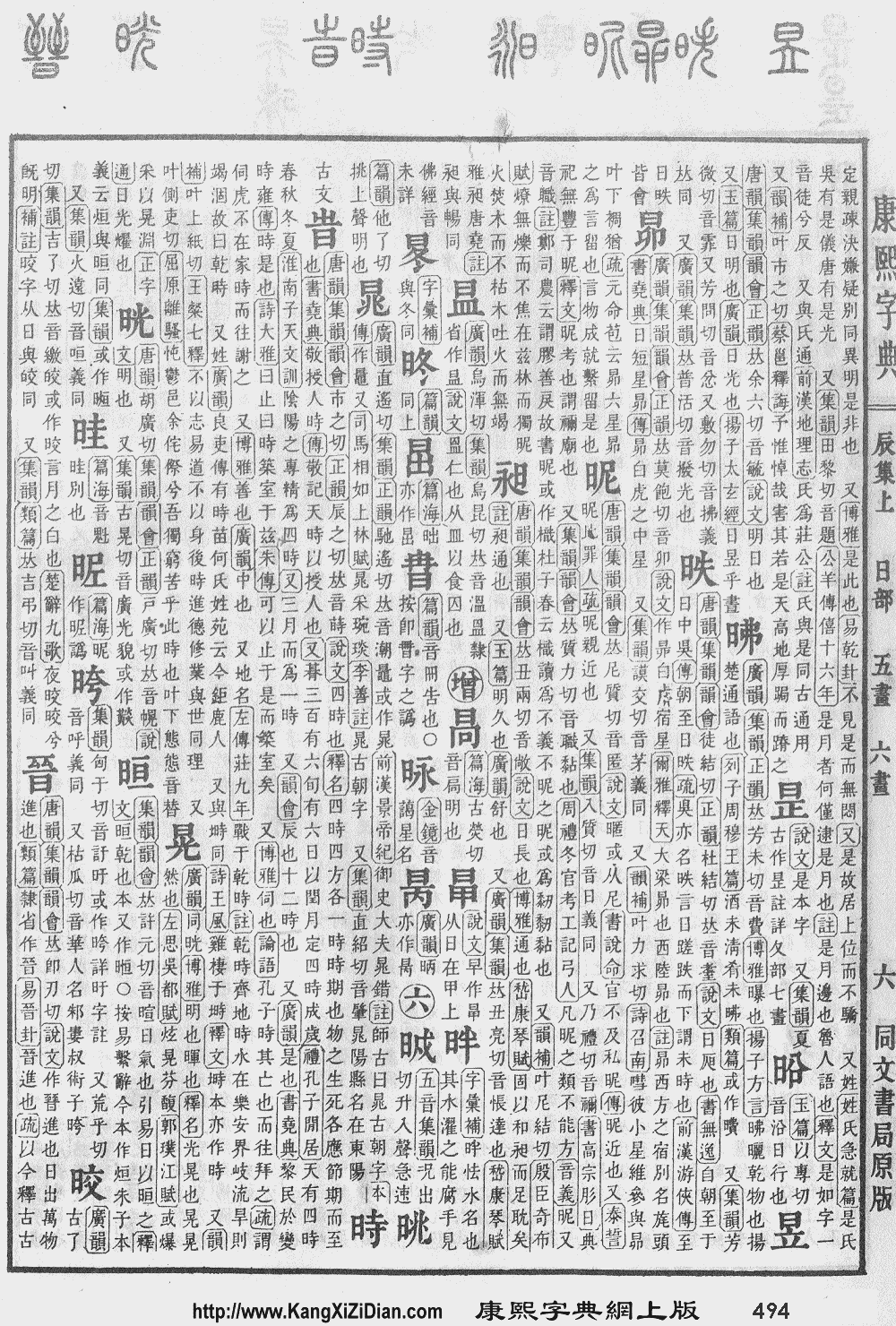
- KangXi: page 494, character 31
- Dai Kanwa Jiten: character 13898
- Dae Jaweon: page 860, character 7
- Hanyu Da Zidian: volume 2, page 1507, character 3
- Unihan data for U+6649
Chinese
| trad. | 晉 | |
|---|---|---|
| simp. | 晋 | |
| alt. forms | 㬜 𫞄 | |
Glyph origin
| Characters in the same phonetic series (晉) (Zhengzhang, 2003) | |
|---|---|
| Old Chinese | |
| 鄑 | *ʔsel |
| 戩 | *ʔsenʔ |
| 榗 | *ʔsens |
| 晉 | *ʔsins |
| 縉 | *ʔsins |
| 搢 | *ʔsins |
| 瑨 | *ʔsins |
Pronunciation
Definitions
晉
- to advance; to increase
- to promote
- (~國) Chinese feudal state of Jin (11th century BCE–376 BCE), a state of the Zhou Dynasty in northern China
- (~朝) Chinese Jin dynasty (265-420)
- 35th hexagram of the I Ching
- Alternative name for 山西 (Shānxī, “Shanxi”).
See also
Compounds
Japanese
Kanji
晉
Readings
Usage notes
Alternative form of 晋 (Jinmeiyō kanji used for names).
Korean
Hanja
晉 • (jin) (hangeul 진, revised jin, McCune–Reischauer chin, Yale cin)
- This term needs a translation to English. Please help out and add a translation, then remove the text
{{rfdef}}.
Vietnamese
Han character
- This term needs a translation to English. Please help out and add a translation, then remove the text
{{rfdef}}.
This article is issued from
Wiktionary.
The text is licensed under Creative Commons - Attribution - Sharealike.
Additional terms may apply for the media files.