晋
| ||||||||
Translingual
| Japanese | 晋 |
|---|---|
| Simplified | 晋 |
| Traditional | 晉 |
Han character
晋 (radical 72, 日+6, 10 strokes, cangjie input 一金日 (MCA), composition ⿱亚日)
- advance, increase
- promote
- Chinese feudal state of Jin (11th century BCE – 376 BCE), a state of the Zhou Dynasty in northern China
- Chinese Jin dynasty (265–420)
- 35th hexagram of the I Ching
- Shanxi province
References
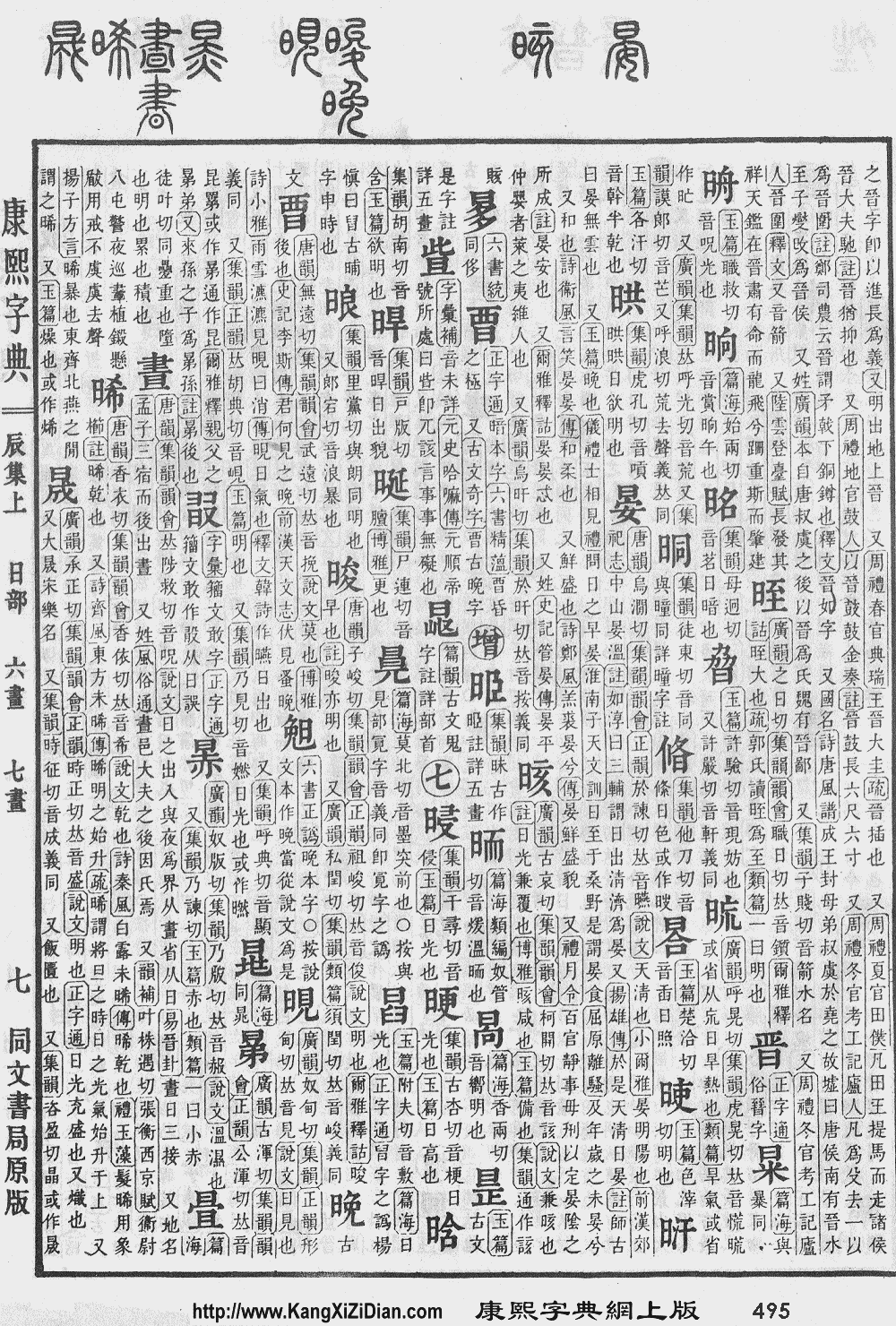
- KangXi: page 495, character 2
- Dai Kanwa Jiten: character 13899
- Dae Jaweon: page 860, character 8
- Hanyu Da Zidian: volume 2, page 1506, character 3
- Unihan data for U+664B
Usage notes
This character is listed in the Kangxi dictionary (正字通) as an unorthodox form (俗字) of 㬜, which is a variant character of 晉.
Chinese
| For pronunciation and definitions of 晋 – see 晉 (“to advance; to increase; to promote; etc.”). (This character, 晋, is the simplified and variant form of 晉.) |
Notes:
|
Usage notes
Found also in calligraphic works of 颜真卿 (Tang dynasty).
Japanese
Kanji
(“Jinmeiyō” kanji used for names)
Readings
Compounds
Etymology 1
| Kanji in this term |
|---|
| 晋 |
| しん Jinmeiyō |
| on’yomi |
*/t͡sin/ → /siɴ/ → /ɕiɴ/
From Middle Chinese 晉 (MC t͡siɪnH).
Proper noun
- (historical) the Chinese state of Jin (c. 11th century–376 BCE) during the Zhou dynasty
- (historical) the Jin dynasty (266–420 CE)
- the 西晋 (Seishin, “Western Jin”, 266–316 CE)
- the 東晋 (Tōshin, “Eastern Jin”, 317–420 CE)
- Synonym: 晋朝 (Jin-chō)
- (historical) the Later Jin (936-947 CE), one of the Five Dynasties
- Synonym: 後晉 (Kōshin, Goshin)
- a surname
- a unisex given name.
Etymology 2
| Kanji in this term |
|---|
| 晋 |
| すすむしん Jinmeiyō |
| kun’yomi |
Compound of 進む (susumu, “to proceed”) + 晋 (Shin, “Jin”).
The 晋 kanji itself has a kun'yomi of susumu.
Pronunciation
Usage notes
This reading is used to distinguish from the kan'on-reading of 秦 (Shin, “Qin dynasty”), itself called 秦 (Hata-shin). The senses are the same for Etymology 1 above.
Etymology 3
| Kanji in this term |
|---|
| 晋 |
| すすみ Jinmeiyō |
| kun’yomi |
Nominalization of the 連用形 (ren'yōkei, “stem or continuative form”) of verb 進む (susumu, “to proceed”).
Proper noun
晋 (hiragana すすみ, rōmaji Susumi)
- a unisex given name.
Etymology 4
| Kanji in this term |
|---|
| 晋 |
| すすむ Jinmeiyō |
| kun’yomi |
Nominalization of 進む (susumu, “to proceed”).
Proper noun
晋 (hiragana すすむ, rōmaji Susumu)
- a unisex given name.