米
| ||||||||
Translingual
| Stroke order | |||
|---|---|---|---|
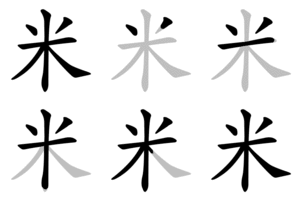 | |||
Han character
米 (radical 119, 米+0, 6 strokes, cangjie input 火木 (FD), four-corner 90904, composition ⿻丷木)
- Kangxi radical #119, ⽶.
Derived characters
References
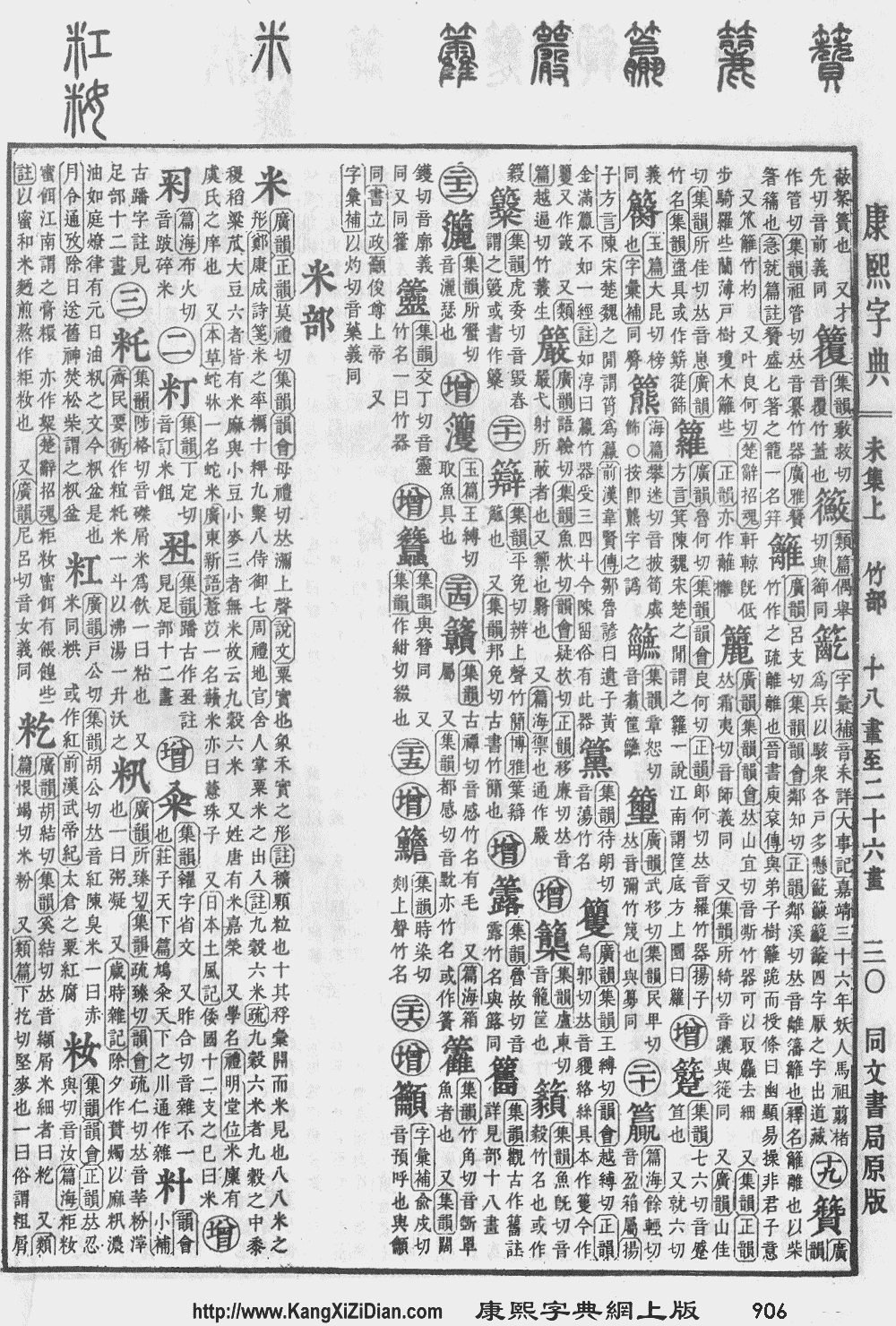
- KangXi: page 906, character 31
- Dai Kanwa Jiten: character 26832
- Dae Jaweon: page 1331, character 28
- Hanyu Da Zidian: volume 5, page 3141, character 1
- Unihan data for U+7C73
Chinese
| simp. and trad. |
米 | |
|---|---|---|
Glyph origin
| Historical forms of the character 米 | |||||
|---|---|---|---|---|---|
| Shang | Western Zhou | Warring States | Shuowen Jiezi (compiled in Han) | Liushutong (compiled in Ming) | |
| Oracle bone script | Bronze inscriptions | Chu Slip and silk script | Qin slip script | Small seal script | Transcribed ancient scripts |
 |
 |
 |
 |
 |
 |
| Characters in the same phonetic series (米) (Zhengzhang, 2003) | |
|---|---|
| Old Chinese | |
| 謎 | *miː, *miːs |
| 迷 | *miː |
| 米 | *miːʔ |
| 眯 | *miːʔ |
| 洣 | *miːʔ |
| 蔝 | *miːʔ |
| 麊 | *me |
| 冞 | *me |
| 糜 | *mral |
| 敉 | *meʔ |
| 侎 | *meʔ |
| 麋 | *mril |
| 蘪 | *mril |
| 攗 | *mril |
Etymology
- “uncooked rice; husked seed; etc.”
- From Proto-Sino-Tibetan *ma-j ~ mej (“rice; paddy”). Cognate with Garo mi, Atong (India) mai.
- “metre”
- Short for 米突 (mǐtū), from English metre.
Pronunciation
Definitions
米
Compounds
|
|
|
See also
Japanese
Kanji
- husked rice grains
- meter, metre (SI unit of length)
- Short for 亜米利加 (Amerika): America, American, Americas, Americo-
- Short for 亜米利加合衆国 (Amerika Gasshūkoku): the United States
- eighty-eight-year-old
Readings
- Goon: まい (mai, Jōyō)
- Kan’on: べい (bei, Jōyō)
- Kun: こめ (kome, 米, Jōyō); めめ (meme, 米); よね (yone, 米); メートル (mētoru, 米)
- Nanori: こん (kon); たから (takara); めい (mei)
Compounds
- 米原 (Maibara)
- 米塩 (beien)
- 米価 (beika)
- 米軍 (Beigun)
- 米国 (Beikoku, “the United States”)
- 米穀 (beikoku)
- 米作 (beisaku)
- 米寿 (beiju)
- 米粟 (beizoku)
- 米栂 (beitsuga)
- 米飯 (beihan)
- 米粉 (beifun)
- 赤米 (akamai)
- 入り米 (irimai)
- 欧米 (Ō-Bei)
- 外国米 (gaikokumai), 外米 (gaimai)
- 供米 (kyōmai)
- 供米 (kumai)
- 玄米 (genmai)
- 黒米 (kokumai)
- 五斗米 (gotobei)
- 散米 (sanmai)
- 産米 (sanmai)
- 舂米 (shōmai)
- 親米 (shin-Bei)
- 新米 (shinmai)
- 神米 (shinmai)
- 精白米 (seihakumai)
- 精米 (seimai)
- 洗米 (senmai)
- 饌米 (senmai)
- 大唐米 (daitōmai)
- 渡米 (to-Bei)
- 内地米 (naichimai)
- 南米 (Nanbei, “South America”)
- 日米 (Nichi-Bei)
- 白米 (hakumai)
- 平米 (heibei, “square meter, square metre”)
- 北米 (Hokubei, “North America”)
- 立米 (ryūbei, “cubic meter, cubic metre”)
- 禄米 (rokumai)
- 早稲米 (wasemai)
- 糈米 (kumashine)
- 米粉 (bīfun, “rice vermicelli”)
Etymology 1
| Kanji in this term |
|---|
| 米 |
| こめ Grade: 2 |
| kun’yomi |
⟨ko2me2⟩ → */kəməj/ → /kome/
From Old Japanese.
Many theories exist regarding the ultimate derivation:
- From 籠め (kome), the 連用形 (ren'yōkei, “stem or continuative form”) of verb 籠める (komeru, “do with one's heart”), from the way rice is farmed.
- Possibly borrowed from Korean, or other Asian language. Compare Vietnamese cơm (“cooked rice”)
Pronunciation
Noun
- rice (husked grains of the Asian rice plant, Oryza sativa), one of the five grains
- Hypernym: 五穀 (gokoku)
Derived terms
- 米揚げ (komeage)
- 米揚げ笊 (komeage zaru)
- 米油 (kome abura)
- 米市 (komeichi)
- 米占 (komeura)
- 米浙 (komekashi)
- 米浙桶 (komekashi oke)
- 米噛み
- 米茅 (komegaya)
- 米粉 (komeko)
- 米麹 (kome kōji)
- 米座 (komeza)
- 米刺し, 米差し (komesashi)
- 米将軍 (Kome Shōgun)
- 米酢 (kome-su), 米酢 (komezu)
- 米代 (komedai)
- 米俵, 米苞 (kome-dawara)
- 米栂 (kometsuga)
- 米搗き, 米舂き (kometsuki)
- 米粒 (kometsubu)
- 米糠 (komenuka)
- 米偏 (komehen)
- 米屋 (komeya)
- 赤米 (akagome)
- 煎り米, 炒り米 (irigome)
- 粳米 (urugome)
- 生米 (kigome)
- 黒米, 玄米 (kurogome)
- 小米, 粉米 (kogome)
- 白米 (shirogome)
- 大唐米 (daito-gome)
- 大唐米 (daitō-gome)
- 搗き米, 舂き米 (tsukigome)
- 生米 (namagome)
- 碾き米 (hikigome)
- 陳米 (hinegome)
- 蓑米 (minogome)
- 糯米, 餅米 (mochigome)
- 籾米 (momigome)
- 焼米, 焼き米, 糄 (yakigome)
- 闇米 (yamigome)
- 早稲米 (wasagome)
Proverbs
- 米の飯とお天道様はどこへ行っても付いて回る (kome no meshi to o-tentō-sama wa doko e itte mo tsuite mawaru)
- 乞食が米を零したよう (kojiki ga kome o koboshita yō)
- 糠を舐りて米に及ぶ (nuka o neburi te kome ni oyobu)
- 熊野松風は米の飯 (Yuya Matsukaze wa kome no meshi)
Coordinate terms
- 五穀 (gokoku, “five grains”): 米 (kome, “rice”), 麦 (mugi, “wheat”), 粟 (awa, “foxtail millet”), 黍 (kibi, “proso millet”), 豆 (mame, “soybeans”)
See also
Proper noun
米 (hiragana こめ, rōmaji Kome)
- a female given name
- a surname
Etymology 2
| Kanji in this term |
|---|
| 米 |
| めめ Grade: 2 |
| kun’yomi |
Attested around the Edo period.
Probably a shortened reduplication of kome (see above). (Can this(+) etymology be sourced?)
Noun
米 (hiragana めめ, rōmaji meme)
Etymology 3
| Kanji in this term |
|---|
| 米 |
| よね Grade: 2 |
| kun’yomi |
⟨yo2ne⟩ → */jəne/ → /jone/
First attested in the Wamyō Ruijushō (938 CE).
Possibly a shift from Old Japanese 稲 (ine, “rice plant”). (Can this(+) etymology be sourced?)
The colloquial sense is derived from the components of the 米 kanji: 八 (hachi, “eight”) + 十 (jū, “ten”) + 八 (hachi, “eight”).
Noun
米 (hiragana よね, rōmaji yone)
- the Asian rice plant, Oryza sativa
- Synonym: 稲 (ine)
- rice (husked grains of the Asian rice plant, Oryza sativa)
- (colloquial) an eighty-eight-year-old
- Synonym: 米寿 (beiju)
Derived terms
- 米市 (Yoneichi)
- 米占 (yoneura)
- 米川 (Yonekawa)
- 米沢 (Yonezawa)
- 米代 (Yoneshiro)
- 米酢 (yonezu)
- 米の祝い (yone no iwai)
- 米の守り (yone no mamori)
- 米原 (Yonehara)
- 米饅頭 (yone manjū)
- 米山 (Yoneyama)
- 米琉 (Yone-Ryū)
- 洗い米 (arai yone)
- 売り米, 糶 (uriyone)
- 買い米, 糴 (kaiyone)
- 粿米, 淅米 (kashiyone)
- 精げ米 (shirage yone)
- 白米 (shirayone)
- 散らし米 (chirashi yone)
- 籾米 (momiyone)
Proper noun
米 (hiragana よね, rōmaji Yone)
- a female given name
- a surname
Etymology 4
| Kanji in this term |
|---|
| 米 |
| めーとる Grade: 2 |
| kun’yomi |
Borrowing from French mètre.[1]
The use of this kanji is attested in the Meiji period and is an example of ateji (当て字).
Pronunciation
Noun
米 (katakana メートル, rōmaji mētoru)
- Rare spelling of メートル (mētoru): meter, metre (SI unit of length)
- Rare spelling of メーター (mētā): a device or implement used for measurement
Derived terms
- 粍 (mirimētoru, “millimeter, millimetre”)
- 糎 (senchimētoru, “centimeter, centimetre”)
- 粉 (deshimētoru, “decimeter, decimetre”)
- 籵 (dekamētoru, “decameter, decametre”)
- 粨 (hekutomētoru, “hectometer, hectometre”)
- 粁 (kiromētoru, “kilometer, kilometre”)
Coordinate terms
See also
References
|
- Source: EDICT and KANJIDIC files licensed by the Electronic Dictionaries Research Group.
Korean
Hanja
米 • (mi) (hangeul 미, McCune–Reischauer mi, Yale mi)
- This term needs a translation to English. Please help out and add a translation, then remove the text
{{rfdef}}.
Vietnamese
Han character
米 (mè, mễ)
- This term needs a translation to English. Please help out and add a translation, then remove the text
{{rfdef}}.