丷
| ||||||||
Translingual
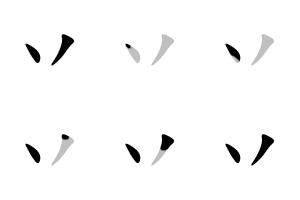
| Stroke order | |||
|---|---|---|---|
 | |||
Han character
丷 (radical 3, 丶+1, 2 strokes, cangjie input 戈竹 (IH) or X戈竹 (XIH), four-corner 80000, composition ⿰丶丿)
References
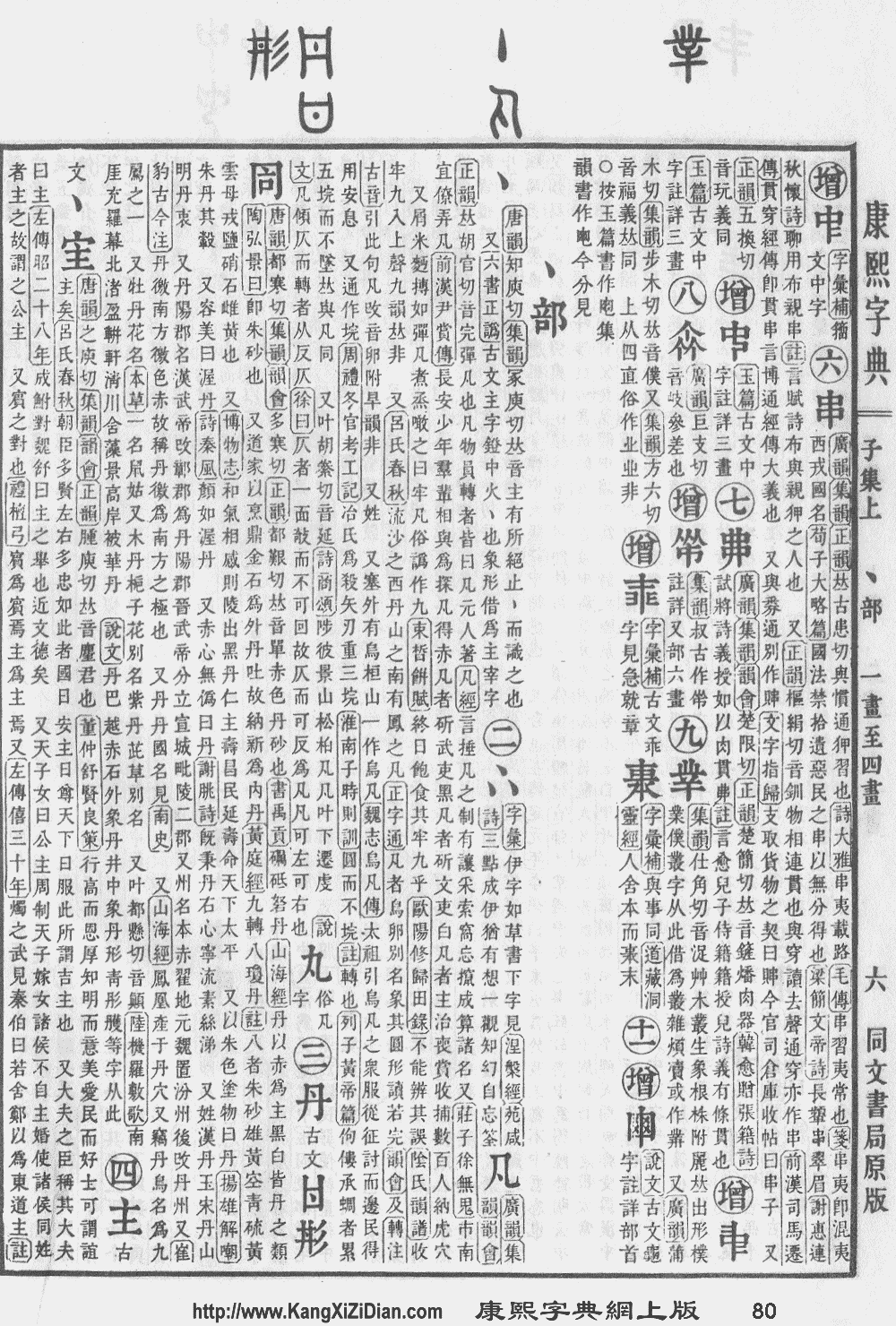
- KangXi: not present, would follow page 80, character 12
- Dae Jaweon: not present, would follow page 162, character 21
- Hanyu Da Zidian: not present, would follow volume 1, page 42, character 9
- Unihan data for U+4E37
Chinese
| simp. and trad. |
丷 | |
|---|---|---|
Pronunciation
Definitions
丷
- Component variant of 八.
Korean
Etymology
The character 為 (爲) (위, halq wi) is reduced to its top part.
Particle
丷 • (ha, McCune-Reischauer: ha, Yale: ha, ho) (hangeul 하)
- to do (suffix to make verbs)
- to be (suffix to make adjectives)
Usage notes
- The "ho" reading is was used in Middle Korean only.
- This is a kwukyel note. Kwukyel was a system formerly used in Korea whereby correct interpretation of texts written in Classical Chinese was aided by small interspersed notes such as this one. The notes represent Korean morphemes but were only used within Chinese text.
Vietnamese
Han character
丷 (bát)
- This term needs a translation to English. Please help out and add a translation, then remove the text
{{rfdef}}.
References
This article is issued from
Wiktionary.
The text is licensed under Creative Commons - Attribution - Sharealike.
Additional terms may apply for the media files.