瓦
| ||||||||
Translingual
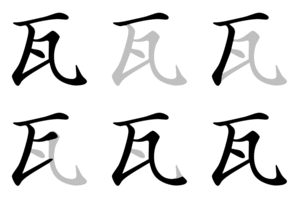
| Stroke order | |||
|---|---|---|---|
 | |||
Han character
瓦 (radical 98, 瓦+0, 4 strokes, cangjie input 一女弓戈 (MVNI), four-corner 10717)
- Kangxi radical #98, ⽡.
Derived characters
- Index:Chinese radical/瓦
References
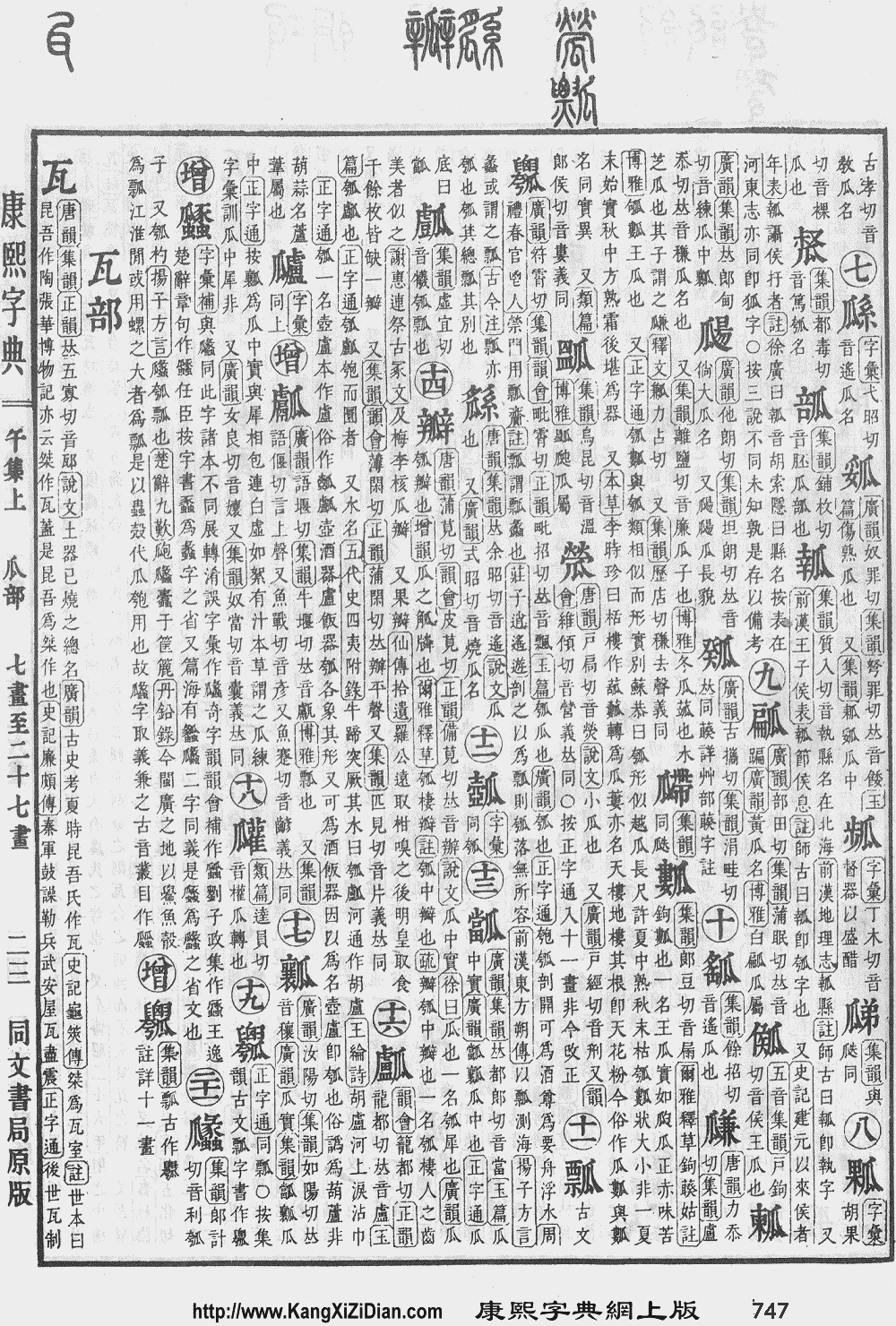
- KangXi: page 747, character 36
- Dai Kanwa Jiten: character 21438
- Dae Jaweon: page 1156, character 5
- Hanyu Da Zidian: volume 2, page 1421, character 3
- Unihan data for U+74E6
Chinese
| simp. and trad. |
瓦 | |
|---|---|---|
| alt. forms | 𪜂 | |
Glyph origin
| Historical forms of the character 瓦 | ||
|---|---|---|
| Warring States | Shuowen Jiezi (compiled in Han) | Liushutong (compiled in Ming) |
| Chu Slip and silk script | Small seal script | Transcribed ancient scripts |
 |
 |
 |
| Characters in the same phonetic series (瓦) (Zhengzhang, 2003) | |
|---|---|
| Old Chinese | |
| 瓦 | *ŋʷraːlʔ, *ŋʷraːls |
| 邷 | *ŋʷraːlʔ |
Pictogram (象形) – fired earthenware pottery, or a tile.
Pronunciation 1
Definitions
瓦
- earthenware; earthenware pottery
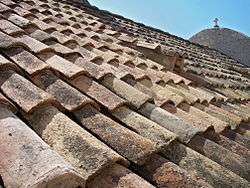
- tile (roof covering)
- (historical) back of shield (arching, as if it is covered by tile)
- (historical) amusement park; market
- (historical, dialectal) protecting plate of wheel
- (music) Alternative name for 土 (tǔ, “earth”).
- Ancient placename in modern Hua County, Henan.
- Short for 瓦特 (wǎtè, “watt”).
- A surname.
Compounds
|
|
|
Pronunciation 2
Definitions
瓦
Compounds
|
Japanese
Kanji
Readings
- Goon: げ (ge)←げ (ge, historical)←ぐゑ (gwe, ancient)
- Kan’on: が (ga, Jōyō)←ぐわ (gwa, historical)
- Kun: かわら (kawara, 瓦, Jōyō)←かはら (kafara, historical); グラム (guramu, 瓦)
Compounds
Etymology 1
| Kanji in this term |
|---|
| 瓦 |
| かわら Grade: S |
| kun’yomi |
/kapara/ → /kaɸara/ → /kawara/
Probably from Sanskrit कपालः (kapāla, “cup, bowl, skull”),[1][2] possibly via 迦波羅 (MC kɨɑ|kˠa puɑ lɑ). Along with Buddhism, roof tiles came to Japan in the Asuka period.
Cognate with 骨, 䯊 (kawara, “a bone, particularly a covering bone such as a skull or kneecap”).
Folk etymologies include:
- from 変わら (kawara), the 未然形 (mizenkei, “incomplete form”) of verb 変わる (kawaru, “to change”), from the idea that tiles were produced by changing the clay into pottery through firing
Pronunciation
Noun
Etymology 2
Abbreviation of transliterated ateji (当て字) spelling 瓦蘭姆 (guramu), attested in the Meiji period. The term グラム (guramu) itself was borrowed from either English gram or French gramme.[1][2]
Once considered a 国字 (kokuji, “national character”, a kanji coined in Japan), another example being 瓲 (ton, “ton, tonne”).
Pronunciation
Noun
Derived terms
- 瓲 (miriguramu, “milligram, milligramme”)
- 甅 (senchiguramu, “centigram, centigramme”)
- 瓰 (deshiguramu, “decigram, decigramme”)
- 瓧 (dekaguramu, “decagram, decagramme”)
- 瓸 (hekutoguramu, “hectogram, hectogramme”)
- 瓩 (kiroguramu, “kilogram, kilogramme”)
References
Korean
Hanja
瓦 • (wa) (hangeul 와, revised wa, McCune–Reischauer wa, Yale wa)
- This term needs a translation to English. Please help out and add a translation, then remove the text
{{rfdef}}.
Vietnamese
Han character
- This term needs a translation to English. Please help out and add a translation, then remove the text
{{rfdef}}.