飯
See also: 饭
| ||||||||
| ||||||||
Translingual
Han character
飯 (radical 184, 食+4, 13 strokes in Chinese, 12 strokes in Japanese, cangjie input 人戈竹水 (OIHE), four-corner 81747, composition ⿰飠反(GHTJV) or ⿰𩙿反(K))
References
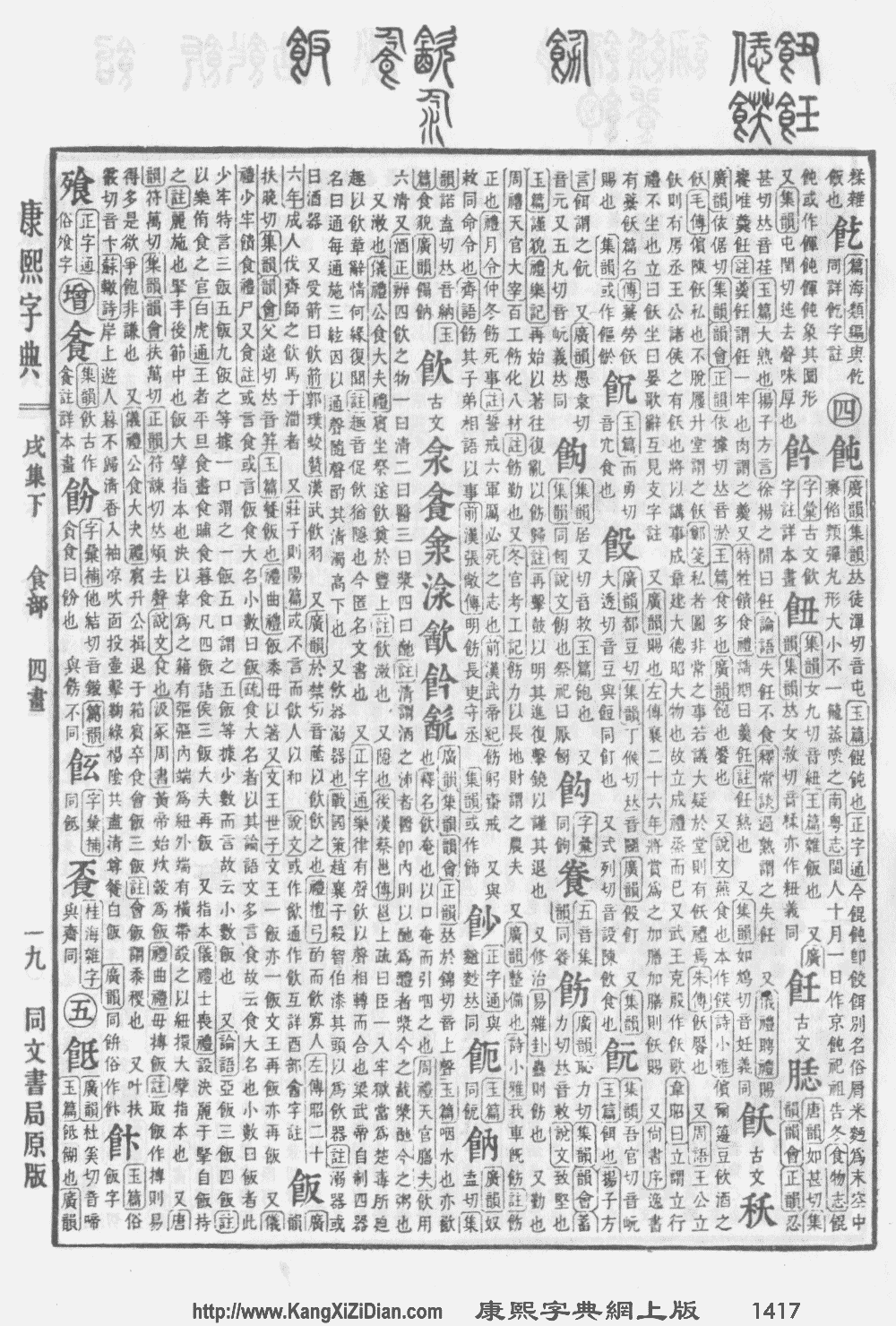
- KangXi: page 1417, character 27
- Dai Kanwa Jiten: character 44064
- Dae Jaweon: page 1941, character 21
- Hanyu Da Zidian: volume 7, page 4444, character 5
- Unihan data for U+98EF
Chinese
| trad. | 飯 | |
|---|---|---|
| simp. | 饭 | |
Glyph origin
| Characters in the same phonetic series (反) (Zhengzhang, 2003) | |
|---|---|
| Old Chinese | |
| 扳 | *praːn, *pʰraːn |
| 板 | *praːnʔ |
| 版 | *praːnʔ |
| 瓪 | *praːnʔ, *paːnʔ |
| 昄 | *praːnʔ, *braːnʔ, *paːnʔ |
| 鈑 | *praːnʔ |
| 蝂 | *praːnʔ |
| 眅 | *pʰraːn, *pʰraːnʔ |
| 阪 | *braːnʔ, *panʔ |
| 魬 | *braːnʔ |
| 粄 | *paːnʔ |
| 反 | *panʔ, *pʰan |
| 返 | *panʔ |
| 坂 | *panʔ |
| 畈 | *pans |
| 販 | *pans |
| 汳 | *pʰans |
| 飯 | *bonʔ, *bons |
Phono-semantic compound (形聲, OC *bonʔ, *bons) : semantic 食 (“food”) + phonetic 反 (OC *panʔ, *pʰan).
Etymology
Compare Proto-Mon-Khmer *puuŋ (“cooked rice”), whence Mon ပုၚ် (pɜŋ, “cooked rice”).
Pronunciation 1
Definitions
飯
Pronunciation 2
Definitions
飯
Compounds
Derived terms from 飯
|
|
|
Japanese
Kanji
飯
- This term needs a translation to English. Please help out and add a translation, then remove the text
{{rfdef}}.
Readings
- Goon: ぼん (bon)
- Kan’on: はん (han, Jōyō)
- Kun: めし (meshi, 飯, Jōyō); いい (ī, 飯)←いひ (ifi, historical); くらう (kurau, 飯う)←くらふ (kurafu, historical); くらわす (kurawasu, 飯わす)←くらはす (kurafasu, historical)
Compounds
Derived terms
| Kanji in this term |
|---|
| 飯 |
| めし Grade: 4 |
| kun’yomi |
Pronunciation
Noun
- cooked rice
- (informal) meal
- 飯を食う
- meshi o kuu
- eat a meal
- 飯を食う
Usage notes
This is an informal way to refer to food, and 食う (kuu) is a correspondingly informal way to say "eat."
References
Korean
Hanja
飯 • (ban) (hangeul 반, McCune–Reischauer pan, Yale pan)
- This term needs a translation to English. Please help out and add a translation, then remove the text
{{rfdef}}.
Compounds
Vietnamese
Han character
飯 (phạn)
- This term needs a translation to English. Please help out and add a translation, then remove the text
{{rfdef}}.
This article is issued from
Wiktionary.
The text is licensed under Creative Commons - Attribution - Sharealike.
Additional terms may apply for the media files.