釆
| ||||||||
Translingual
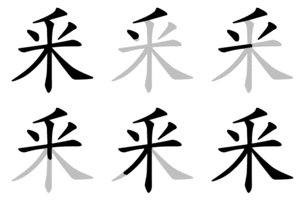
| Stroke order | |||
|---|---|---|---|
 | |||
Han character
釆 (radical 165 釆+0, 7 strokes, cangjie input 竹火木 (HFD) or X竹火木 (XHFD), four-corner 20909, composition ⿻禾丷 or ⿱丿米)
- Kangxi radical #165, ⾤.
- Shuōwén Jiězì radical №17
Derived characters
- Index:Chinese radical/釆
References
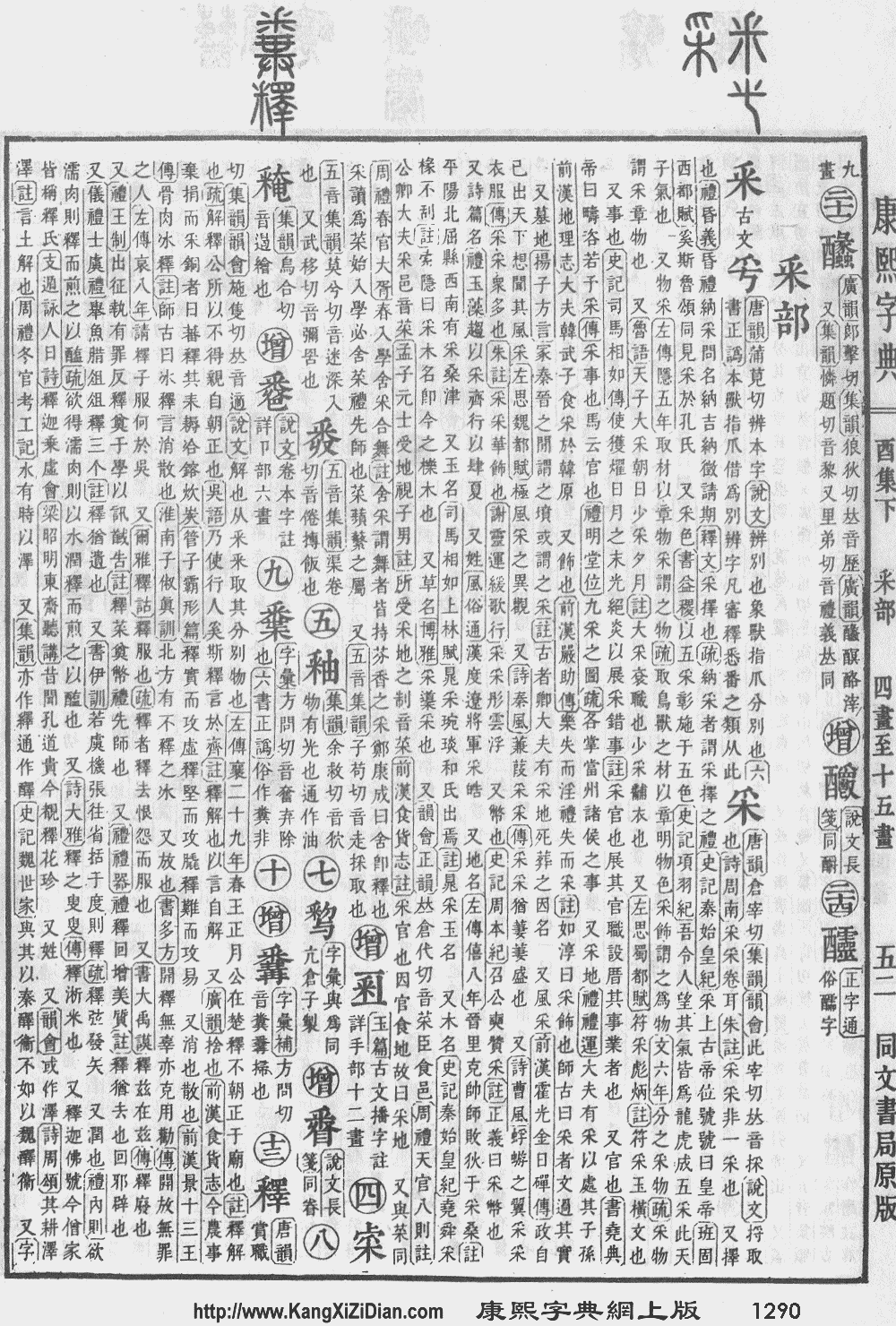
- KangXi: page 1290, character 4
- Dai Kanwa Jiten: character 40115
- Dae Jaweon: page 1790, character 8
- Hanyu Da Zidian: volume 6, page 3898, character 1
- Unihan data for U+91C6
Chinese
| simp. and trad. |
釆 | |
|---|---|---|
Glyph origin
| Historical forms of the character 釆 | |||
|---|---|---|---|
| Shang | Western Zhou | Shuowen Jiezi (compiled in Han) | Liushutong (compiled in Ming) |
| Oracle bone script | Bronze inscriptions | Small seal script | Transcribed ancient scripts |
 |
 |
 |
 |
Pronunciation
Definitions
釆
Japanese
Kanji
釆
Readings
- Goon: べん (ben)
- Kan’on: はん (han)
- On: ばん (ban), へん (hen)
- Kun: わかつ (wakatsu), わかれる (wakareru), ひずめ (hizume)
Korean
Hanja
釆 • (byeon) (hangeul 변, revised byeon, McCune–Reischauer pyŏn, Yale pyen)
- distinguish
- KangXi radical 165
Vietnamese
Han character
- This term needs a translation to English. Please help out and add a translation, then remove the text
{{rfdef}}.
This article is issued from
Wiktionary.
The text is licensed under Creative Commons - Attribution - Sharealike.
Additional terms may apply for the media files.