木
| ||||||||
Translingual
| Stroke order | |||
|---|---|---|---|
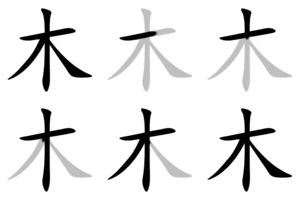 | |||
Han character
木 (radical 75, 木+0, 4 strokes, cangjie input 木 (D), four-corner 40900)
- Kangxi radical #75, ⽊.
Derived characters
References
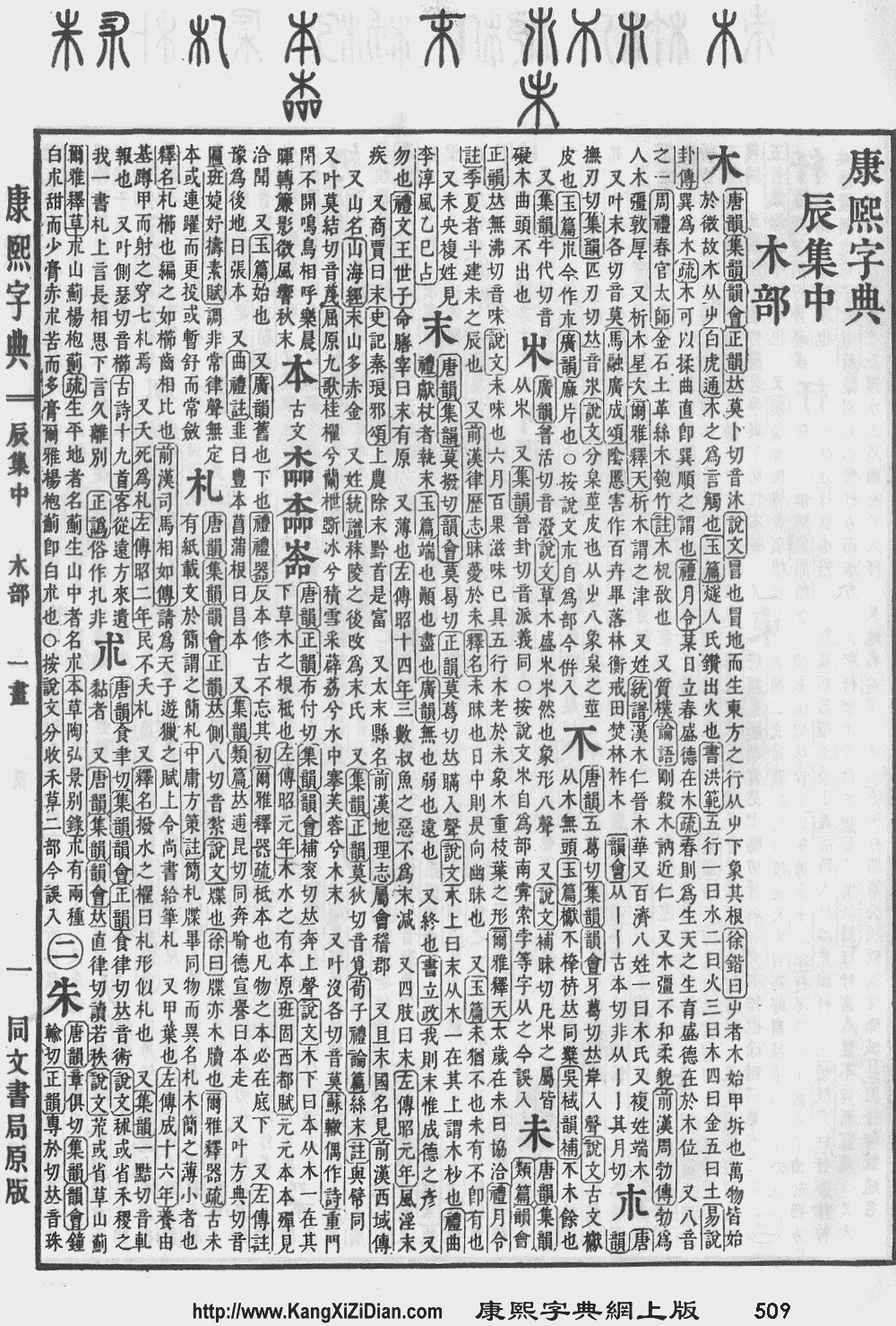
- KangXi: page 509, character 1
- Dai Kanwa Jiten: character 14415
- Dae Jaweon: page 888, character 13
- Hanyu Da Zidian: volume 2, page 1149, character 6
- Unihan data for U+6728
Chinese
| simp. and trad. |
木 | |
|---|---|---|
Glyph origin
| Historical forms of the character 木 | ||||
|---|---|---|---|---|
| Shang | Western Zhou | Warring States | Shuowen Jiezi (compiled in Han) | Liushutong (compiled in Ming) |
| Oracle bone script | Bronze inscriptions | Chu Slip and silk script | Small seal script | Transcribed ancient scripts |
 |
 |
 |
 |
 |
| Characters in the same phonetic series (木) (Zhengzhang, 2003) | |
|---|---|
| Old Chinese | |
| 木 | *moːɡ |
| 沐 | *moːɡ |
| 朷 | *taːw, *moːɡ |
| 蚞 | *moːɡ |
| 霂 | *moːɡ |
Pictogram (象形) – a tree: branches on top, roots on the bottom (more visible in earlier forms).
Etymology
No known cognate exists. It can perhaps be compared with Proto-Karen *məŋᴮ (“trunk (of a tree); firewood”) (Starostin) or Proto-Lolo-Burmese *ʔmuk (“stump (of a tree)”) (Schuessler, 2007).
The common Sino-Tibetan root for “tree; wood” is *siŋ ~ sik, represented by 薪 (OC *siŋ, “firewood”).
Pronunciation
Definitions
木
Compounds
|
|
|
Japanese
Kanji
Readings
Etymology 1
| Kanji in this term |
|---|
| 木 |
| き Grade: 1 |
| kun’yomi |
/ki2/ invalid IPA characters (2): [kɨ], from [ki]
From Old Japanese. Likely developed from fusion of older form ko + い (i, emphatic nominative particle), similar to the sound changes at work in 神 in the shift from kamu to kami.
Now the modern Japanese word.
Pronunciation
Noun
Idioms
- 猿も木から落ちる (saru mo ki kara ochiru): “even monkeys fall from trees”, i.e. even experts make mistakes
Etymology 2
| Kanji in this term |
|---|
| 木 |
| け Grade: 1 |
| kun’yomi |
Old Japanese. Possibly an intermediate form. Obsolete in modern Japanese, and never found in isolation; remains in certain place names. Even in ancient times, its use was apparently limited to eastern dialects.[2]
Pronunciation
Noun
- a tree
- 麻都能氣乃 奈美多流美礼波 伊波妣等乃 和例乎美於久流等 多々理之母己呂 [3]
- 松の木の 並みたる見れば 家人の 我れを見送ると 立たりしもころ
まつのけの なみたるみれば いはびとの われをみおくると たたりしもころ
Matsu no ke no / namitaru mireba / iwabito no / ware o miokuru to / tatari shi mokoro - Looking at the pine trees all in a row, they were just like the people from the household standing to see me off
- 松の木の 並みたる見れば 家人の 我れを見送ると 立たりしもころ
Etymology 3
| Kanji in this term |
|---|
| 木 |
| こ Grade: 1 |
| kun’yomi |
/ko2/ invalid IPA characters (2): [kə], from [ko̞]
Old Japanese. Likely the original form. Obsolete in modern Japanese, and never found in isolation; only found in compounds and certain idioms.
Pronunciation
Noun
- a tree
Derived terms
Etymology 4
| Kanji in this term |
|---|
| 木 |
| もく Grade: 1 |
| on’yomi |
From Middle Chinese 木 (muwk). The goon reading, so likely the original borrowing. Compare modern Cantonese 木 (muk6).
Pronunciation
Noun
- a tree
- short for 木曜日 (Mokuyōbi): Thursday
- When written in romaji, often capitalized as Moku.
- wood grain
- Often written 杢.
Derived terms
Etymology 5
| Kanji in this term |
|---|
| 木 |
| ぼく Grade: 1 |
| on’yomi |
From Middle Chinese 木. The kan'on reading, so likely a later borrowing. Compare literary Min Nan 木 (bo̍k).
Pronunciation
Adjective
木 (-na inflection, hiragana ぼく, rōmaji boku)
- (derogatory) wooden, as of a person's character or behavior
- (derogatory) wooden, as of a person's mental abilities: blockheaded, stupid, dimwitted
Noun
- a tree; more specifically, a living tree
- the bent and gnarled trunk or roots of an old tree
- wood, lumber
- something made of wood
- in ancient China, a wooden musical instrument