黍
| ||||||||
Translingual
| Stroke order | |||
|---|---|---|---|
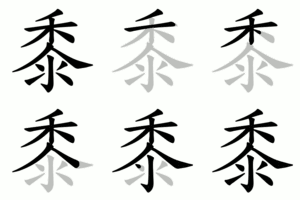 | |||
Han character
黍 (radical 202, 黍+0, 12 strokes, cangjie input 竹木人水 (HDOE), four-corner 20132, composition ⿳禾人氺)
- Kangxi radical #202, ⿉.
Derived characters
- Index:Chinese radical/黍
References
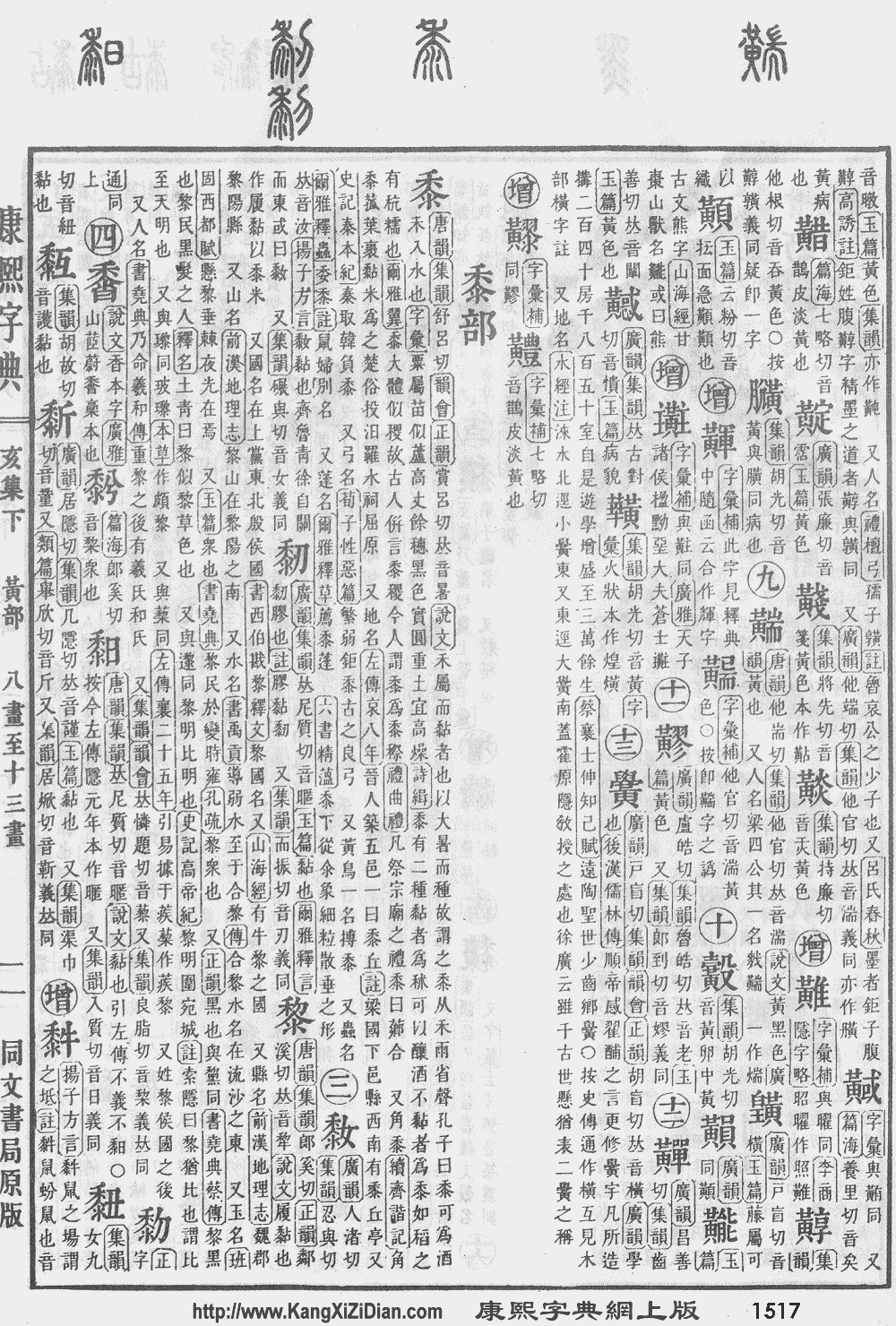
- KangXi: page 1517, character 25
- Dai Kanwa Jiten: character 47991
- Dae Jaweon: page 2049, character 33
- Hanyu Da Zidian: volume 7, page 4759, character 1
- Unihan data for U+9ECD
Chinese
| simp. and trad. |
黍 | |
|---|---|---|
Glyph origin
| Historical forms of the character 黍 | |||
|---|---|---|---|
| Shang | Western Zhou | Shuowen Jiezi (compiled in Han) | Liushutong (compiled in Ming) |
| Oracle bone script | Bronze inscriptions | Small seal script | Transcribed ancient scripts |
 |
 |
 |
 |
Pronunciation
Definitions
黍
- proso millet (esp. glutinous varieties, but also generic[1])
Compounds
Related terms
References
- (Min Nan) “Entry #9252”, in 臺灣閩南語常用詞辭典 [Dictionary of Frequently-Used Taiwan Minnan] (in Chinese and Min Nan), Ministry of Education, R.O.C., 2011.
- ↑ Francesca Bray, "Millet cultivation in China: a historical survey," Journal d'agriculture traditionnelle et de botanique appliquée, 28(3): 291-307, 1981.
Japanese
Kanji
黍
Readings
Alternative forms
| Kanji in this term |
|---|
| 黍 |
| きび Hyōgaiji |
| kun’yomi |
Pronunciation
Noun
黍 (hiragana きび, katakana キビ, rōmaji kibi)
Korean
Hanja
黍 • (seo) (hangeul 서, revised seo, McCune–Reischauer sŏ, Yale se)
- This term needs a translation to English. Please help out and add a translation, then remove the text
{{rfdef}}.
Vietnamese
Han character
黍 (thử)
- This term needs a translation to English. Please help out and add a translation, then remove the text
{{rfdef}}.
This article is issued from
Wiktionary.
The text is licensed under Creative Commons - Attribution - Sharealike.
Additional terms may apply for the media files.