禮
| ||||||||
| ||||||||
Translingual
| 禮 | |
| 礼 | |
| 礼 | |
| 禮 |
Alternative forms
In traditional Chinese, the component on the left of U+79AE is 礻. In Korean Hanja or Japanese kyūjitai, the component on the left of U+79AE is 示 rather than 礻, which is also the historical form that appears in the Kangxi dictionary. A CJK compatibility ideograph exists at U+F9B6 to reflect the form found in the Kangxi dictionary.
Han character
禮 (radical 113, 示+13, 18 strokes, cangjie input 戈火廿田廿 (IFTWT), four-corner 35218, composition ⿰礻豊(GHTV) or ⿰示豊(JK or U+F9B6))
Derived characters
- 𡅏, 𡓾, 𡤠, 𢹿, 𣠲, 𧕬, 𨰋
Descendants
References
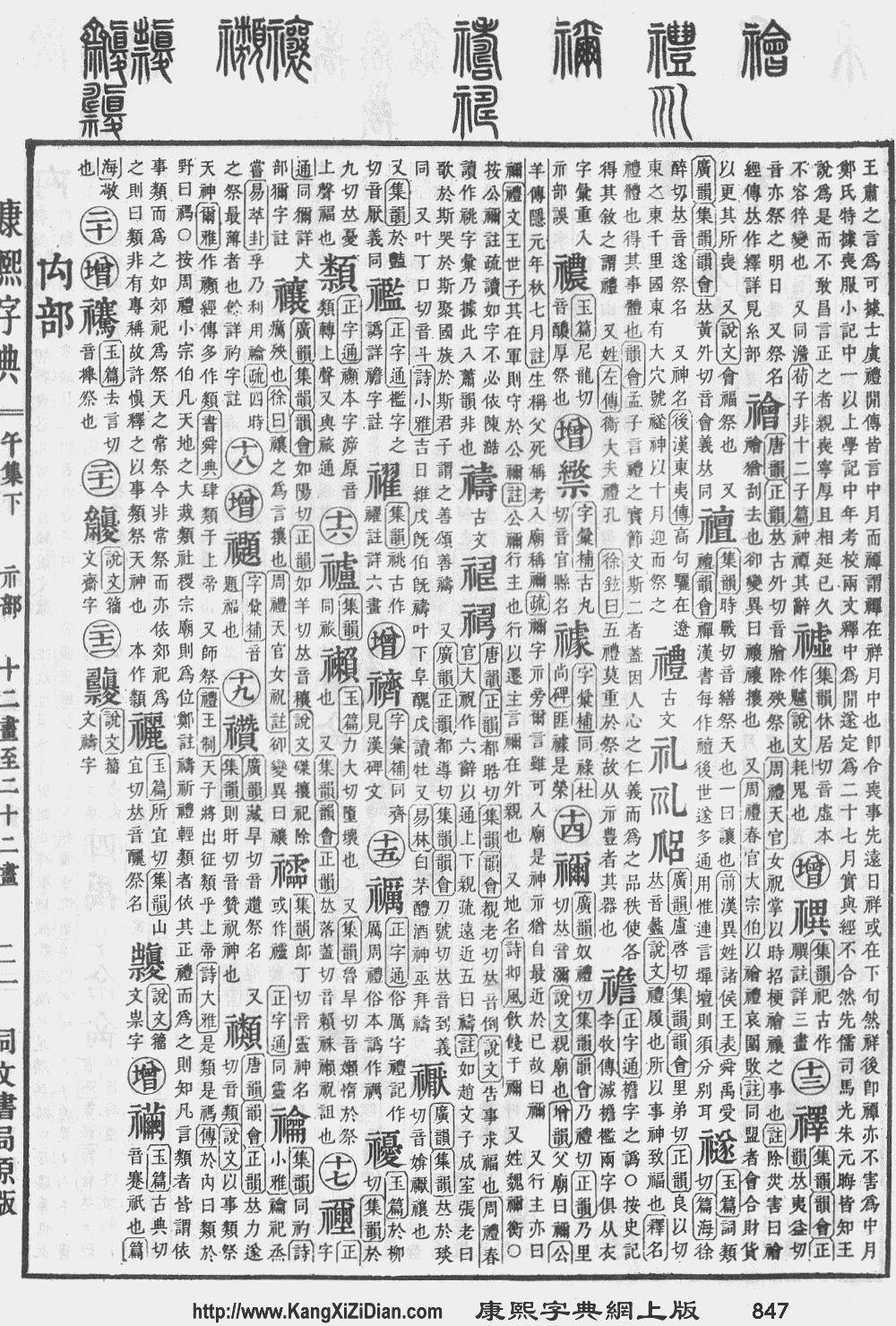
- KangXi: page 847, character 7
- Dai Kanwa Jiten: character 24844
- Dae Jaweon: page 1268, character 9
- Hanyu Da Zidian: volume 4, page 2409, character 14
- Unihan data for U+79AE
- Unihan data for U+F9B6
Chinese
| trad. | 禮 | |
|---|---|---|
| simp. | 礼 | |
| alt. forms | 𥜨 (historical variant) 𥜪 (historical variant) 𫌓 (corrupted form) | |
Glyph origin
| Historical forms of the character 禮 | |||
|---|---|---|---|
| Western Zhou | Warring States | Shuowen Jiezi (compiled in Han) | |
| Bronze inscriptions | Bronze inscriptions | Ancient script | Small seal script |
 |
 |
 |
 |
| Characters in the same phonetic series (豊) (Zhengzhang, 2003) | |
|---|---|
| Old Chinese | |
| 體 | *r̥ʰiːʔ |
| 軆 | *r̥ʰiːʔ |
| 禮 | *riːʔ |
| 澧 | *riːʔ |
| 醴 | *riːʔ |
| 豊 | *riːʔ |
| 鱧 | *riːʔ |
Phono-semantic compound (形聲, OC *riːʔ) : semantic 礻 (“altar”) + phonetic 豊 (OC *riːʔ) – performing rites at the altar.
Pronunciation
Definitions
禮
Usage notes
Usually, a single 禮 refers to a gift that involves more serious social interaction. For gifts between friends, 禮物 is used instead.
Compounds
|
|
|
Japanese
| 礼 | |
| 禮 |
Kanji
(“Jinmeiyō” kanji used for names, kyūjitai kanji, shinjitai form 礼)
Readings
Usage notes
This spelling has been superseded in modern Japanese by the shinjitai form 礼.
Korean
Hanja
禮 • (rye>ye)
compounds
- 무례 (murye) (無禮) rudeness
- 예절 (yejeol) (禮節) manners, etiquette
- 예식 (yesik) (禮式) ceremony
- 예의 (ye-ui) (禮儀) manners, etiquette
- 혼례 (hollye) (婚禮) wedding
- 예배 (yebae) (禮拜) worship
- 결례 (gyeollye) (缺禮) discourtesy
- 다례 (darye) (茶禮) = 다도(茶道) tea ceremony
- 사례 (sarye) (謝禮) return, reward
- 답례 (damnye) (答禮) return, reward
- 경례 (gyeongnye) (敬禮) salute
- 세례 (serye) (洗禮) baptism
- 장례 (jangnye) (葬禮) funeral
Vietnamese
Han character
禮 (lễ, thanh, lạy, lẩy, lẫy, lẻ, lể, rẩy, lãi, lấy, lỡi, lởi, rẽ)
- This term needs a translation to English. Please help out and add a translation, then remove the text
{{rfdef}}.