雨
| ||||||||
Translingual
| Stroke order | |||
|---|---|---|---|
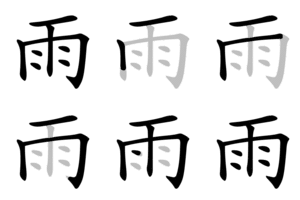 | |||
Alternative forms
- ⻗ (U+2ED7) (When used as a combining radical)
Han character
雨 (radical 173, 雨+0, 8 strokes, cangjie input 一中月卜 (MLBY), four-corner 10227, composition ⿱一𠕒)
- Kangxi radical #173, ⾬.
Derived characters
- Index:Chinese radical/雨
References
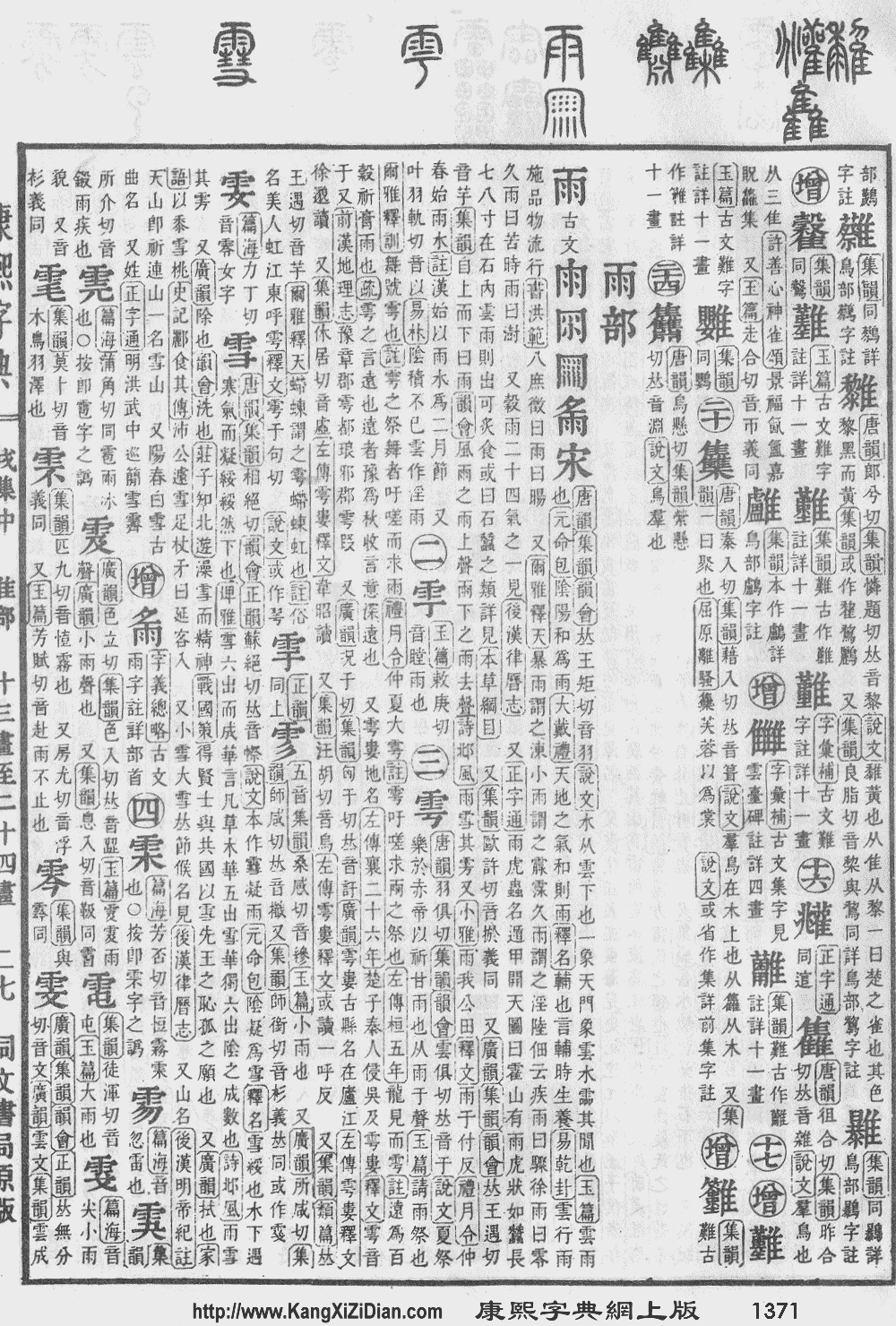
- KangXi: page 1371, character 18
- Dai Kanwa Jiten: character 42210
- Dae Jaweon: page 1878, character 1
- Hanyu Da Zidian: volume 6, page 4057, character 1
- Unihan data for U+96E8
Chinese
| simp. and trad. |
雨 | |
|---|---|---|
| alt. forms | 㲾 𠕒 𠕘 𠕲 | |
Glyph origin
| Historical forms of the character 雨 | ||||||
|---|---|---|---|---|---|---|
| Shang | Western Zhou | Warring States | Shuowen Jiezi (compiled in Han) | Liushutong (compiled in Ming) | ||
| Oracle bone script | Bronze inscriptions | Chu Slip and silk script | Qin slip script | Ancient script | Small seal script | Transcribed ancient scripts |
 |
 |
 |
 |
 |
 |
 |
Pictogram (象形) – a cloud with drops of rain falling from it.
Etymology
From Proto-Sino-Tibetan *k/r/s-wa.
Pronunciation 1
Definitions
雨
- rain
- 雷以動之,風以散之,雨以潤之,日以烜之。 [Classical Chinese, trad.]
- From: I Ching, 3rd – 2nd millennia BCE
- Léi yǐ dòng zhī, fēng yǐ sàn zhī, yǔ yǐ rùn zhī, rì yǐ xuǎn zhī. [Pinyin]
- Thunder serves to put things in motion; wind to scatter (the genial seeds of) them; rain to moisten them; the sun to warm them.
雷以动之,风以散之,雨以润之,日以烜之。 [Classical Chinese, simp.]
- † (figuratively) friend
- † (figuratively) teaching; instruction
Descendants
Compounds
|
|
|
Pronunciation 2
Definitions
雨
- † to rain
- 雨我公田,遂及我私。 [Classical Chinese, trad. and simp.]
- From: The Classic of Poetry, circa 11th – 7th centuries BCE, translated based on James Legge's version
- Yù wǒ gōng tián, suì jí wǒ sī. [Pinyin]
- May it rain first on our public fields, and then come to our private!
- † to fall from the sky (like the rain)
- 北風其涼,雨雪其雱。惠而好我,攜手同行。其虛其邪,既亟只且。 [Classical Chinese, trad.]
- From: The Classic of Poetry, circa 11th – 7th centuries BCE, translated based on James Legge's version
- Běi fēng qí liáng, yù xuě qí pāng. Huì ér hào wǒ, xié shǒu tóng xíng. Qí xū qí xié, jì jí zhǐ qiě. [Pinyin]
- Cold blows the north wind; Thick falls the snow. Ye who love and regard me, let us join hands and go together. Is it a time for delay? The urgency is extreme!
北风其凉,雨雪其雱。惠而好我,携手同行。其虚其邪,既亟只且。 [Classical Chinese, simp.]
Synonyms
Compounds
|
|
Japanese
Kanji
Readings
- Goon: う (u, Jōyō)
- Kan’on: う (u, Jōyō)
- Kun: あめ (ame, 雨, Jōyō); あま (ama, 雨, Jōyō, uncommon); さめ (same, 雨)
- The さめ (same) reading occurs as epenthesis (instead of the more common あめ (ame)) in terms such as 小雨 (kosame, “light rain, drizzle”) and 春雨 (harusame, “spring rain”).
Compounds
- 雨傘 (amagasa): umbrella
- 雨域 (uiki): rainy area
- 雨雲 (amagumo): rain cloud
- 雨蛙 (amagaeru): tree frog
- 雨笠 (amagasa): rain hat
- 雨間 (amaai): break in the rain
- 雨期, 雨季 (uki): rainy season
- 雨気 (amake, uki): signs of rain
- 雨脚, 雨足 (amaashi, ameashi): passing shower
- 雨具 (amagu): rain gear
- 雨空 (amazora): threatening sky
- 雨靴 (amagutsu): overshoes
- 雨戸 (amado): sliding storm door
- 雨後 (ugo): after rain
- 雨水 (amamizu): rain water
- 雨声 (usei): sound of rain
- 雨着 (amagi): raincoat
- 雨中 (uchū): in the rain
- 雨注 (uchū): showering upon
- 雨滴 (uteki): rain drops
- 雨天 (uten): rainy weather
- 雨曇 (amagumori): overcast weather
- 雨樋 (amadoi): drainspout
- 雨氷 (uhyō): freezing rain
- 雨風 (amakaze, amekaze): rain and wind
- 雨粒 (amatsubu, ametsubu): raindrop
- 雨量 (uryō): rainfall
- 雨林 (urin): rain forest
- 雨露 (uro, ametsuyu): rain and dew
- 雨霰 (amearare): rain and hail
- 雨垂れ (amadare): raindrops
- 雨降り (amefuri): in the rain
- 雨乞い (amagoi): praying for rain
- 雨止み (amayami): break in the rain
- 雨宿り (amadayori): taking shelter from rain
- 雨避け, 雨除け (amayoke): shelter from rain
- 雨上り (ameagari): after the rain
- 雨続き (ametsuzuki): raining for days on end
- 雨曝し (amazarashi): weatherbeaten
- 雨落ち (amaochi, ameochi): raindrops fall from eaves
- 雨漏り (amamori): roof leak
- 雨合羽 (amagappa): raincoat
- 雨支度, 雨仕度 (amajitaku): preparation for rain
- 降雨 (kōu): rainfall
- 豪雨 (gōu): heavy rain
- 梅雨 (baiu, tsuyu): rainy season
- 風雨 (fūu): wind and rain
- 大雨 (ōame): heavy rain
- 俄雨 (niwakaame): shower
- 春雨 (harusame): spring rain
- 小雨 (kosame): drizzle
- 時雨 (shigure): late fall rain
- 五月雨 (samidare): early summer rain
Etymology 1
| Kanji in this term |
|---|
| 雨 |
| あめ Grade: 1 |
| kun’yomi |
Cognate with 雨 (same, “rain”). Found both alone and in compounds. Perhaps derived from /same/ → /ame/ with loss of the initial /s/; see same.
Pronunciation
Noun
- rain
- 一雨ごとに春が来る ― hito ame goto ni haru ga kuru ― spring nears by each rainfall
- 931–938, Wamyō Ruijushō, book 1, page 24:
- 雨 設文云、雨、音禹、阿女○山田本有和名二字、谷川氏曰、阿女天水之急呼、謂如水從天下也、水從雲中而下也
Etymology 2
| Kanji in this term |
|---|
| 雨 |
| さめ Grade: 1 |
| kun’yomi |
Cognate with 雨 (ame, “rain”).
Appears as the latter part in older compounds with an -s- infix or prefix. It is unclear if this leading /s/ is indicative of an earlier form (same), or if this was an epenthesis for euphony to avoid vowel clusters, or for other reasons. This /s/ is also seen in 青 (ao, becoming sao in old compounds) and 稲 (ine, becoming shine in old compounds).
Given that this /s/ only ever appears interstitially, and given the semantics, this /s/ may be cognate with Korean interfix -ᄉ- (-s-) used to mark possession, much like English 's.
Pronunciation
Noun
- (possibly archaic) rain
Usage notes
Now used only in compounds.
Derived terms
References
- Minamoto, Shitagō; Kyōto Daigaku Bungakubu Kokugogaku Kokubungaku Kenkyūshitu (931–938) Shohon Shūsei Wamyō Ruijushō: Honbunhen (in Japanese), Kyōto: Rinsen, published 1968, →ISBN.
Korean
Hanja
- This term needs a translation to English. Please help out and add a translation, then remove the text
{{rfdef}}.
Compounds
- 雨傘 (우산, usan)
- 雨雹 (우박, ubak)
Miyako
Kanji
Noun
Okinawan
Kanji
Noun
Compounds
Vietnamese
Han character
雨 (vũ)
- This term needs a translation to English. Please help out and add a translation, then remove the text
{{rfdef}}.
Yonaguni
Kanji
Noun
Yoron
Kanji
Noun
Compounds
- 長雨 (ながみ, nagami): rainy season (also 霖)