遇
| ||||||||
Translingual
Han character
遇 (radical 162, 辵+9, 13 strokes, cangjie input 卜田中月 (YWLB), four-corner 36302, composition ⿺辶禺)
References
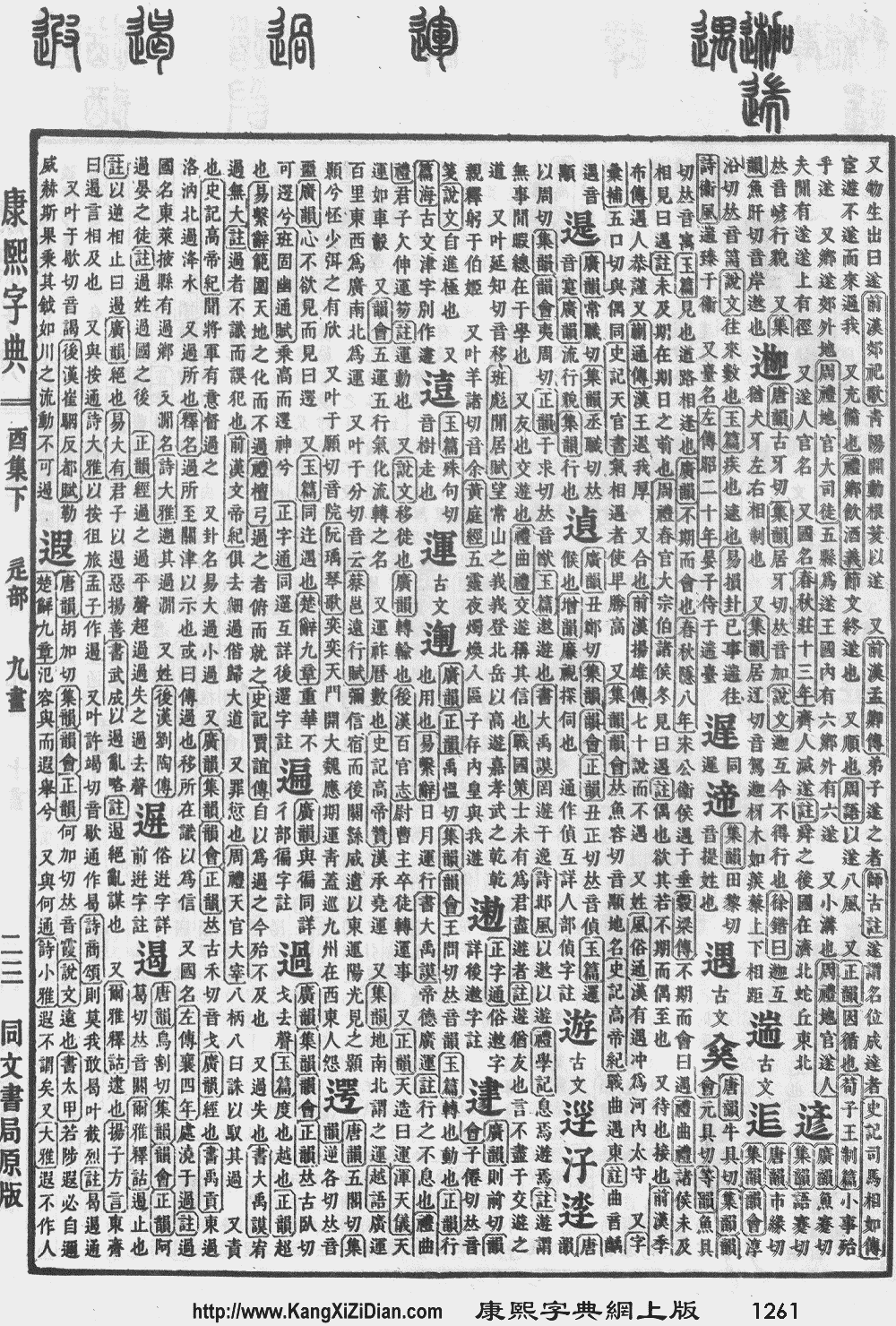
- KangXi: page 1261, character 7
- Dai Kanwa Jiten: character 38991
- Dae Jaweon: page 1751, character 10
- Hanyu Da Zidian: volume 6, page 3857, character 16
- Unihan data for U+9047
Chinese
| simp. and trad. |
遇 | |
|---|---|---|
Glyph origin
| Characters in the same phonetic series (禺) (Zhengzhang, 2003) | |
|---|---|
| Old Chinese | |
| 齵 | *ŋoː, *ŋo |
| 偶 | *ŋoːʔ, *ŋoːs |
| 耦 | *ŋoːʔ |
| 藕 | *ŋoːʔ |
| 髃 | *ŋoːʔ, *ŋo |
| 蕅 | *ŋoːʔ |
| 愚 | *ŋo |
| 隅 | *ŋo |
| 禺 | *ŋo, *ŋos |
| 湡 | *ŋo |
| 堣 | *ŋo |
| 嵎 | *ŋo |
| 鰅 | *ŋo, *ŋoŋ |
| 鍝 | *ŋo |
| 遇 | *ŋos |
| 寓 | *ŋos |
| 庽 | *ŋos |
| 媀 | *ŋos |
| 喁 | *ŋoŋ |
| 顒 | *ŋoŋ |
Pronunciation
Definitions
遇
- to meet; to come across; to encounter
- 43rd tetragram of the Taixuanjing
Synonyms
- 遭 (zāo, “to meet, to encounter”)
Compounds
Japanese
Kanji
遇
Readings
- Goon: ぐ (gu)
- Kan’on: ぐ (gu)
- Kan’yōon: ぐう (gū, Jōyō)
- Kun: あう (au, 遇う); もてなす (motenasu, 遇す); たまたま (tamatama, 遇)
Korean
Hanja
遇 • (u) (hangeul 우, revised u, McCune–Reischauer u, Yale wu)
- This term needs a translation to English. Please help out and add a translation, then remove the text
{{rfdef}}.
Vietnamese
Han character
遇 (ngộ)
- This term needs a translation to English. Please help out and add a translation, then remove the text
{{rfdef}}.
This article is issued from
Wiktionary.
The text is licensed under Creative Commons - Attribution - Sharealike.
Additional terms may apply for the media files.