攜
See also: 携
| ||||||||
Translingual
Han character
攜 (radical 64 手+18, 21 strokes, cangjie input 手山人月 (QUOB), four-corner 52027, composition ⿰扌巂)
References
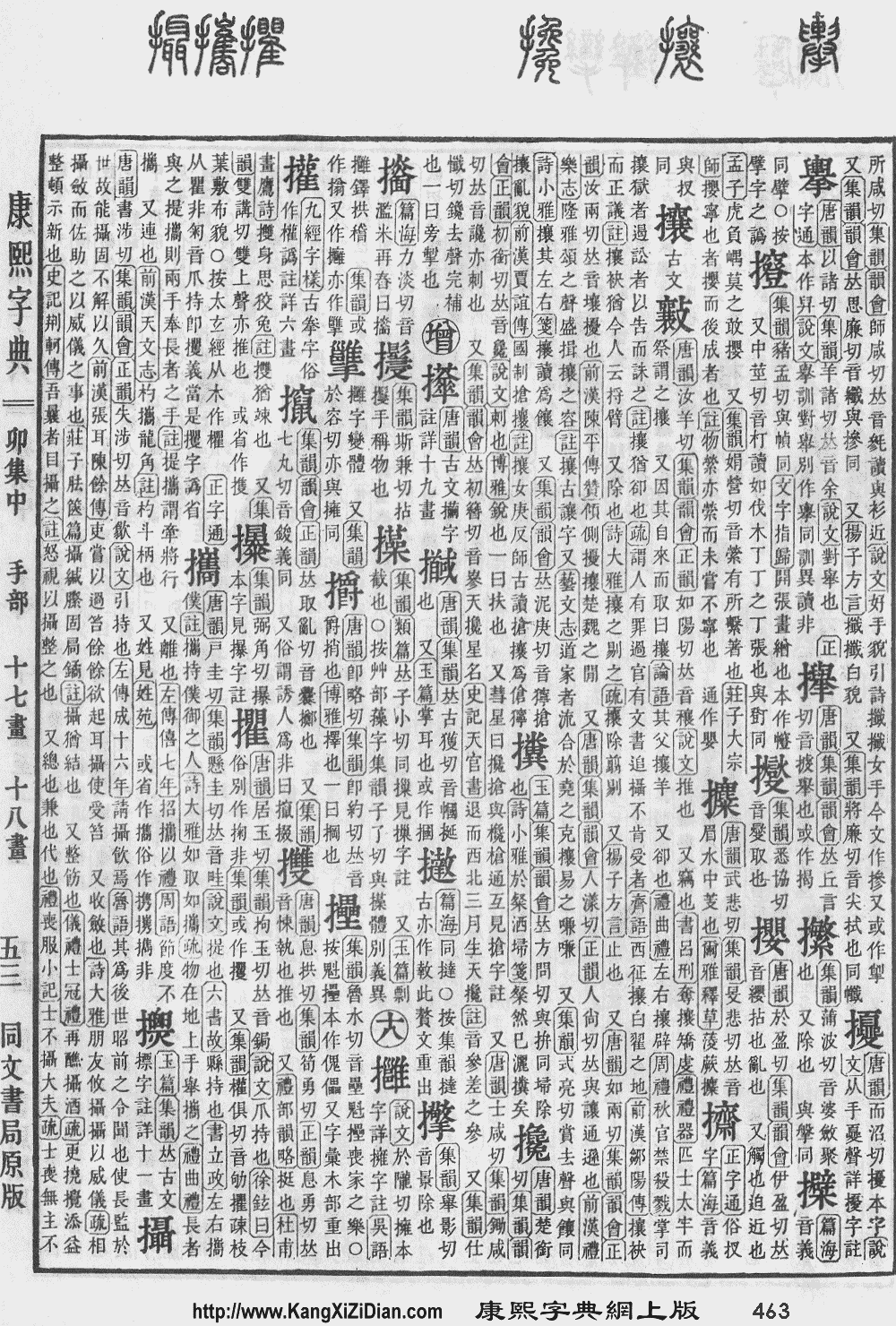
- KangXi: page 463, character 31
- Dai Kanwa Jiten: character 13008
- Dae Jaweon: page 812, character 33
- Hanyu Da Zidian: volume 3, page 1987, character 5
- Unihan data for U+651C
Chinese
| trad. | 攜 | |
|---|---|---|
| simp. | 携 | |
| alt. forms | 携 | |
Glyph origin
| Characters in the same phonetic series (巂) (Zhengzhang, 2003) | |
|---|---|
| Old Chinese | |
| 孈 | *ɢʷeʔ, *ɡʷreːs, *qʰʷes, *ɢʷiʔ |
| 纗 | *ɡʷreːs, *ɡʷeː, *sqʷe, *ɢʷes |
| 攜 | *ɡʷeː |
| 蠵 | *ɡʷeː, *ɢʷe |
| 鑴 | *ɡʷeː, *qʰʷe |
| 驨 | *ɡʷeː |
| 酅 | *ɡʷeː |
| 雟 | *ɡʷeː |
| 讗 | *ɡʷeː, *kʷreːɡ |
| 觽 | *ɡʷeː |
| 儶 | *ɡʷeːs |
| 觿 | *qʰʷe |
| 欈 | *ɢʷe |
| 瓗 | *ɢʷes |
| 携 | *ɡʷleː |
Pronunciation
Definitions
攜
Compounds
|
Japanese
Kanji
攜
- This term needs a translation to English. Please help out and add a translation, then remove the text
{{rfdef}}.
Readings
- Goon: え (e)←ゑ (we, historical)
- Kan’on: けい (kei)←くゑい (kwei, historical)
- Kun: たずさえる (tazusaeru, 攜える); たずさわる (tazusawaru, 攜わる)
Vietnamese
Han character
攜 (huề)
- This term needs a translation to English. Please help out and add a translation, then remove the text
{{rfdef}}.
This article is issued from
Wiktionary.
The text is licensed under Creative Commons - Attribution - Sharealike.
Additional terms may apply for the media files.