北
| ||||||||
| ||||||||
Translingual
| Japanese stroke order | |||
|---|---|---|---|
 | |||
Han character
北 (radical 21, 匕+3, 5 strokes, cangjie input 中一心 (LMP), four-corner 11110, composition ⿰丬匕)
References
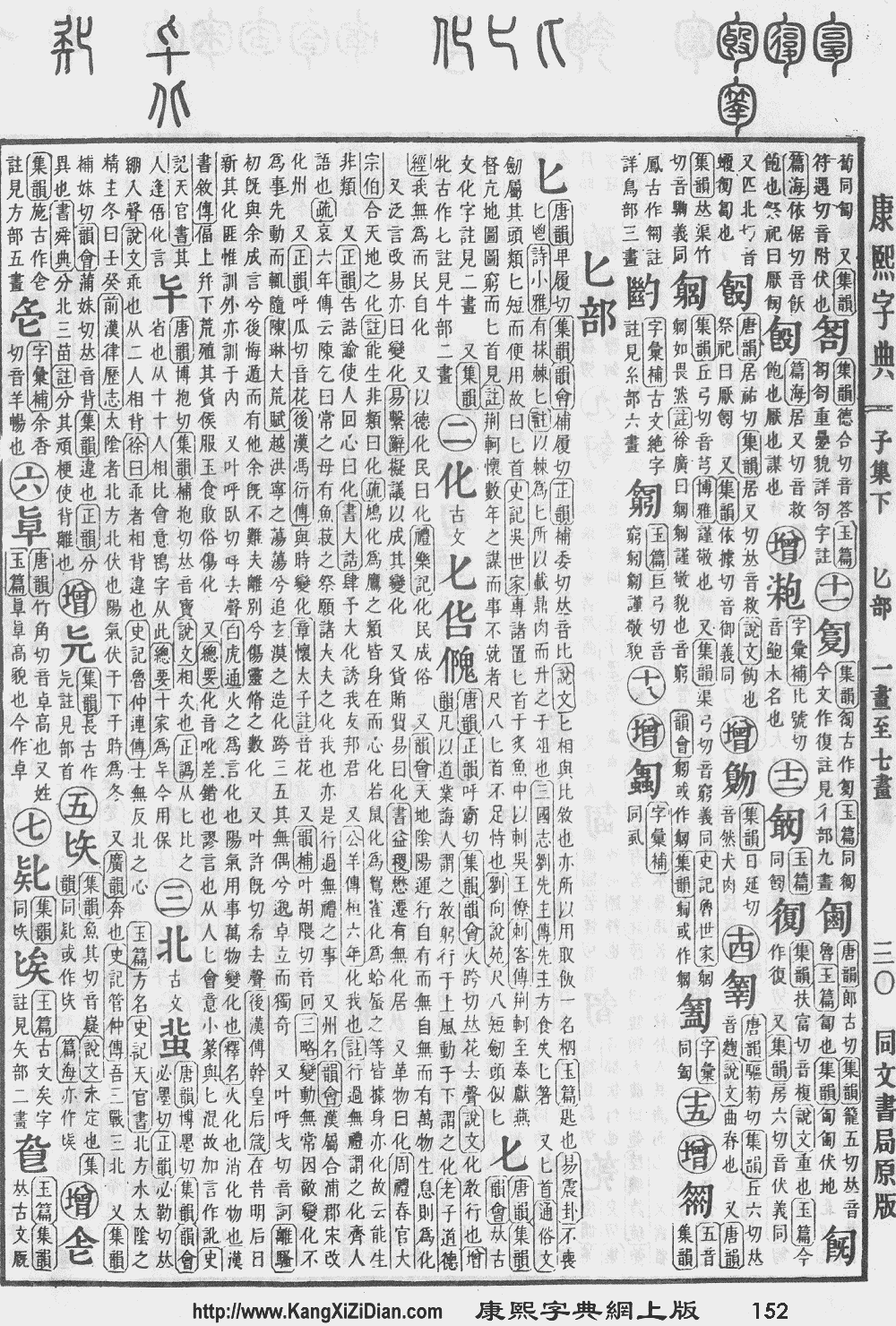
- KangXi: page 152, character 25
- Dai Kanwa Jiten: character 2574
- Dae Jaweon: page 342, character 6
- Hanyu Da Zidian: volume 1, page 262, character 4
- Unihan data for U+5317
Chinese
| simp. and trad. |
北 | |
|---|---|---|
Glyph origin
| Historical forms of the character 北 | ||||
|---|---|---|---|---|
| Shang | Western Zhou | Warring States | Shuowen Jiezi (compiled in Han) | Liushutong (compiled in Ming) |
| Oracle bone script | Bronze inscriptions | Chu Slip and silk script | Small seal script | Transcribed ancient scripts |
 |
 |
 |
 |
 |
| Characters in the same phonetic series (北) (Zhengzhang, 2003) | |
|---|---|
| Old Chinese | |
| 背 | *pɯːɡs, *bɯːɡs |
| 鄁 | *bɯːɡs |
| 偝 | *bɯːɡs |
| 邶 | *bɯːɡs |
| 苝 | *bɯːɡs |
| 北 | *pɯːɡ |
Ideogrammic compound (會意) – two men back to back. Originally meaning “back”; the character 背 (OC *pɯːɡs, *bɯːɡs) refers to the original word.
Etymology
The sense of “north” is derived from “back (of body)”: “back” → “to turn the back to; to retreat” → “north”.
The ancient Chinese value the southern direction and houses are traditionally oriented along a north-south axis, as evident in the fengshui theory and orientation of buildings in Chinese Neolithic sites. North is the direction the back is oriented to when the person is facing south.
Compare the graphical origin of 南 (OC *nuːm, “south”) (Sagart, 1988).
Pronunciation
Definitions
北
Coordinate terms
Compounds
|
|
|
Japanese
Kanji
Readings
Compounds
- 北緯 (hokui)
- 北海 (hokkai), 北海 (Hokkai)
- 北海道 (Hokkaidō)
- 北極 (hokkyoku), 北極 (Hokkyoku)
- 北国 (hokkoku)
- 北上 (hokujō)
- 北進 (hokushin)
- 北西 (hokusei)
- 北端 (hokutan)
- 北天 (hokuten)
- 北斗 (hokuto)
- 北斗七星 (Hokuto Shichisei, “Big Dipper”)
- 北部 (hokubu)
- 北風 (hokufū)
- 北面 (hokumen)
- 北洋 (hokuyō), 北洋 (Hokuyō)
- 北陸 (Hokuriku)
- 北方 (hoppō)
- 極北 (kyokuhoku)
- 硯北 (kenboku)
- 朔北 (sakuhoku)
- 東北 (tōhoku), 東北 (Tōhoku)
- 南北 (nanboku)
- 敗北 (haiboku, “defeat”)
- 北条 (Hōjō)
- 台北 (Taipei)
- 北京 (Pekin)
- 北叟笑む (hokusoemu)
Etymology
| Kanji in this term |
|---|
| 北 |
| きた Grade: 2 |
| kun’yomi |
From Old Japanese.
Ultimate derivation unknown.
Pronunciation
Noun
- north (compass direction)
- Antonym: 南 (minami)
- the North (northern part of a region)
- the north wind
- Synonym: 北風 (kitakaze, hokufū)
- a developed country
Derived terms
Proper noun
北 (hiragana きた, katakana キタ, rōmaji Kita)
- a place name
- a surname
References
Korean
Hanja
北 • (buk, bae)
Okinawan
Etymology
Kanji
北