且
| ||||||||
Translingual
Han character
且 (radical 1, 一+4, 5 strokes, cangjie input 月一 (BM), four-corner 77100, composition ⿴𠀃𠄠)
Derived characters
References
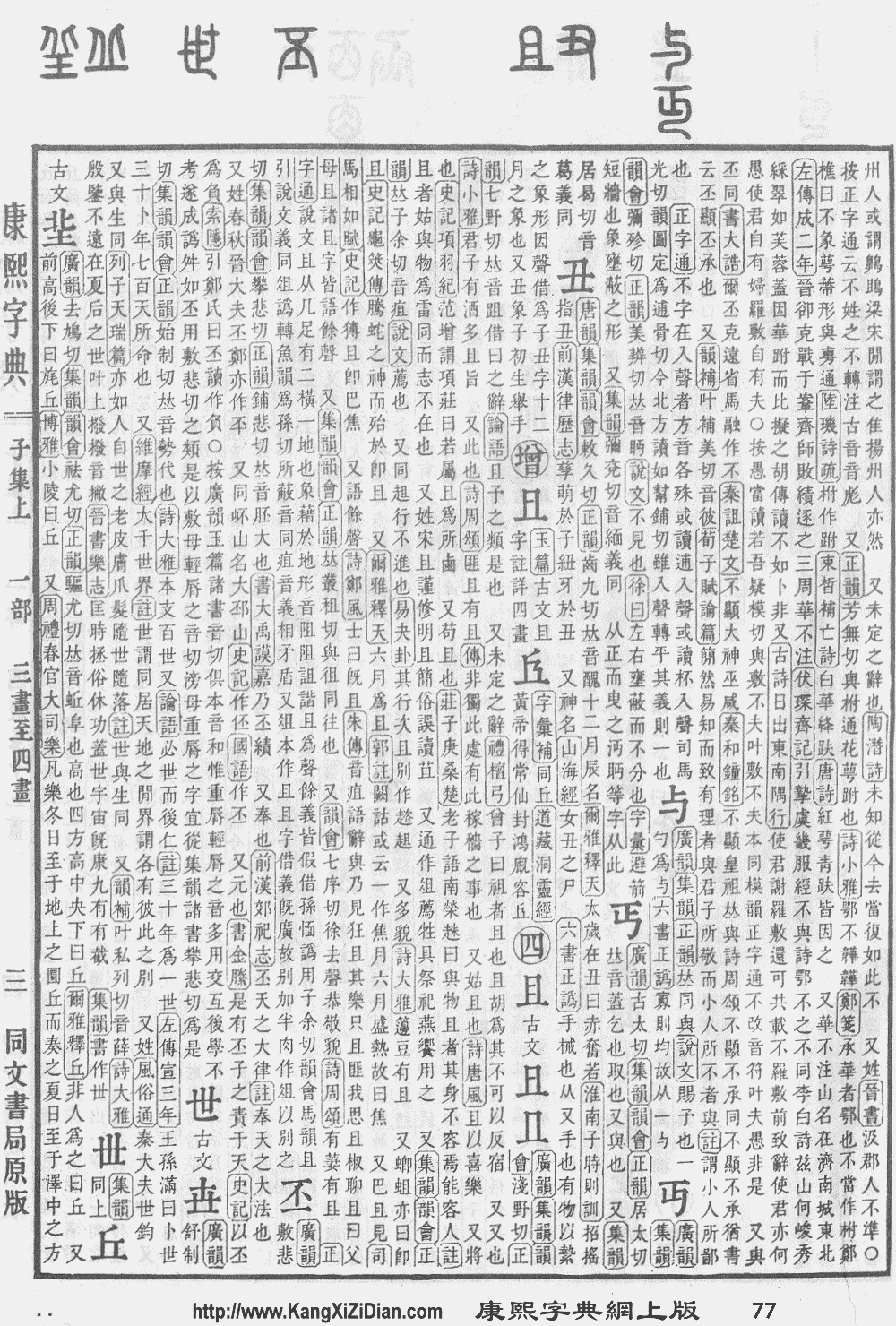
- KangXi: page 77, character 7
- Dai Kanwa Jiten: character 29
- Dae Jaweon: page 154, character 19
- Hanyu Da Zidian: volume 1, page 15, character 5
- Unihan data for U+4E14
Chinese
| simp. and trad. |
且 | |
|---|---|---|
| alt. forms | 𠀇 𠀃 | |
Glyph origin
| Historical forms of the character 且 | |||||||||||||||||||||||||||||||||||||||||||||||||||||||||||||||||||||||||||||||||||||||||||||||||||||||||||||||||||||||||||||||||||||||||||||||||||||||||||||||||||||||||
|---|---|---|---|---|---|---|---|---|---|---|---|---|---|---|---|---|---|---|---|---|---|---|---|---|---|---|---|---|---|---|---|---|---|---|---|---|---|---|---|---|---|---|---|---|---|---|---|---|---|---|---|---|---|---|---|---|---|---|---|---|---|---|---|---|---|---|---|---|---|---|---|---|---|---|---|---|---|---|---|---|---|---|---|---|---|---|---|---|---|---|---|---|---|---|---|---|---|---|---|---|---|---|---|---|---|---|---|---|---|---|---|---|---|---|---|---|---|---|---|---|---|---|---|---|---|---|---|---|---|---|---|---|---|---|---|---|---|---|---|---|---|---|---|---|---|---|---|---|---|---|---|---|---|---|---|---|---|---|---|---|---|---|---|---|---|---|---|---|---|
| Shang | Western Zhou | Shuowen Jiezi (compiled in Han) | Liushutong (compiled in Ming) | ||||||||||||||||||||||||||||||||||||||||||||||||||||||||||||||||||||||||||||||||||||||||||||||||||||||||||||||||||||||||||||||||||||||||||||||||||||||||||||||||||||||
| Oracle bone script | Bronze inscriptions | Small seal script | Transcribed ancient scripts | ||||||||||||||||||||||||||||||||||||||||||||||||||||||||||||||||||||||||||||||||||||||||||||||||||||||||||||||||||||||||||||||||||||||||||||||||||||||||||||||||||||||
 |
 |
 |
 | ||||||||||||||||||||||||||||||||||||||||||||||||||||||||||||||||||||||||||||||||||||||||||||||||||||||||||||||||||||||||||||||||||||||||||||||||||||||||||||||||||||||
|||
|
References: Mostly from Richard Sears' Chinese Etymology site (authorisation),
| |||||||||||||||||||||||||||||||||||||||||||||||||||||||||||||||||||||||||||||||||||||||||||||||||||||||||||||||||||||||||||||||||||||||||||||||||||||||||||||||||||||||||


| Characters in the same phonetic series (且) (Zhengzhang, 2003) | |
|---|---|
| Old Chinese | |
| 虘 | *zaːl, *zaː |
| 蔖 | *zlaːl, *sʰaːʔ |
| 摣 | *rnaː, *ʔsraː |
| 袓 | *ʔsjaː, *zaʔ |
| 怚 | *ʔsjaː, *ʔsas, *zaʔ |
| 罝 | *ʔsjaː |
| 謯 | *ʔslja, *ʔsraːʔ |
| 姐 | *ʔsjaːʔ |
| 抯 | *ʔsljaːʔ, *ljaːʔ, *ʔsraː |
| 飷 | *ʔsjaːʔ |
| 且 | *sʰjaːʔ, *ʔsa |
| 趄 | *sʰjaːs, *sʰa |
| 笡 | *sʰjaːs |
| 查 | *ʔsraː, *zraː, *zraː |
| 柤 | *ʔsraː |
| 樝 | *ʔsraː |
| 皻 | *ʔsraː |
| 渣 | *ʔsraː |
| 楂 | *zraː |
| 苴 | *zraː, *ʔsa, *ʔsaʔ, *sʰa |
| 駔 | *ʔslaːŋʔ, *zaːʔ |
| 租 | *ʔsaː |
| 蒩 | *ʔsaː, *ʔsaːʔ, *sʰa |
| 祖 | *ʔsaːʔ |
| 組 | *ʔsaːʔ |
| 珇 | *ʔsaːʔ |
| 靻 | *ʔsaːʔ |
| 粗 | *sʰaː, *zaːʔ |
| 徂 | *zaː |
| 殂 | *zaː |
| 麆 | *zaːʔ, *zras |
| 伹 | *zaːʔ, *sʰa |
| 蛆 | *ʔsa, *sʰa |
| 沮 | *ʔsa, *ʔsas, *sʰa, *zaʔ, *ʔsra |
| 咀 | *ʔsaʔ, *zaʔ |
| 疽 | *sʰa |
| 雎 | *sʰa |
| 狙 | *sʰa, *sʰas |
| 岨 | *sʰa |
| 砠 | *sʰa |
| 坥 | *sʰa, *sʰas |
| 刞 | *sʰas |
| 覰 | *sʰas |
| 覷 | *sʰas |
| 跙 | *zaʔ |
| 筯 | *das |
| 菹 | *ʔsra |
| 葅 | *ʔsra |
| 阻 | *ʔsraʔ, *ʔsras |
| 俎 | *ʔsraʔ |
| 詛 | *ʔsraʔ, *ʔsras |
| 鉏 | *zra, *zraʔ |
| 豠 | *zra |
| 鋤 | *zra |
| 耡 | *zra, *zras |
| 齟 | *zraʔ |
| 助 | *zras |
Pictogram (象形) . Multiple interpretations:
- A sacrificial vessel used for chopping and holding meat, as viewed from above (Wang, 1923) – original form of 俎 (OC *ʔsraʔ).
- An erect penis, the symbol of the male ancestor (Guo, 1931) – original form of 祖 (OC *ʔsaːʔ).
- A stone altar – original form of 祖 (OC *ʔsaːʔ).
In the oracle bones and bronze inscriptions, this character was commonly used as 祖 (OC *ʔsaːʔ). Usage as 俎 (OC *ʔsraʔ) is not attested until the Warring States period in the bamboo script.
Etymology
- “and; also; almost; be going to”
- Cognate with 將 (OC *ʔsaŋ, *ʔsaŋs) (Schuessler, 2007).
Pronunciation 1
Definitions
且
- this
- almost; nearly
- be going to; will; shall
- just; for the time being
- even (placed after a hypothetical extreme scenario for emphasis)
- (dialectal) for a long time
- and; also (for juxtaposition)
- both ... and ...
- or (to list alternatives)
- moreover (to indicate progression)
- if; assuming (to indicate hypotheticality)
- sentence-initial or sentence-medial modal particle
- A surname.
Compounds
Pronunciation 2
Definitions
且
Compounds
|
|
|
Pronunciation 3
Definitions
且
Pronunciation 4
Definitions
且
Japanese
Kanji
- This term needs a translation to English. Please help out and add a translation, then remove the text
{{rfdef}}.
Readings
Compounds
Related terms
- 且つ (katsu)
Korean
Hanja
且 • (cha, jeo, jo)
- This term needs a translation to English. Please help out and add a translation, then remove the text
{{rfdef}}.
References
Vietnamese
Han character
- This term needs a translation to English. Please help out and add a translation, then remove the text
{{rfdef}}.