公
| ||||||||
Translingual
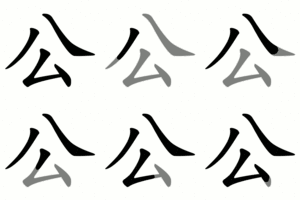
| Stroke order | |||
|---|---|---|---|
 | |||
| Stroke order | |||
|---|---|---|---|
 | |||
Han character
公 (radical 12, 八+2, 4 strokes, cangjie input 金戈 (CI), four-corner 80732, composition ⿱八厶)
References
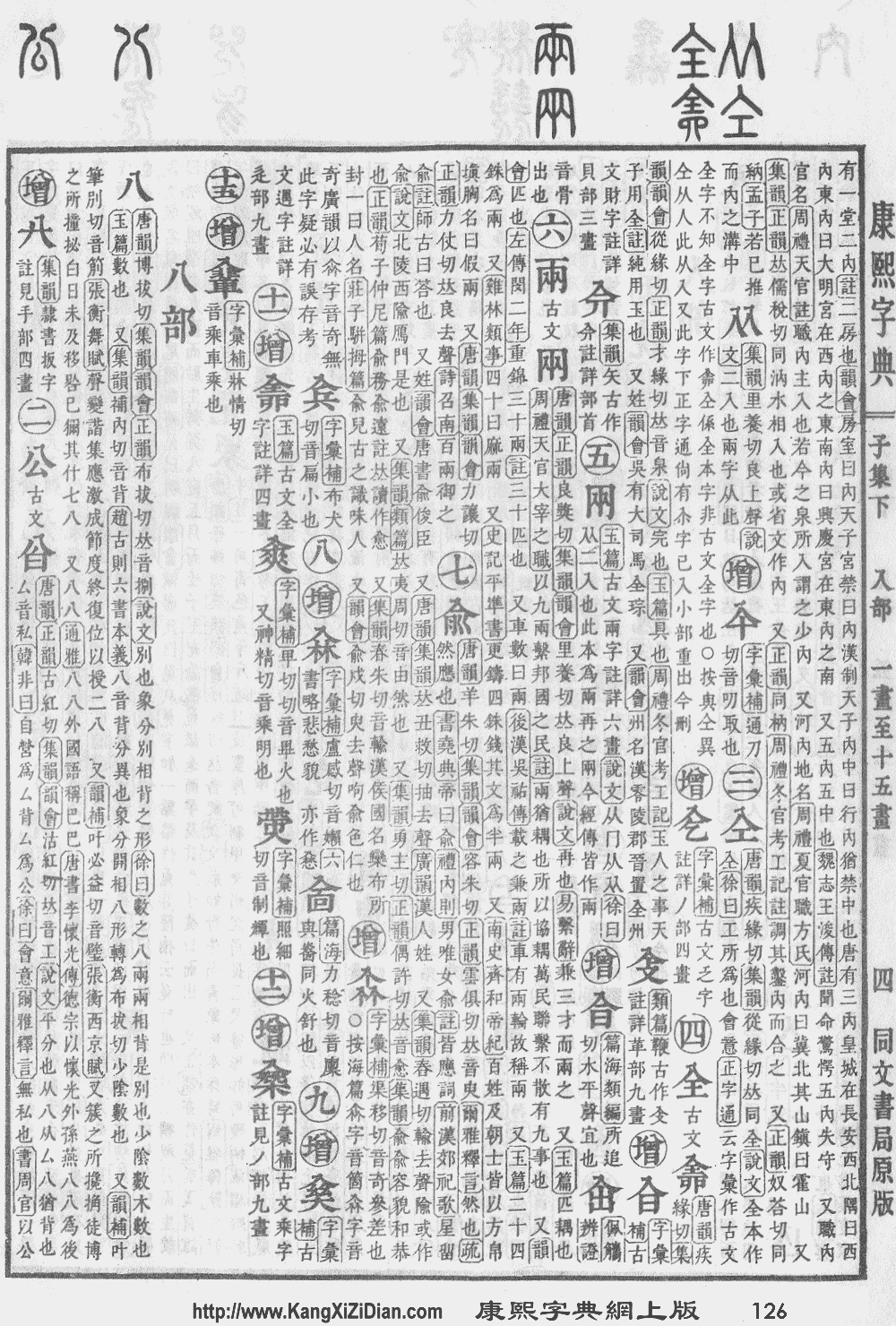
- KangXi: page 126, character 28
- Dai Kanwa Jiten: character 1452
- Dae Jaweon: page 277, character 1
- Hanyu Da Zidian: volume 1, page 242, character 1
- Unihan data for U+516C
Chinese
| simp. and trad. |
公 | |
|---|---|---|
| alt. forms | 㒶 | |
Glyph origin
| Historical forms of the character 公 | ||||||||||||||||||||||||||||||||||||||||||||||||||||||||||||||||||||||||||||||||||||||||||||||||||||||||||||||||||||||||||||||||||
|---|---|---|---|---|---|---|---|---|---|---|---|---|---|---|---|---|---|---|---|---|---|---|---|---|---|---|---|---|---|---|---|---|---|---|---|---|---|---|---|---|---|---|---|---|---|---|---|---|---|---|---|---|---|---|---|---|---|---|---|---|---|---|---|---|---|---|---|---|---|---|---|---|---|---|---|---|---|---|---|---|---|---|---|---|---|---|---|---|---|---|---|---|---|---|---|---|---|---|---|---|---|---|---|---|---|---|---|---|---|---|---|---|---|---|---|---|---|---|---|---|---|---|---|---|---|---|---|---|---|---|
| Shang | Western Zhou | Shuowen Jiezi (compiled in Han) | Liushutong (compiled in Ming) | |||||||||||||||||||||||||||||||||||||||||||||||||||||||||||||||||||||||||||||||||||||||||||||||||||||||||||||||||||||||||||||||
| Oracle bone script | Bronze inscriptions | Small seal script | Transcribed ancient scripts | |||||||||||||||||||||||||||||||||||||||||||||||||||||||||||||||||||||||||||||||||||||||||||||||||||||||||||||||||||||||||||||||
 |
 |
 |
 | |||||||||||||||||||||||||||||||||||||||||||||||||||||||||||||||||||||||||||||||||||||||||||||||||||||||||||||||||||||||||||||||
|||
|
References: Mostly from Richard Sears' Chinese Etymology site (authorisation),
| ||||||||||||||||||||||||||||||||||||||||||||||||||||||||||||||||||||||||||||||||||||||||||||||||||||||||||||||||||||||||||||||||||


| Characters in the same phonetic series (公) (Zhengzhang, 2003) | |
|---|---|
| Old Chinese | |
| 慃 | *qroːŋʔ |
| 袞 | *kluːnʔ |
| 衮 | *kluːnʔ |
| 蔉 | *kluːnʔ |
| 滚 | *kluːnʔ |
| 忩 | *sʰloːŋ |
| 鬆 | *sqʰloːŋs, *sqʰluːŋ, *skʰloŋ, *sqʰloŋ |
| 凇 | *sqʰloːŋs, *sqʰloŋ, *sɢloŋ |
| 公 | *kloːŋ |
| 蚣 | *kloːŋ, *kljoŋ |
| 翁 | *qloːŋ |
| 螉 | *qloːŋ |
| 蓊 | *qloːŋ, *qloːŋʔ |
| 嗡 | *qloːŋ |
| 滃 | *qloːŋʔ |
| 暡 | *qloːŋʔ |
| 勜 | *qloːŋʔ |
| 塕 | *qloːŋʔ |
| 瓮 | *qloːŋs |
| 崧 | *sqʰluŋ |
| 菘 | *sqʰluŋ |
| 硹 | *sqʰluŋ |
| 淞 | *sqʰloŋ, *sɢloŋ |
| 蜙 | *sqʰloŋ |
| 倯 | *sqʰloŋ |
| 松 | *sɢloŋ |
| 訟 | *sɢloŋ, *sɢloŋs |
| 頌 | *sɢloŋs, *loŋ |
| 忪 | *kljoŋ |
| 彸 | *kljoŋ |
| 衳 | *kljoŋ |
| 伀 | *kljoŋ |
| 妐 | *kljoŋ |
| 炂 | *kljoŋ |
| 鈆 | *kljoŋ, *lon |
The traditional interpretation as given by Han Feizi is that 公 is a compound of 八 (= 背 (“to deviate; opposite”)) and 厶 (original form of 私 (“individual; private”)), i.e. the opposite of “individual”; public. This theory is supported by Sun Yirang and Qiang Kaiyun, despite the somewhat different shape of the top component from 厶.
This is disputed in modern times by Gao Hongjin, who thinks that the 八 on top stands for 分 (“to divide; to distribute”) and the bottom round component of 口 symbolises the general object. 公 thus represents “equally dividing resources so that they are communal”.
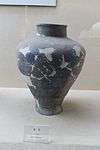
Another theory put forth by Zhu Fangpu is that 公 is a pictogram (象形) , being the original form of 瓮 (OC *qloːŋs, “a wide-mouthed round-bottomed jar”), and later borrowed for the meaning of “public”.
Pronunciation
Definitions
公
Compounds
|
|
|
Japanese
Kanji
Readings
Compounds
Noun
公 (hiragana おおやけ, rōmaji ōyake, historical hiragana おほやけ)
Pronoun
- Alternative form of 君
Korean
Hanja
公 (eumhun 공평할 공 (gongpyeonghal gong))
- This term needs a translation to English. Please help out and add a translation, then remove the text
{{rfdef}}.
Vietnamese
Han character
公 (công)
- This term needs a translation to English. Please help out and add a translation, then remove the text
{{rfdef}}.