体
| ||||||||
Translingual
| Japanese | 体 |
|---|---|
| Simplified | 体 |
| Traditional | 體/体 |
Alternative forms
In the historical Chinese dictionary Longkan Shoujian (龍龕手鑑), this character is written in the form of ⿰亻夲.
Han character
体 (radical 9, 人+5, 7 strokes, cangjie input 人木一 (ODM), four-corner 25230, composition ⿰亻本)
Derived characters
- 𭈄, 𭰟, 𬌕, 𫌠/𧡊, 𥮋
Related characters
- 體 (Orthodox traditional form of 体)
References
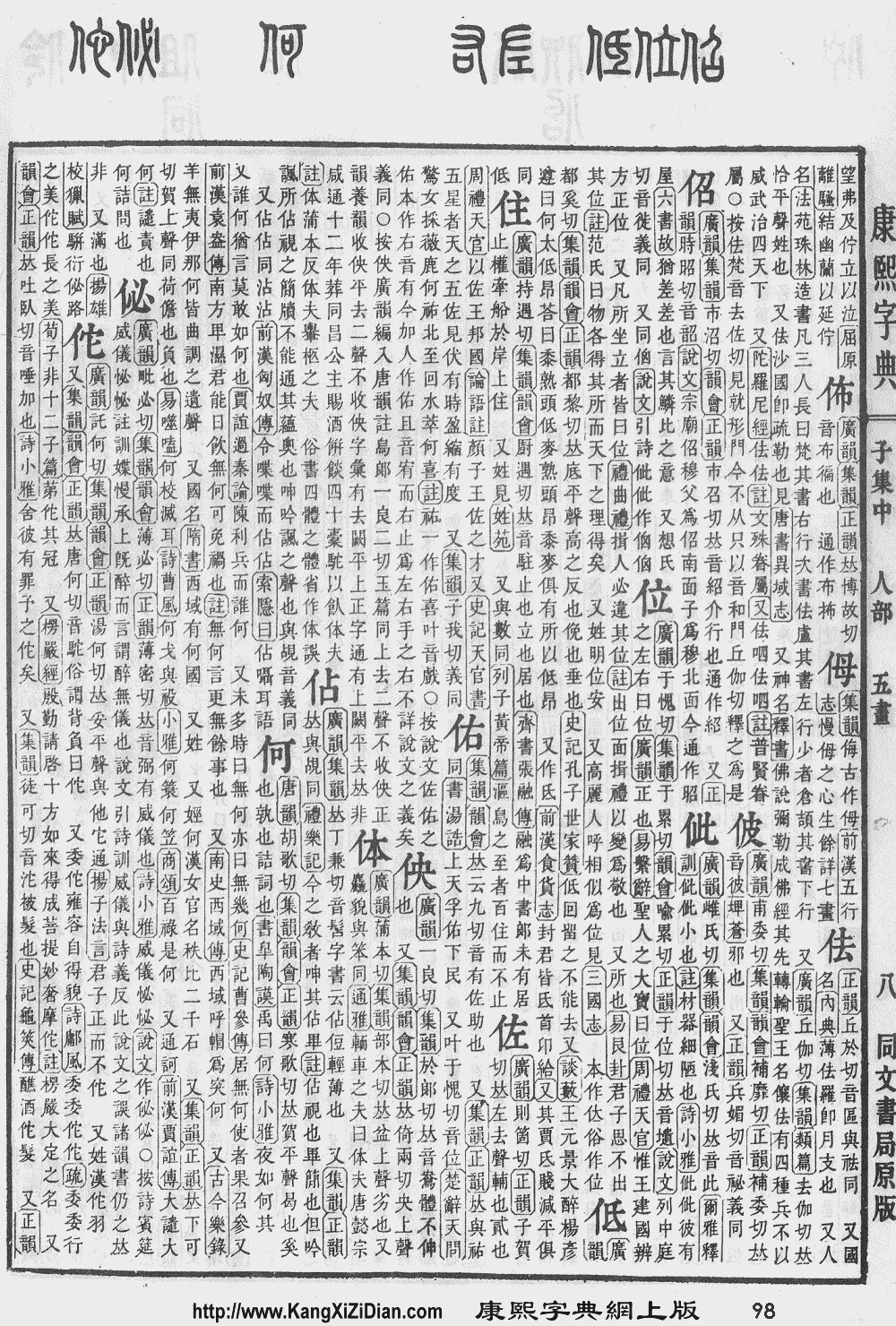
- KangXi: page 98, character 13
- Dai Kanwa Jiten: character 509
- Dae Jaweon: page 208, character 3
- Hanyu Da Zidian: volume 1, page 130, character 1
- Unihan data for U+4F53
Usage notes
- Readings as traditional 体 (coarse; inferior):
- ban6 (Cantonese), bèn (Mandarin), bun (Korean), hon (Japanese).
- Readings as simplification of 體 (body; group):
- tai2 (Cantonese), tǐ (Mandarin), che (Korean), tei or tai (Japanese), thể (Vietnamese).
Chinese
Etymology 1
Ideogrammic compound (會意) : 亻 (“person”) + 本 (“basis”).
| For pronunciation and definitions of 体 – see 體 (“body; part of the body; etc.”). (This character, 体, is the simplified and variant traditional form of 體.) |
Notes:
|
Etymology 2
| simp. and trad. |
体 | |
|---|---|---|
Glyph origin
| Characters in the same phonetic series (本) (Zhengzhang, 2003) | |
|---|---|
| Old Chinese | |
| 本 | *pɯːnʔ |
| 笨 | *pɯːnʔ, *bɯːnʔ |
| 苯 | *pɯːnʔ |
| 翉 | *pʰɯːnʔ |
| 体 | *bɯːnʔ |
| 鉢 | *poːd |
| 缽 | *poːd |
Phono-semantic compound (形聲, OC *bɯːnʔ) : semantic 亻 (“person”) + phonetic 本 (OC *pɯːnʔ).
Pronunciation
Definitions
体
- Alternative form of 笨 (bèn). (coarse appearance; inferior)
- Used in 体夫. (pallbearer)
Compounds
|
Etymology 3
| simp. and trad. |
体 | |
|---|---|---|
Pronunciation
Definitions
体
- ‡ name of prison
Japanese
| 体 | |
| 體 |
Kanji 1
体
(grade 2 “Kyōiku” kanji, shinjitai kanji, kyūjitai form 體)
Readings
Kanji 2
体
(Uncommon “Hyōgai” kanji, co-opted
for common use, see above)
Readings
Etymology 1
| Kanji in this term |
|---|
| 体 |
| からだ Grade: 2 |
| kun’yomi |
Pronunciation
Alternative forms
Noun
体 (hiragana からだ, rōmaji karada)
- body
- 2004 November 9, Sorachi, Hideaki, “第二十六訓 旅にはパンツは忘れてもUNOは忘れるな [Lesson 26: Never Forget to Bring UNO on a Trip Even If You Might Forget Your Underwear]”, in 銀魂 [Silver Soul], volume 4 (fiction, in Japanese), Tokyo: Shueisha, →ISBN:
- あー 身体も重いし 完全に二日酔いじゃの〰アッハッハッハッハッ
- Ā karada mo omoishi Kanzen ni futsukayoi ja no~Ahhahhahhahha'
- Agh, my body feels all heavy. Must be the hangover〰Ahahahaha
- あー 身体も重いし 完全に二日酔いじゃの〰アッハッハッハッハッ
-
- health
Derived terms
- 体付き (karadatsuki)
Etymology 2
| Kanji in this term |
|---|
| 体 |
| たい Grade: 2 |
| on’yomi |
From Middle Chinese 體 (thejX, “body”).
Pronunciation
Counter
- counter for humanoid objects
- 2017 March 25, “リンク・スパイダー [Link Spider]”, in STARTER DECK, Konami:
- 通常モンスター1体
①:1ターンに1度、自分メインフェイズに発動できる。手札からレベル4以下の通常モンスター1体をこのカードのリンク先に特殊召喚する。- Tsūjō Monsutā ittai
①: Ittān ni ichi-do, jibun Mein Feizu ni hatsudō dekiru. Tefuda kara Reberu 4 ika no Tsūjō Monsutā ittai o kono kādo no Rinku-saki ni Tokushu Shōkansuru. - 1 or more Normal Monsters
①: Once per turn, can be activated during your Main Phase. Special Summon 1 Normal Monster of Level 4 or lower from your hand to where this card is linked to.
- Tsūjō Monsutā ittai
- 通常モンスター1体
-
Noun
Derived terms
Derived terms
- ガラス体 (garasutai, “vitreous body”)
- 字体 (jitai)
- 硝子体 (shōshitai, “vitreous body”)
- 身体 (shintai)
- 体位 (taii)
- 体育 (taiiku)
- 体液 (taieki)
- 体温 (taion)
- 体外 (taigai)
- 体格 (taikaku)
- 体感 (taikan)
- 体技 (taigi)
- 体協 (taikyō)
- 体躯 (taiku)
- 体腔 (taikū)
- 体刑 (taikei)
- 体型 (taikei)
- 体形 (taikei)
- 体系 (taikei)
- 体験 (taiken)
- 体現 (taigen)
- 体言 (taigen)
- 体質 (taishitsu)
- 体重 (taijū)
- 体臭 (taishutsu)
- 体術 (taijutsu, “taijutsu”)
- 体制 (taisei)
- 体勢 (taisei)
- 体積 (taiseki)
- 体操 (taisō)
- 体中 (taichū)
- 体調 (taichō)
- 体長 (taichō)
- 体得 (taitoku)
- 体内 (tainai)
- 体認 (tainin)
- 体熱 (tainetsu)
- 体罰 (taibatsu)
- 体貌 (taibotsu)
- 体面 (taimen)
- 体毛 (taimō)
- 体様 (taiyō)
- 体要 (taiyō)
- 体量 (tairyō)
- 体力 (tairyoku)
- 扁桃体 (hentōtai, “amygdala”)
Etymology 3
| Kanji in this term |
|---|
| 体 |
| てい Grade: 2 |
| on’yomi |
Pronunciation
Alternative forms
Noun
Derived terms
- 体裁 (teisai)
- 体良く (teiyoku)
References
- 1 2 3 4 諸橋轍次 (Morohashi Tetsuji), chief ed. 大漢和辞典 (Dai Kan-Wa Jiten, "Comprehensive Chinese–Japanese Dictionary"). 13 vols. 1955–1960. Revised and enlarged ed. 1984–1986. Tokyo: Taishukan.
- 1 2 3 2006, 大辞林 (Daijirin), Third Edition (in Japanese), Tōkyō: Sanseidō, →ISBN
- 1 2 3 1998, NHK日本語発音アクセント辞典 (NHK Japanese Pronunciation Accent Dictionary) (in Japanese), Tōkyō: NHK, →ISBN
Korean
Etymology 1
Hanja
体 (eumhun 용렬할 분 (yongnyeolhal bun))
Etymology 2
Hanja
- body
- personally
- shape
- root
- formality
- matter
- object
- handwriting
- style
- experience
- get by experience
- acknowledge
- think
Vietnamese
Etymology 1
Han character
体 (thể)
Etymology 2
Han character
体 (thấy)
- Alternative form of 𫌠/𧡊 (to see)
References
This article is issued from
Wiktionary.
The text is licensed under Creative Commons - Attribution - Sharealike.
Additional terms may apply for the media files.