弓
| ||||||||
Translingual
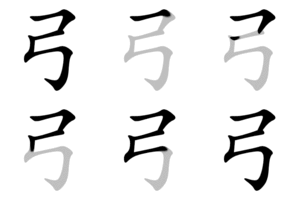
| Stroke order | |||
|---|---|---|---|
 | |||
Han character
弓 (radical 57 弓+0, 3 strokes, cangjie input 弓 (N), four-corner 17207)
- Kangxi radical #57, ⼸.
Derived characters
References
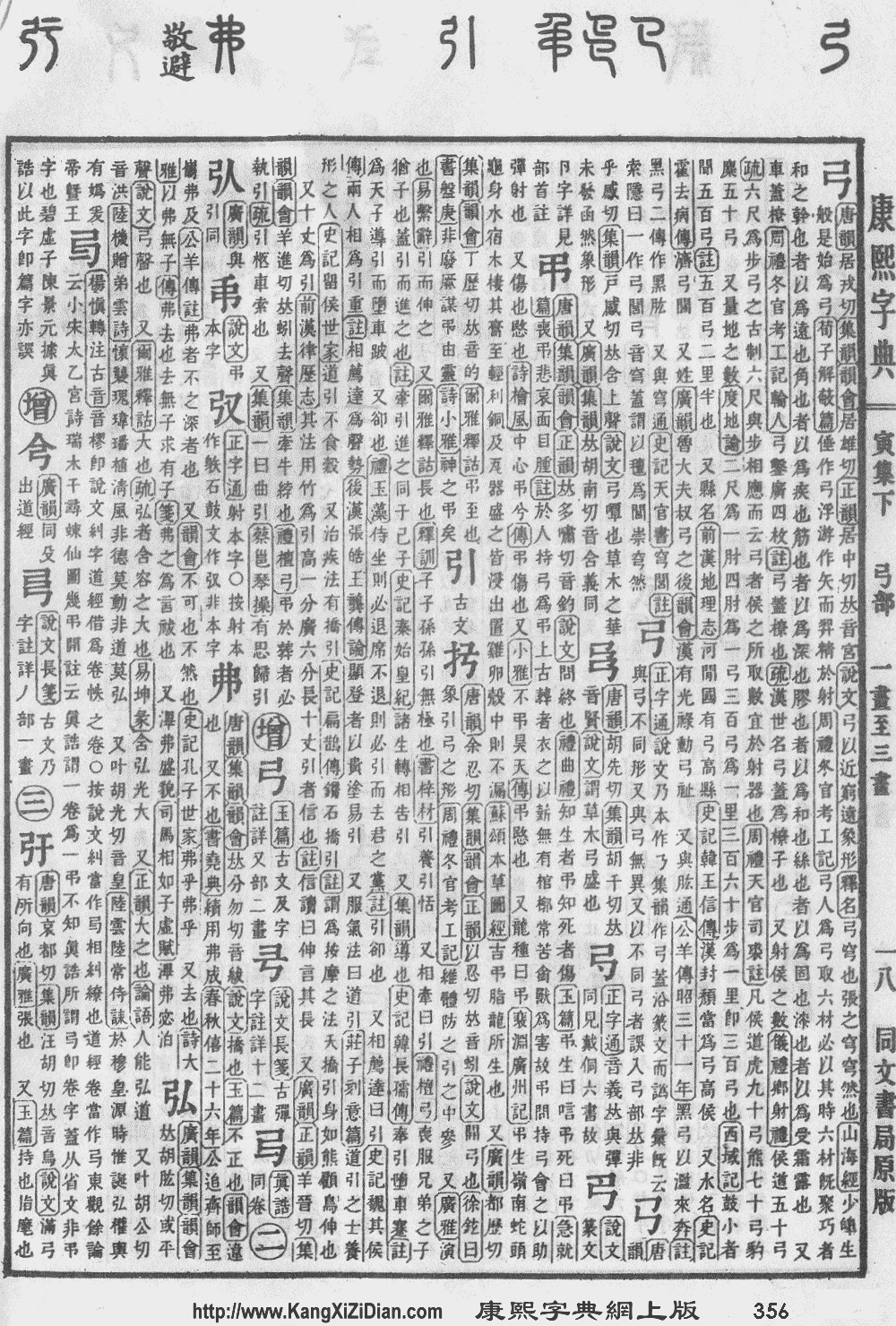
- KangXi: page 356, character 1
- Dai Kanwa Jiten: character 9692
- Dae Jaweon: page 671, character 22
- Hanyu Da Zidian: volume 2, page 987, character 11
- Unihan data for U+5F13
Chinese
| simp. and trad. |
弓 | |
|---|---|---|
Glyph origin
| Historical forms of the character 弓 | ||||
|---|---|---|---|---|
| Shang | Western Zhou | Warring States | Shuowen Jiezi (compiled in Han) | Liushutong (compiled in Ming) |
| Oracle bone script | Bronze inscriptions | Chu Slip and silk script | Small seal script | Transcribed ancient scripts |
 |
 |
 |
 |
 |
| Characters in the same phonetic series (弓) (Zhengzhang, 2003) | |
|---|---|
| Old Chinese | |
| 弓 | *kʷɯŋ |
| 穹 | *kʰʷɯŋ |
| 焪 | *kʰʷɯŋ, *kʰʷɯŋs |
| 芎 | *kʰʷɯŋ |
Pictogram (象形) - pictographic representation of a bow.
Pronunciation
Definitions
弓
Compounds
See also
Japanese
Kanji
Readings
Etymology 1
| Kanji in this term |
|---|
| 弓 |
| ゆ Grade: 2 |
| kun’yomi |
From Old Japanese. In modern Japanese, only found as a prefix in compounds.[1][2]
Pronunciation
Prefix
弓 (hiragana ゆ, rōmaji yu-)
Derived terms
Etymology 2
| Kanji in this term |
|---|
| 弓 |
| ゆみ Grade: 2 |
| kun’yomi |
Appears to be Old Japanese yu + suffixing element mi, itself of uncertain derivation.
Pronunciation
Noun
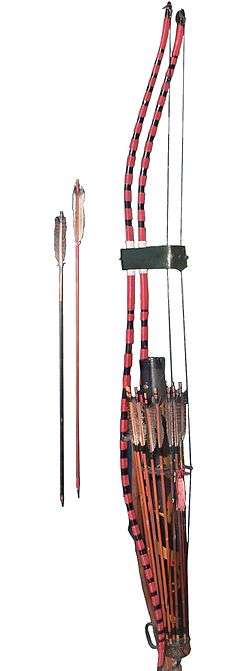
- a bow:
- (weaponry) a bow for shooting arrows
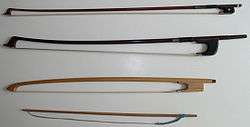
- (music) a bow for playing a stringed instrument such as a violin or cello
- archery
- (Shinto) a type of kagura (sacred Shinto song and dance) intended to drive away evil
- short for 破魔弓 (hama yumi): a ceremonial archery bow with the power to dispel evil
- a bow shape, a curve
- a bow-shaped tool used to beat ginned cotton into a softer and finer textile
Coordinate terms
Derived terms
- 弓矢 (yumiya): bow and arrow
- 梓弓 (azusa yumi): a catalpa wood bow
- 破魔弓 (hama yumi): a traditional Shintō ceremonial bow for dispelling evil
- 重籐弓, 滋籐弓, 繁籐弓 (shigedō yumi): a rattan wood bow
See also
- ロングボウ
Further reading
-

-
-
-
Etymology 3
| Kanji in this term |
|---|
| 弓 |
| たらし Grade: 2 |
| kun’yomi |
Alteration from torashi, 連用形 (ren'yōkei, “stem or continuative form”) of verb torasu, from tora as the 未然形 (mizenkei, “incomplete form”) of verb 取る (toru, “to take”) + す (su, honorific suffix in Old Japanese). Original meaning was “something kept to hand”.[1][2]
Pronunciation
Alternative forms
Noun
弓 (hiragana たらし, rōmaji tarashi)
Synonyms
- 御執, 御弓 (みたらし, mitarashi)
Etymology 4
| Kanji in this term |
|---|
| 弓 |
| きゅう Grade: 2 |
| on’yomi |
From Middle Chinese 弓 (*giung).[1][2] Compare modern Mandarin 弓 (gōng).
Pronunciation
Noun
- (rare) a bow
- (obsolete) in ancient Chinese archery, a unit of length for measuring the distance between the archer and the target; one kyū was equal to six 尺 (shaku), roughly six feet or 182 centimeters
- (obsolete) in ancient China, a unit of length for surveying land; one kyū was equal to eight 尺 (shaku), roughly eight feet or 242 centimeters
Usage notes
In modern Japanese, the reading kyū is most often found in compounds.
Derived terms
References
Korean
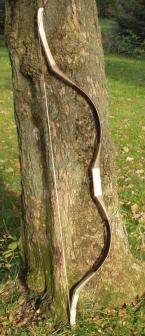
the shape of the Hun bow
Hanja
弓 • (gung)
Compounds
Related terms
See also
Vietnamese
Han character
- This term needs a translation to English. Please help out and add a translation, then remove the text
{{rfdef}}.