發
| ||||||||
Translingual
| Traditional | 發 |
|---|---|
| Shinjitai | 発 |
| Simplified | 发 |
Han character
發 (radical 105, 癶+7, 12 strokes, cangjie input 弓人弓竹水 (NONHE), four-corner 12247, composition ⿱癶⿰弓殳)
Descendants
Derived characters
References
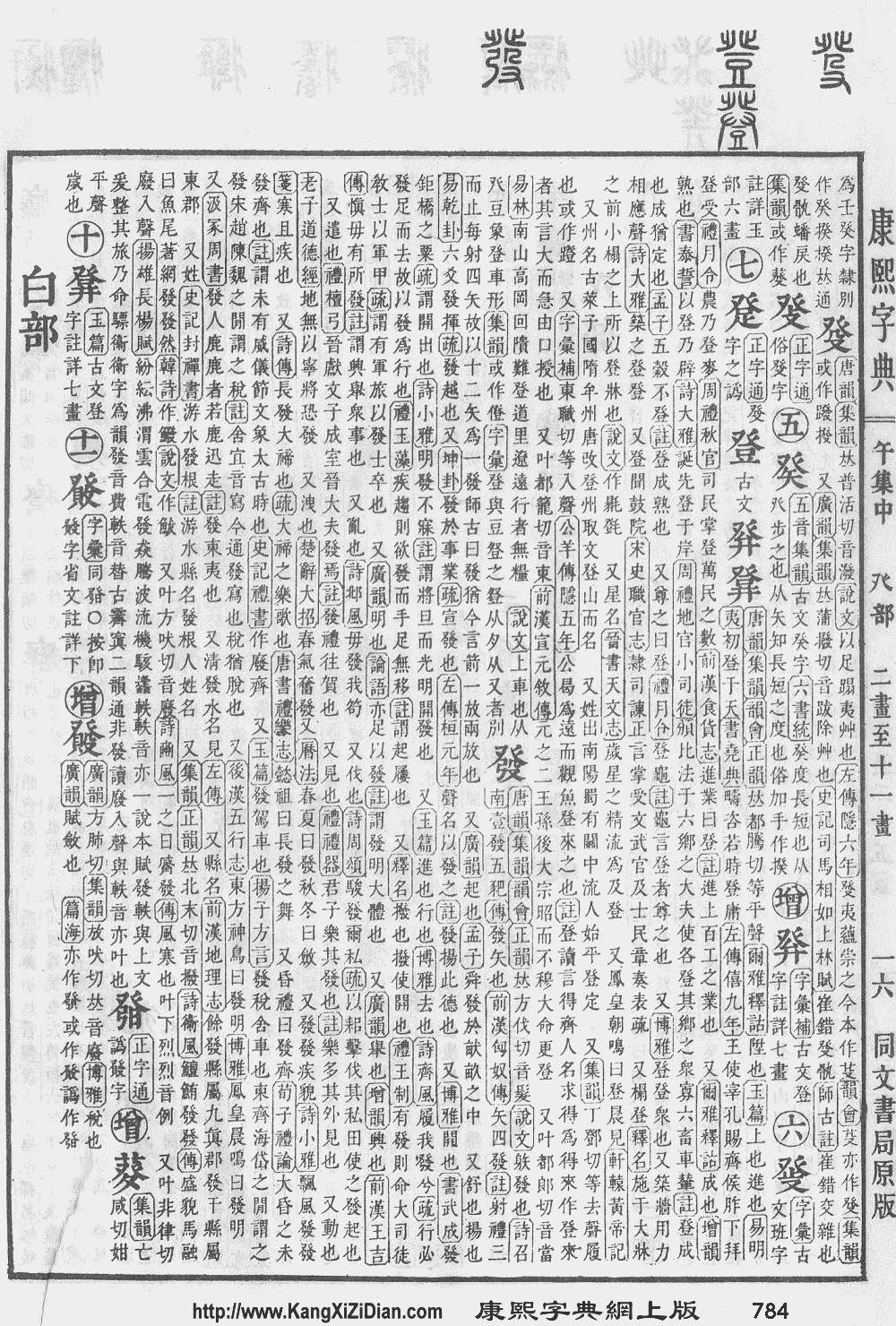
- KangXi: page 784, character 10
- Dai Kanwa Jiten: character 22669
- Dae Jaweon: page 1194, character 1
- Hanyu Da Zidian: volume 4, page 2761, character 4
- Unihan data for U+767C
Chinese
| trad. | 發 | |
|---|---|---|
| simp. | 发* | |
| alt. forms | 𤼲 𤼵 彂 | |
Glyph origin
| Characters in the same phonetic series (癹) (Zhengzhang, 2003) | |
|---|---|
| Old Chinese | |
| 發 | *pad |
| 癹 | *pʰaːd, *baːd |
Phono-semantic compound (形聲, OC *pad) : semantic 弓 (“bow”) + phonetic 癹 (OC *pʰaːd, *baːd, “sound of bowstring when shooting”).
Pronunciation
Definitions
發
- to issue
- to distribute
- to depart
- to become; to get into a certain state; to develop; to manifest
- to become wealthy
- Classifier for ammunition.
Compounds
Derived terms from 發
|
|
|
Japanese
| 発 | |
| 發 |
Kanji
發
(uncommon “Hyōgai” kanji, kyūjitai kanji, shinjitai form 発)
Readings
Etymology
| Kanji in this term |
|---|
| 發 |
| はつ Hyōgaiji |
| Irregular |
Alternate forms
- 𤼵 (common in Japanese tilesets)
Pronunciation
- (Irregular reading)
- IPA(key): [ha̠t͡sɨᵝ]
Noun
發 (katakana ハツ, rōmaji hatsu)
- (mahjong) green dragon (tile)
- Hypernym: 三元牌 (sangenpai)
- (mahjong) a 役 (yaku, “winning hand”) with a triplet or quad of green dragon tiles
- Hypernym: 役牌 (yakuhai, yaku-pai)
Coordinate terms
- 三元牌 (sangenpai, “dragon tiles”): 白 (haku, “white dragon”), 發/𤼵 (hatsu, “green dragon”), 中 (chun, “red dragon”)
Korean
Hanja
發 • (bal) (hangeul 발)
- This term needs a translation to English. Please help out and add a translation, then remove the text
{{rfdef}}.
Vietnamese
Han character
- This term needs a translation to English. Please help out and add a translation, then remove the text
{{rfdef}}.
This article is issued from
Wiktionary.
The text is licensed under Creative Commons - Attribution - Sharealike.
Additional terms may apply for the media files.