歲
| ||||||||
Translingual
| Traditional | 歲 |
|---|---|
| Shinjitai | 歳 |
| Simplified | 岁 |
Han character
歲 (radical 77, 止+9, 13 strokes, cangjie input 卜一戈竹竹 (YMIHH), four-corner 21253, composition ⿱止⿵戌𣥂)
Derived glyphs
References
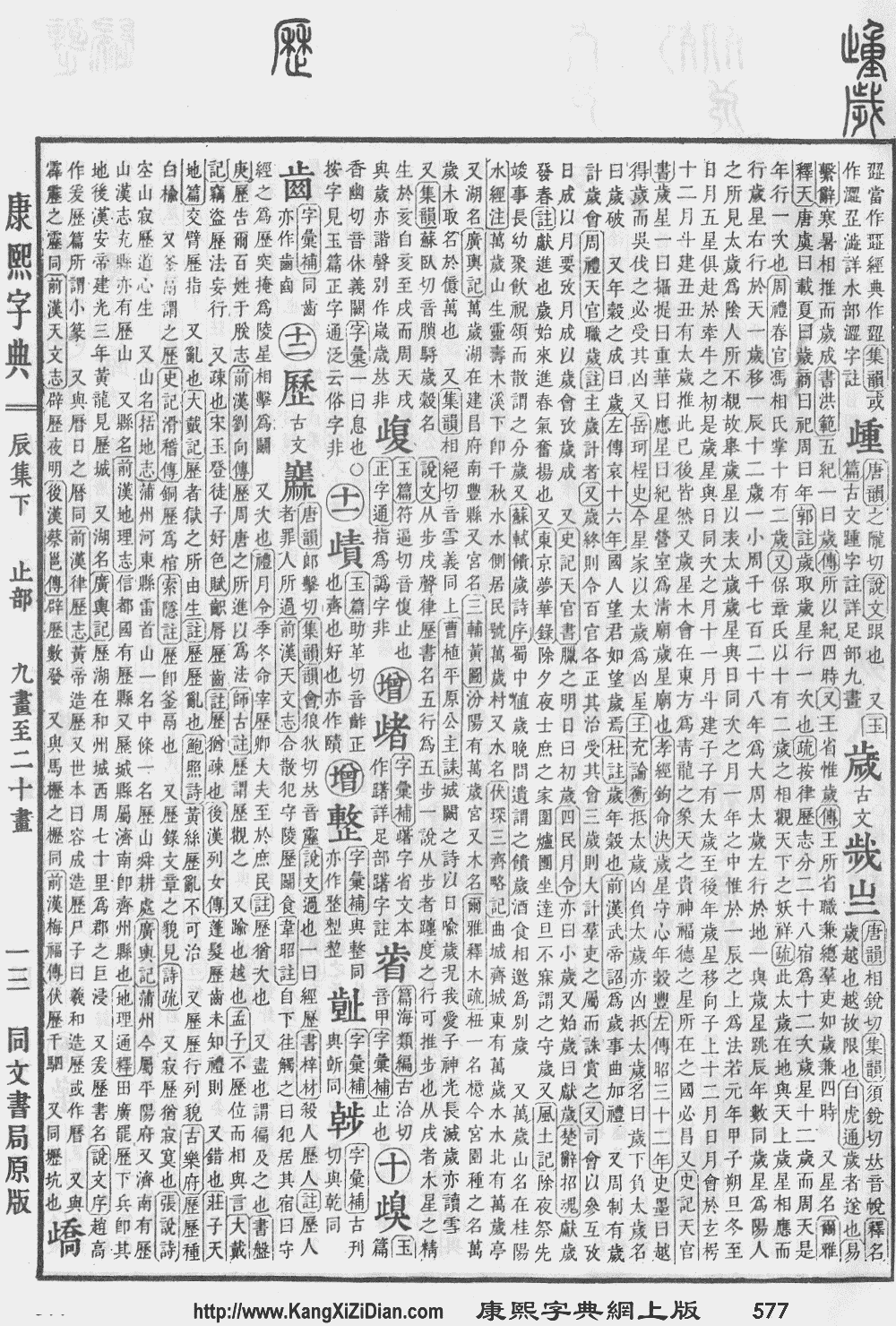
- KangXi: page 577, character 2
- Dai Kanwa Jiten: character 16326
- Dae Jaweon: page 967, character 17
- Hanyu Da Zidian: volume 2, page 1443, character 20
- Unihan data for U+6B72
Chinese
| trad. | 歲 | |
|---|---|---|
| simp. | 岁 | |
| alt. forms | ||
Glyph origin
| Historical forms of the character 歲 | ||||
|---|---|---|---|---|
| Shang | Western Zhou | Warring States | Shuowen Jiezi (compiled in Han) | Liushutong (compiled in Ming) |
| Oracle bone script | Bronze inscriptions | Chu Slip and silk script | Small seal script | Transcribed ancient scripts |
 |
 |
 |
 |
 |
| Characters in the same phonetic series (歲) (Zhengzhang, 2003) | |
|---|---|
| Old Chinese | |
| 噦 | *qʰʷaːds, *qʷrad, *qʷad |
| 翽 | *qʰʷaːds |
| 鐬 | *qʰʷaːds |
| 濊 | *qʰʷaːds, *qʷaːds, *qʷads, *qʰʷaːd |
| 歲 | *sqʰʷads, *sqʰʷad |
| 劌 | *kʷrads |
| 顪 | *qʰʷads |
| 穢 | *qʷads |
| 薉 | *qʷads |
| 獩 | *qʷads |
| 饖 | *qʷads |
| 奯 | *qʰʷaːd |
Phono-semantic compound (形聲, OC *sqʰʷads, *sqʰʷad) : semantic 步 + phonetic 戉 (OC *ɢʷad).
Pronunciation
Definitions
歲
- (Classical Chinese) Jupiter (planet)
- a year of the duodecennial Jovian orbital cycle or of the sexagenary cycle based upon it, (particularly) used in discussion of age.
- Tai Sui, the god representing each of these years
- age
- time; period
- crop harvests of the year
Usage note
Ages in 歲 are traditionally reckoned using the Chinese lunar calendar, considered as 1 year old at the moment of birth and increasing not during birthdays, but at the Chinese New Year.
See also
Compounds
Derived terms from 歲
|
|
|
Japanese
Kanji
歲
- This term needs a translation to English. Please help out and add a translation, then remove the text
{{rfdef}}.
Readings
Usage notes
This character lacks JIS support and is not used in Japan. The character 歳 (U+6B73) is used instead.
Korean
Hanja
歲 • (se) (hangeul 세, McCune–Reischauer se, Yale sey)
- Age (counter)
- Year
Vietnamese
Han character
- This term needs a translation to English. Please help out and add a translation, then remove the text
{{rfdef}}.
This article is issued from
Wiktionary.
The text is licensed under Creative Commons - Attribution - Sharealike.
Additional terms may apply for the media files.