animal
English
Pronunciation
| Picture dictionary | |||||||
|---|---|---|---|---|---|---|---|
| |||||||
|
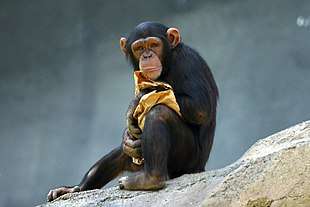

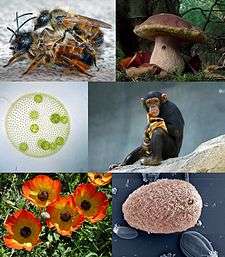
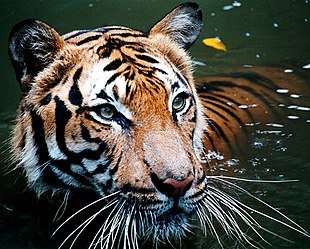

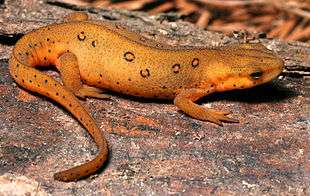
.jpg)
Etymology 1
From Middle English animal, from Old French animal, from Latin animal, a nominal use of an adjective from animale, neuter of animalis, from anima (“breath, spirit”). Displaced native Middle English deor, der (“animal”) (from Old English dēor (“animal”)), Middle English reother (“animal, neat”) (from Old English hrīþer, hrȳþer (“neat, ox”)).
Noun
animal (plural animals)
- In scientific usage, a multicellular organism that is usually mobile, whose cells are not encased in a rigid cell wall (distinguishing it from plants and fungi) and which derives energy solely from the consumption of other organisms (distinguishing it from plants).
- A cat is an animal, not a plant. Humans are also animals, under the scientific definition, as we are not plants.
- 1646, Thomas Browne, “Of the Cameleon”, in Pseudodoxia Epidemica: Or, Enquiries into Very Many Received Tenents, and Commonly Presumed Truths, London: Printed for Tho. Harper for Edvvard Dod, OCLC 838860010; Pseudodoxia Epidemica: Or, Enquiries into Very Many Received Tenents, and Commonly Presumed Truths. [...] Together with Some Marginall Observations, and a Table Alphabeticall at the End, book 3, 2nd corrected and much enlarged edition, London: Printed by A. Miller, for Edw[ard] Dod and Nath. Ekins, at the Gunne in Ivie Lane, 1650, OCLC 152706203, page 133:
- It cannot be denied it [the chameleon] is (if not the moſt of any) a very abſtemious animall, and ſuch as by reaſon of its frigidity, paucity of bloud, and latitancy in the winter (about which time the obſervations are often made) will long ſubſist without a viſible ſuſtentation.
- In non-scientific usage, any member of the kingdom Animalia other than a human.
- In non-scientific usage, any land-living vertebrate (i.e. not fishes, insects, etc.).
- 2013 July-August, Henry Petroski, “Geothermal Energy”, in American Scientist, volume 101, number 4:
- Ancient nomads, wishing to ward off the evening chill and enjoy a meal around a campfire, had to collect wood and then spend time and effort coaxing the heat of friction out from between sticks to kindle a flame. With more settled people, animals were harnessed to capstans or caged in treadmills to turn grist into meal.
-
- (figuratively) A person who behaves wildly; a bestial, brutal, brutish, cruel, or inhuman person.
- My students are animals.
- (informal) A person of a particular type.
- He's a political animal.
- Matter, thing.
- a whole different animal
Synonyms
Hyponyms
- See also Thesaurus:animal
Related terms
Translations
|
|
|
|
|
|
- The translations below need to be checked and inserted above into the appropriate translation tables, removing any numbers. Numbers do not necessarily match those in definitions. See instructions at Wiktionary:Entry layout#Translations.
|
|
Etymology 2
From Latin animalis, from either anima (“breath, spirit”) or animus. Originally distinct from the noun, it became associated with attributive use of the noun and is now indistinguishable from it.
Adjective
animal (not comparable)
- Of or relating to animals.
- animal instincts
- Raw, base, unhindered by social codes.
- animal passions
- Pertaining to the spirit or soul; relating to sensation or innervation.
- 2003, Roy Porter, Flesh in the Age of Reason (Penguin 2004), page 47:
- To explain what activated the flesh, ‘animal spirits’ were posited, superfine fluids which shuttled between the mind and the vitals, conveying messages and motion.
- 2003, Roy Porter, Flesh in the Age of Reason (Penguin 2004), page 47:
- (slang, Ireland) Excellent.
Synonyms
Derived terms
Translations
|
|
|
|
See also
- Wiktionary appendix of terms relating to animals
References
- animal at OneLook Dictionary Search
Anagrams
Asturian
Etymology
Adjective
Noun
animal m (plural animales)
Catalan
Etymology
Pronunciation
Noun
animal m (plural animals)
Adjective
animal (masculine and feminine plural animals)
Cebuano
Etymology 1
From English animal, from Middle English animal, from Old French animal, from Latin animal, a nominal use of an adjective from animale, neuter of animalis, from anima (“breath, spirit”).
Noun
animal
- animal
- (pejorative) a contemptible person
Adjective
animal
- contemptible, deserving contempt
- ruthless; without pity or compassion; cruel, pitiless
Etymology 2
From Spanish animal, borrowed from Latin animal.
Interjection
animal
French
Etymology
Borrowed from Latin animal. Compare the archaic inherited doublet aumaille and its variant armaille, both from the Latin neuter plural animālia.
Pronunciation
Noun
animal m (plural animaux)
Synonyms
Derived terms
Adjective
animal (feminine singular animale, masculine plural animaux, feminine plural animales)
Synonyms
Antonyms
Further reading
- “animal” in le Trésor de la langue française informatisé (The Digitized Treasury of the French Language).
Anagrams
Galician
Etymology
Adjective
animal m, f (plural animais)
Noun
animal m (plural animais)
Haitian Creole
Etymology
Noun
animal
Synonyms
Interlingua
Pronunciation
- IPA(key): /a.niˈmal/
Noun
animal (plural animales)
Latin
Etymology
Pronunciation
- (Classical) IPA(key): /ˈa.ni.mal/, [ˈa.nɪ.maɫ]
Noun
animal n (genitive animālis); third declension
Inflection
Third declension neuter “pure” i-stem.
| Case | Singular | Plural |
|---|---|---|
| nominative | animal | animālia |
| genitive | animālis | animālium |
| dative | animālī | animālibus |
| accusative | animal | animālia |
| ablative | animālī | animālibus |
| vocative | animal | animālia |
Synonyms
Related terms
Descendants
- Aromanian: nãmalj, nãmaljiu
- Asturian: animal
- Breton: aneval
- Catalan: animal
- English: animal
- Franco-Provençal: armalye, animal (borrowing)
- French: animal, aumaille, armaille
- Friulian: animâl, nemâl
References
- animal in Charlton T. Lewis and Charles Short (1879) A Latin Dictionary, Oxford: Clarendon Press
- animal in Charlton T. Lewis (1891) An Elementary Latin Dictionary, New York: Harper & Brothers
- animal in Charles du Fresne du Cange’s Glossarium Mediæ et Infimæ Latinitatis (augmented edition, 1883–1887)
- animal in Gaffiot, Félix (1934) Dictionnaire Illustré Latin-Français, Hachette
- Carl Meissner; Henry William Auden (1894) Latin Phrase-Book, London: Macmillan and Co.
- animate and inanimate nature: animata (animalia) inanimaque (not inanimata)
- domestic animals: animalia quae nobiscum degunt (Plin. 8. 40)
- animate and inanimate nature: animata (animalia) inanimaque (not inanimata)
Middle French
Noun
animal m (plural animaux or animaulx)
Synonyms
Papiamentu
Etymology
From Portuguese animal and Spanish animal.
Noun
animal
Portuguese
Etymology
Borrowed from Latin animal. See also alimária, an inherited doublet.
Pronunciation
Noun
animal m (plural animais)
- (biology) animal (any member of the kingdom Animalia)
- (non-scientific usage) animal (an animal other than a human, especially a vertebrate)
- (colloquial) twat; idiot; moron
- (colloquial) beast (a cruel person)
Quotations
For quotations of use of this term, see Citations:animal.
Synonyms
Derived terms
- animalzinho (diminutive), animalzão (augmentative)
Adjective
animal m, f (plural animais, comparable)
Inflection
| singular | plural | |||
|---|---|---|---|---|
| masculine | feminine | masculine | feminine | |
| positive | animal | animal | animais | animais |
| comparative | mais animal | mais animal | mais animais | mais animais |
| superlative | o mais animal animalíssimo |
a mais animal animalíssima |
os mais animais animalíssimos |
as mais animais animalíssimas |
| augmentative | — | — | — | — |
| diminutive | — | — | — | — |
Quotations
For quotations of use of this term, see Citations:animal.
Romanian
Etymology
Borrowed from French animal, from Latin animal. Doublet of nămaie.
Pronunciation
- IPA(key): /a.niˈmal/
Adjective
animal m, n (feminine singular animală, masculine plural animali, feminine and neuter plural animale)
Declension
Adverb
animal
Noun
animal n (plural animale)
Declension
Romansch
Etymology
Noun
animal m (plural animals)
Synonyms
- (Rumantsch Grischun, Sursilvan, Surmiran) biestg
- (Rumantsch Grischun, Sutsilvan) bestga
- (Sursilvan) tier, bestia
- (Puter, Vallader) bes-cha
Spanish
Etymology
Borrowed from Latin animal. See also alimaña, an inherited doublet.
Pronunciation
- Rhymes: -al
Noun
animal m (plural animales)
Derived terms
(diminutive animalillo or animalito)
Adjective
animal (plural animales)
Anagrams
Tok Pisin
Etymology
Noun
animal
- animal (members of Kingdom Animalia that are not humans)
- 1989, Buk Baibel long Tok Pisin, Bible Society of Papua New Guinea, Genesis 1:25 (translation here):
- God i kamapim ol kain kain animal bilong ples na ol bikpela na liklik animal bilong bus. God i lukim olgeta dispela samting i gutpela, na em i amamas.
- Synonym: abus
- 1989, Buk Baibel long Tok Pisin, Bible Society of Papua New Guinea, Genesis 1:25 (translation here):