dame
English
Etymology
From Middle English dame, dam (“(term of address or title of a) woman of rank, lady; mistress of a household; superior of a convent; mother”), from Old French dame (“lady; term of address for a woman; the queen in card games and chess”), from Latin domina (“mistress of the house”),[1] feminine form of dominus (“lord, master, ruler; owner of a residence”), ultimately either from Proto-Indo-European *demh₂- (“to domesticate, tame”) or from Latin domus (“home, house”) (ultimately from Proto-Indo-European *dem- (“to build (up)”)). Doublet of donna.
Pronunciation
- (Received Pronunciation, General American) IPA(key): /deɪm/
- Rhymes: -eɪm
Noun
dame (plural dames)
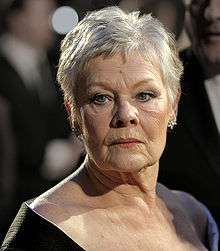
- (Britain) Usually capitalized as Dame: a title equivalent to Sir for a female knight.
- Dame Edith Sitwell
- (Britain) A matron at Eton College.
- (Britain, theater) In traditional pantomime: a melodramatic female often played by a man in drag.
- (US, dated, informal, slightly derogatory) A woman.
- 1903 March, Guy Wetmore Carryl, The Lieutenant-Governor: A Novel, Boston, Mass.; New York, N.Y.: Houghton, Mifflin and Company; Riverside Press, Cambridge [Mass.], OCLC 2223403, page 37:
- I can see that would be the kind of a chap that the dames would stand for everlastingly.
- 1949, Oscar Hammerstein II (lyrics), Richard Rodgers (music), “There Is Nothing Like a Dame”, in South Pacific; published in Oscar Hammerstein II (lyrics); Oscar Hammerstein II and Joshua Logan (book); Albert Sirmay [i.e., Albert Szirmai] (vocal score editor), South Pacific. A Musical Play. [...] Adapted from James A. Michener’s [...] Tales of the South Pacific [...], New York, N.Y.: Williamson Music; Milwaukee, Wis.: Hal Leonard, 1949, OCLC 497235024, page 30:
- There is nothin' like a dame / Nothin' in the world. / There is nothin' you can name / That is anythin' like a dame.
-
- (archaic) A lady, a woman.
Synonyms
- See Thesaurus:woman
Derived terms
Related terms
Translations
See also
References
- ↑ “dāme, n.” in MED Online, Ann Arbor, Mich.: University of Michigan, 2007, retrieved 16 February 2018.
Further reading

Anagrams
Danish
Etymology
Pronunciation
- IPA(key): /daːmə/, [ˈd̥æːmə], [ˈd̥æːm̩]
Noun
dame c (singular definite damen, plural indefinite damer)
- lady
- woman
- (informal) girlfriend
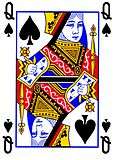
- (card games) queen
Inflection
Derived terms
See also
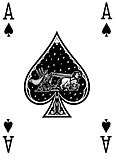
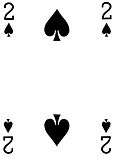
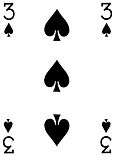
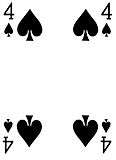
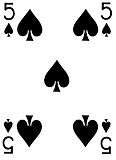
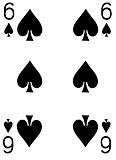
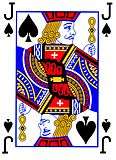
| Playing cards in Danish · kort, spillekort (layout · text) | ||||||
|---|---|---|---|---|---|---|
 |
 |
 |
 |
 |
 |
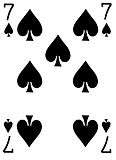 |
| es | toer | treer | firer | femmer | sekser | syver |
 |
 |
 |
 |
 |
 |
 |
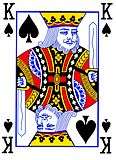
| otter | nier | tier | knægt, bonde | dame, dronning | konge | joker |
Dutch
Etymology
Borrowed from Old French dame, from Latin domina.
Pronunciation
Audio (file) - Hyphenation: da‧me
Noun
See also
| Chess pieces in Dutch · schaakstukken (schaak + stukken) (layout · text) | |||||
|---|---|---|---|---|---|
 |
 |
_kopio.jpg) |
 |
 |
 |
| koning | koningin, dame | toren | loper | paard | pion |
Anagrams
French
Etymology
From Old French dame, from Late Latin domna, shortened variant of Latin domina.
Pronunciation
- IPA(key): /dam/
audio (file)
Noun
dame f (plural dames)
- A lady
- A polite form of address for a woman.
- (chess) queen
- (card games) queen
Derived terms
See also
| Chess pieces in French · pièces d'échecs (layout · text) | |||||
|---|---|---|---|---|---|
|
|
|
|
|
|
| roi | dame | tour | fou | cavalier | pion |
| Playing cards in French · cartes à jouer (layout · text) | ||||||
|---|---|---|---|---|---|---|
|
|
|
|
|
|
|
| as | deux | trois | quatre | cinq | six | sept |
|
|
|
|
|
|
|
| huit | neuf | dix | valet | dame | roi | joker |
Further reading
- “dame” in le Trésor de la langue française informatisé (The Digitized Treasury of the French Language).
Italian
Noun
dame f
- plural of dama
Japanese
Romanization
dame
Northern Sami
Pronunciation
- (Kautokeino) IPA(key): /ˈtame/
Noun
dame
- genitive singular of dapmi
Norwegian Bokmål
Etymology
From Latin domina, via Old French dame and late Old Norse damma.
Noun
dame f, m (definite singular dama or damen, indefinite plural damer, definite plural damene)
Derived terms
References
- “dame” in The Bokmål Dictionary.
Norwegian Nynorsk
Etymology
From Latin domina, via Old French dame and late Old Norse damma.
Noun
dame f (definite singular dama, indefinite plural damer, definite plural damene)
Derived terms
References
- “dame” in The Nynorsk Dictionary.
Old French
Etymology
From Late Latin domna, shortened variant of Latin domina.
Pronunciation
- IPA(key): /ˈdã.mə/
- Rhymes: -amə
Noun
dame f (oblique plural dames, nominative singular dame, nominative plural dames)
Usage notes
Descendants
Spanish
Verb
dame