老
See also: 耂
| ||||||||
| ||||||||
Translingual
| Stroke order | |||
|---|---|---|---|
 | |||
| Stroke order | |||
|---|---|---|---|
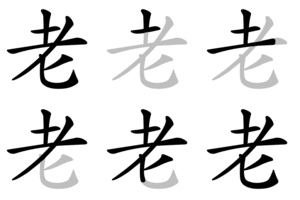 | |||
Han character
老 (radical 125, 老+0, 6 strokes, cangjie input 十大心 (JKP), four-corner 44711, composition ⿱耂匕)
- Kangxi radical #125, ⽼.
Derived characters
- Index:Chinese radical/老
References
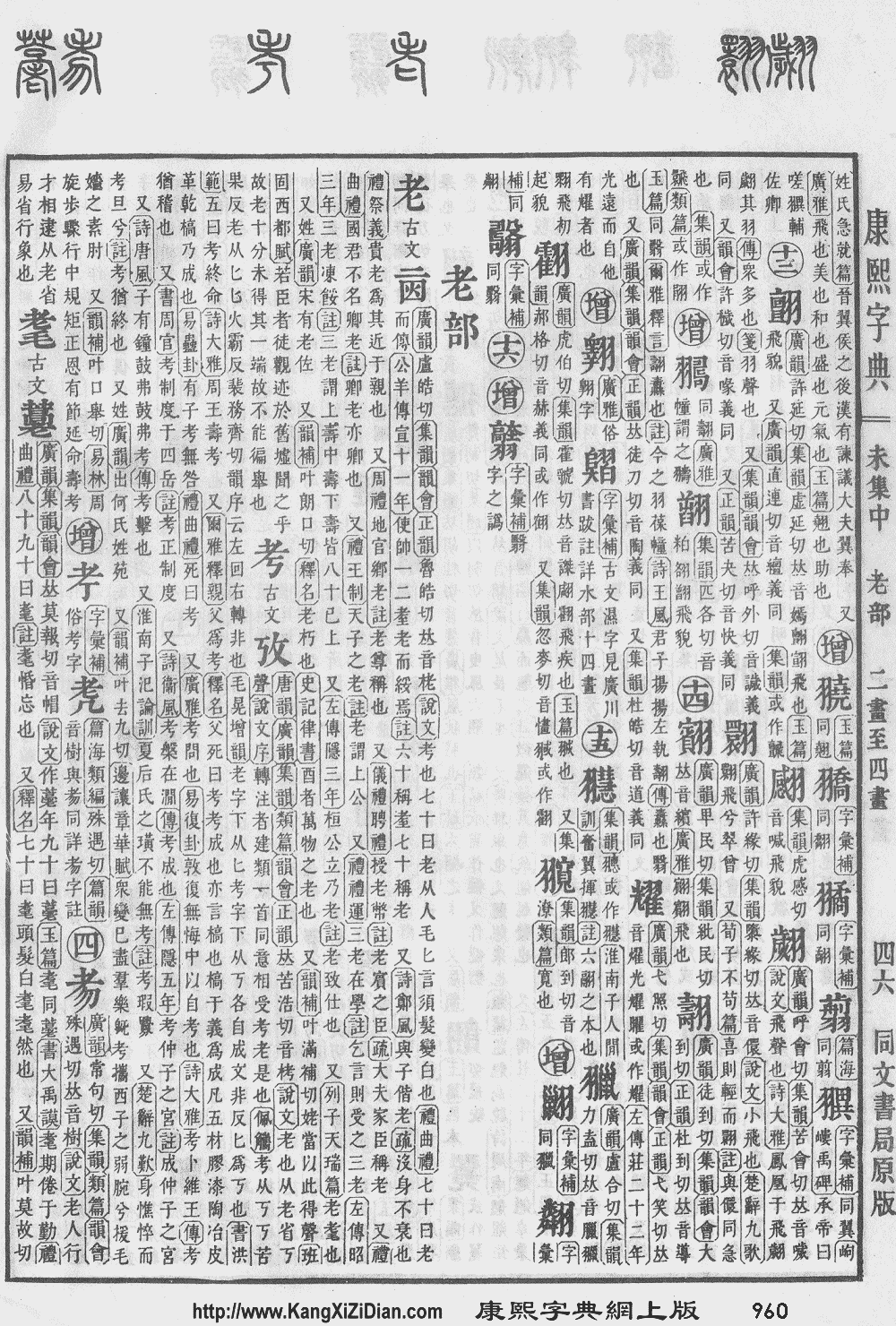
- KangXi: page 960, character 25
- Dai Kanwa Jiten: character 28842
- Dae Jaweon: page 1407, character 8
- Hanyu Da Zidian: volume 4, page 2778, character 1
- Unihan data for U+8001
Chinese
| simp. and trad. |
老 | |
|---|---|---|
Glyph origin
| Historical forms of the character 老 | ||||
|---|---|---|---|---|
| Shang | Western Zhou | Warring States | Shuowen Jiezi (compiled in Han) | Liushutong (compiled in Ming) |
| Oracle bone script | Bronze inscriptions | Chu Slip and silk script | Small seal script | Transcribed ancient scripts |
 |
 |
 |
 |
 |
| Characters in the same phonetic series (老) (Zhengzhang, 2003) | |
|---|---|
| Old Chinese | |
| 老 | *ruːʔ |
| 姥 | *ruːʔ, *maːʔ |
| 栳 | *ruːʔ |
| 恅 | *ruːʔ |
Ideogrammic compound (會意) : 人 (“man”) + 毛 (“hair”) + 匕 (“cane”) – a man with long hair (an old man), leaning on a cane. Compare top component to 孝 (OC *qʰruːs).
Cognate to 考 (OC *kʰluːʔ); the most commonly cited example of 轉注 (“reciprocal meaning”).
Etymology
Unknown. Compare Proto-Sino-Tibetan *s-raw (“withered, residue, corpse”), *rwat (“stiff, tough”), whence Burmese ရော် (rau, “wither, become overripe; age”), ရွတ် (rwat, “old, stiff, tough”). See also 古 (gǔ), 故 (gù).
An old Sino-Vietnamese borrowing is rệu (“overripe, pulpy”).
Pronunciation
Definitions
老
- old, aged, elderly (for persons, animate and inanimate objects generally)
- † the elderly, one's elders
- experienced
- † to respect (the elderly, one's elders)
- overcooked, tough, stringy, hard (used in reference to cooked food or meat)
- stale, not fresh (used in reference to food or potable liquids)
- always, all the time
- (chiefly dialectal) very, quite
- → 很 (hěn)
- 看到儂真個老開心。 [Shanghainese, trad.]
- [kʰø³³ tɔ⁴⁴ nʊŋ²³ t͡səɲ⁵⁵ g̊əʔ²¹ lɔ²³ kʰe̞⁵⁵ ɕɪɲ²¹] [IPA]
- I am really happy to see you.
看到侬真个老开心。 [Shanghainese, simp.]
- (affectionate, respectful) Used before surnames to refer to heads or elder members of families.
- → 小 (xiǎo) (for younger people)
- (usually respectful and affectionate) Used by analogy in several other relationship terms.
- (zoology) Used before several animals considered noxious or unpleasant.
- (colloquial) Used before placenames, particularly countries, to form nouns.
- (Mainland China, Hong Kong) Short for 老撾/老挝 (Lǎowō, “Laos”).
Compounds
Derived terms from 老
|
|
|
Japanese
Kanji
老
Readings
Compounds
Compounds
Korean
Hanja
- This term needs a translation to English. Please help out and add a translation, then remove the text
{{rfdef}}.
Vietnamese
Han character
老 (lão, láu, lảo, lảu, rảu, lẩu, lẽo, lếu)
- This term needs a translation to English. Please help out and add a translation, then remove the text
{{rfdef}}.
This article is issued from
Wiktionary.
The text is licensed under Creative Commons - Attribution - Sharealike.
Additional terms may apply for the media files.