考
See also: 攷
| ||||||||
Translingual
| Stroke order | |||
|---|---|---|---|
 | |||
| Stroke order | |||
|---|---|---|---|
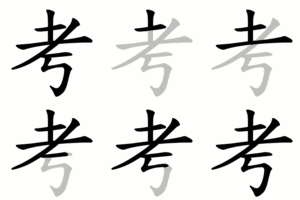 | |||
Han character
考 (radical 125 老+0, 6 strokes, cangjie input 十大卜尸 (JKYS), four-corner 44207, composition ⿱耂丂)
References
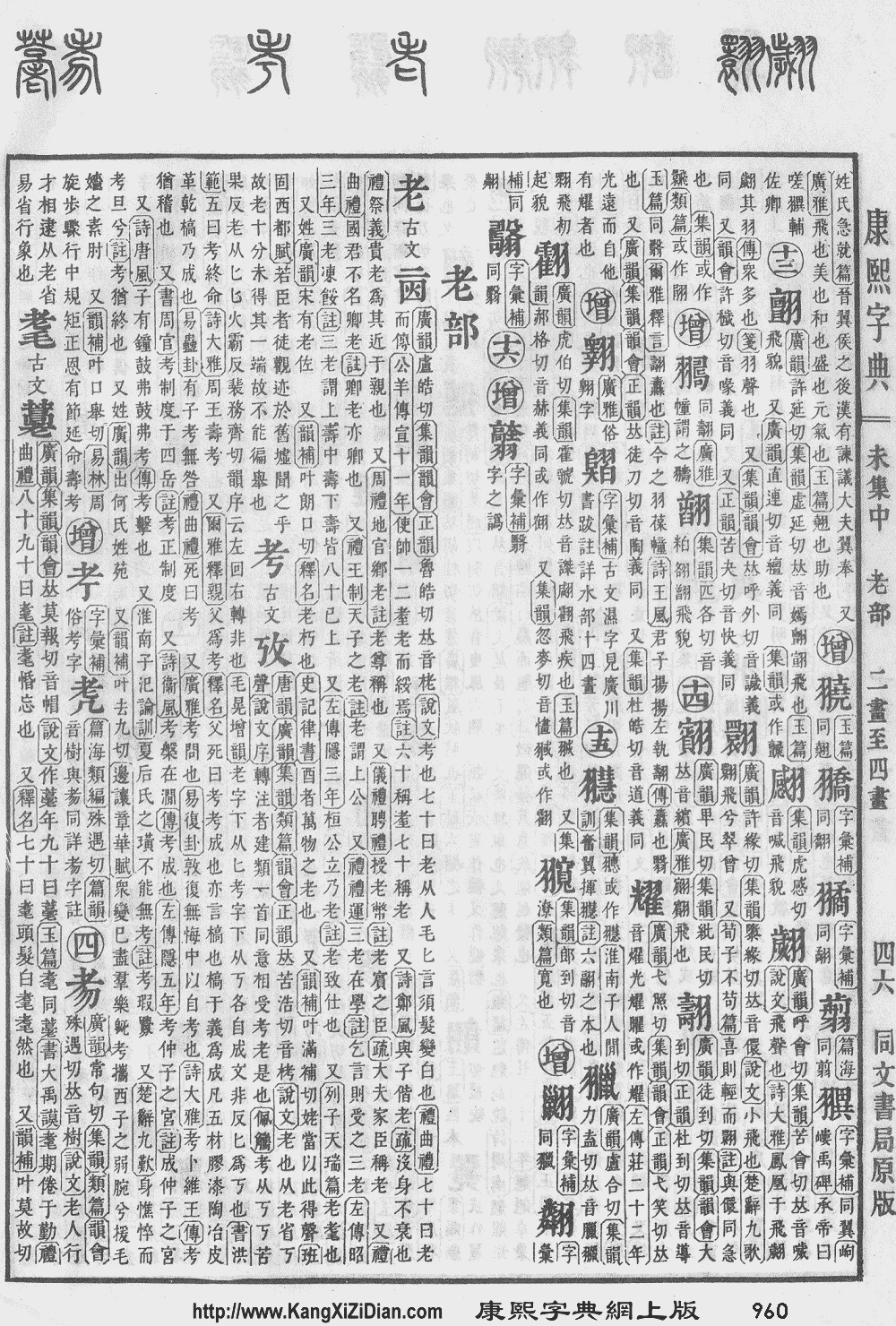
- KangXi: page 960, character 27
- Dai Kanwa Jiten: character 28843
- Dae Jaweon: page 1408, character 1
- Hanyu Da Zidian: volume 4, page 2779, character 2
- Unihan data for U+8003
Chinese
| simp. and trad. |
考 | |
|---|---|---|
Glyph origin
| Historical forms of the character 考 | |||
|---|---|---|---|
| Shang | Western Zhou | Shuowen Jiezi (compiled in Han) | Liushutong (compiled in Ming) |
| Oracle bone script | Bronze inscriptions | Small seal script | Transcribed ancient scripts |
 |
 |
 |
 |
| Characters in the same phonetic series (丂) (Zhengzhang, 2003) | |
|---|---|
| Old Chinese | |
| 丂 | *kʰluːʔ |
| 攷 | *kʰluːʔ |
| 考 | *kʰluːʔ |
| 烤 | *kʰluːʔ |
| 拷 | *kʰluːʔ |
| 栲 | *kʰluːʔ |
| 洘 | *kʰluːʔ |
| 銬 | *kʰluːs |
| 巧 | *kʰruːʔ, *kʰruːs |
| 朽 | *qʰluʔ |
Variant of 老 (OC *ruːʔ) – Ideogrammic compound (會意) : 耂 (“an old man with long hair, bent over”) + 匕 (“a cane”) – an old man, leaning on a cane. Compare top component to 孝 (OC *qʰruːs).
Structurally related to 老 (OC *ruːʔ); the most commonly cited example of 轉注 (“reciprocal meaning”).
Pronunciation
Definitions
考
- † long-lived; elderly
- † deceased father; posthumous name for male relations
-
- 祭王父曰皇祖考,王母曰皇祖妣。父曰皇考,母曰皇妣。夫曰皇辟。生曰父、曰母、曰妻,死曰考、曰妣、曰嬪。 [Classical Chinese, trad.]
- From: The Book of Rites, circa 4th – 2nd century BCE
- Jì wángfù yuē huángzǔkǎo, wángmǔ yuē huángzǔbǐ. Fù yuē huángkǎo, mǔ yuē huángbǐ. Fū yuē huángpì. Shēng yuē fù, yuē mǔ, yuē qī, sǐ yuē kǎo, yuē bǐ, yuē pín. [Pinyin]
- In sacrificing to them, a grandfather is called 'the sovereign grandfather'; a grandmother, 'the sovereign grandmother'; a father, 'the sovereign father'; a mother, 'the sovereign mother; a husband, 'the sovereign pattern.' While alive, the names of 'father', 'mother', and 'wife' are used; when they are dead, those of 'the completed one', 'the corresponding one', and 'the honored one'.
祭王父曰皇祖考,王母曰皇祖妣。父曰皇考,母曰皇妣。夫曰皇辟。生曰父、曰母、曰妻,死曰考、曰妣、曰嫔。 [Classical Chinese, simp.]
-
- to examine; to check
- to consider
- to study; to investigate
- to test; to assess
- to have a test; to have an exam
- exam; test
Compounds
Derived terms from 考
|
|
|
Japanese
Kanji
考
Readings
- Goon: こう (kō, Jōyō)←かう (kau, historical)
- Kan’on: こう (kō, Jōyō)←かう (kau, historical)
- Kun: かんがえる (kangaeru, 考える, Jōyō); かんがえ (kangae)
Korean
Hanja
考 • (go) (hangeul 고, revised go, McCune–Reischauer ko, Yale ko)
- This term needs a translation to English. Please help out and add a translation, then remove the text
{{rfdef}}.
Vietnamese
Han character
考 (khảo)
- This term needs a translation to English. Please help out and add a translation, then remove the text
{{rfdef}}.
This article is issued from
Wiktionary.
The text is licensed under Creative Commons - Attribution - Sharealike.
Additional terms may apply for the media files.