ló
See also: Appendix:Variations of "lo"
Ebughu
Verb
ló
Further reading
- Bruce Connell, Lower Cross Wordlist
Emilian
Etymology
From Vulgar Latin *illūi, from Latin illī (dative singular of ille), ultimately from Proto-Indo-European *h₂el- (“beyond, other”). Cognates include French lui.
Pronunciation
- IPA(key): /ˈlo/
- Hyphenation: ló
Pronoun
ló (personal, disjunctive case)
Related terms
Emilian personal pronouns (strong forms)
| Number | Person | Gender | Disjunctive (tonic) |
Nominative (subject) |
Accusative (direct complement) |
Dative (indirect complement) |
Reflexive (-self) |
Comitative (with) |
|---|---|---|---|---|---|---|---|---|
| Singular | First | — | mè | a | me | mêg | ||
| Second | — | tè | et | te | têg | |||
| Third | Masculine | ló | al | ge | se | sêg | ||
| Feminine | lê | la | ||||||
| Plural | First | Masculine | nuēter | a | se | nōsk | ||
| Feminine | nuētri | |||||||
| Second | Masculine | vuēter | a | ve | vōsk | |||
| Feminine | vuētri | |||||||
| Third | Masculine | lôr | i | ge | se | sêg | ||
| Feminine | el | li | ||||||
Enwang
Verb
ló
Further reading
- Bruce Connell, Lower Cross Wordlist
Hungarian
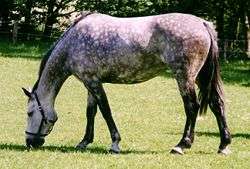
ló
Etymology
From Proto-Ugric *luɣe, *luwɜ, compare Mansi лув (luw, “horse”) [1][2] or from a Proto-Turkic source, compare Tatar alaša (‘pack horse’), Chuvash laša (‘horse’), Ottoman Turkish, Crimean Tatar, Kazakh, Karachay-Balkar alaša (‘horse’).[3]
Pronunciation
- IPA(key): [ˈloː]
Audio (file)
ló

ló
Noun
ló (plural lovak)
Declension
| Inflection (stem in -a-, back harmony) | ||
|---|---|---|
| singular | plural | |
| nominative | ló | lovak |
| accusative | lovat | lovakat |
| dative | lónak | lovaknak |
| instrumental | lóval | lovakkal |
| causal-final | lóért | lovakért |
| translative | lóvá | lovakká |
| terminative | lóig | lovakig |
| essive-formal | lóként | lovakként |
| essive-modal | — | — |
| inessive | lóban | lovakban |
| superessive | lovon | lovakon |
| adessive | lónál | lovaknál |
| illative | lóba | lovakba |
| sublative | lóra | lovakra |
| allative | lóhoz | lovakhoz |
| elative | lóból | lovakból |
| delative | lóról | lovakról |
| ablative | lótól | lovaktól |
| Possessive forms of ló | ||
|---|---|---|
| possessor | single possession | multiple possessions |
| 1st person sing. | lovam | lovaim |
| 2nd person sing. | lovad | lovaid |
| 3rd person sing. | lova | lovai |
| 1st person plural | lovunk | lovaink |
| 2nd person plural | lovatok | lovaitok |
| 3rd person plural | lovuk | lovaik |
Synonyms
- (animal): fogatló, gebe, hátasló, háziló, igásló, musztáng, paripa, pólópóni, póni, póniló, sportpóni, táltos, telivér, vadászpóni, vadló, versenyló
- (young animal): csikó, kiscsikó
- (male animal): apamén, csődör, fedezőmén, mén, tenyészcsődör
- (castrated male animal): herélt
- (female animal): kanca, nőstény ló
- (animal, children): kispaci, lovacska, paci
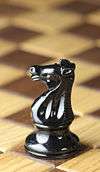
- (chess): huszár
Derived terms
Compound words
See also
| Chess pieces in Hungarian · sakkfigurák, sakkbábuk (layout · text) | |||||
|---|---|---|---|---|---|
 |
 |
_kopio.jpg) |
 |
 |
 |
| király | vezér, királynő | bástya, torony | futó | huszár, ló | gyalog, paraszt |

References
- ↑ É. Kiss Katalin, Gerstner Károly, Hegedűs Attila: Fejezetek a magyar nyelv történetéből, Piliscsaba, 2013. →ISBN.
- ↑ “luwɜ (luγǝ)” in the Uralic Etymological Database
- ↑ Mario Alinei (2003), "Interdisciplinary and linguistic evidence for Paleolithic continuity of Indo-European, Uralic and Altaic populations in Eurasia, with an excursus on Slavic ethnogenesis", Quaderni di semantica, vol. 26.
Ilue
Verb
ló
Further reading
- Bruce Connell, Lower Cross Wordlist
Irish
Noun
ló m
- (archaic or dialectal) dative singular of lá
Okobo
Verb
ló
Further reading
- Bruce Connell, Lower Cross Wordlist
Oro
Verb
ló
Further reading
- Bruce Connell, Lower Cross Wordlist
Uda
Verb
ló
Further reading
- Bruce Connell, Lower Cross Wordlist
Vietnamese
Pronunciation
- (Hà Nội) IPA(key): [lɔ˧˦]
- (Huế) IPA(key): [lɔ˨˩˦]
- (Hồ Chí Minh City) IPA(key): [lɔ˦˥]
Etymology 1
Verb
ló
Derived terms
Terms derived from ló
|
Etymology 2
Noun
(classifier cây) ló
- Eye dialect spelling of lúa, representing Nghệ An dialect and Hà Tĩnh dialect Vietnamese.
This article is issued from
Wiktionary.
The text is licensed under Creative Commons - Attribution - Sharealike.
Additional terms may apply for the media files.