紙
| ||||||||
Translingual
Han character
紙 (radical 120, 糸+4, 10 strokes, cangjie input 女火竹女心 (VFHVP), four-corner 22940, composition ⿰糸氏)
References
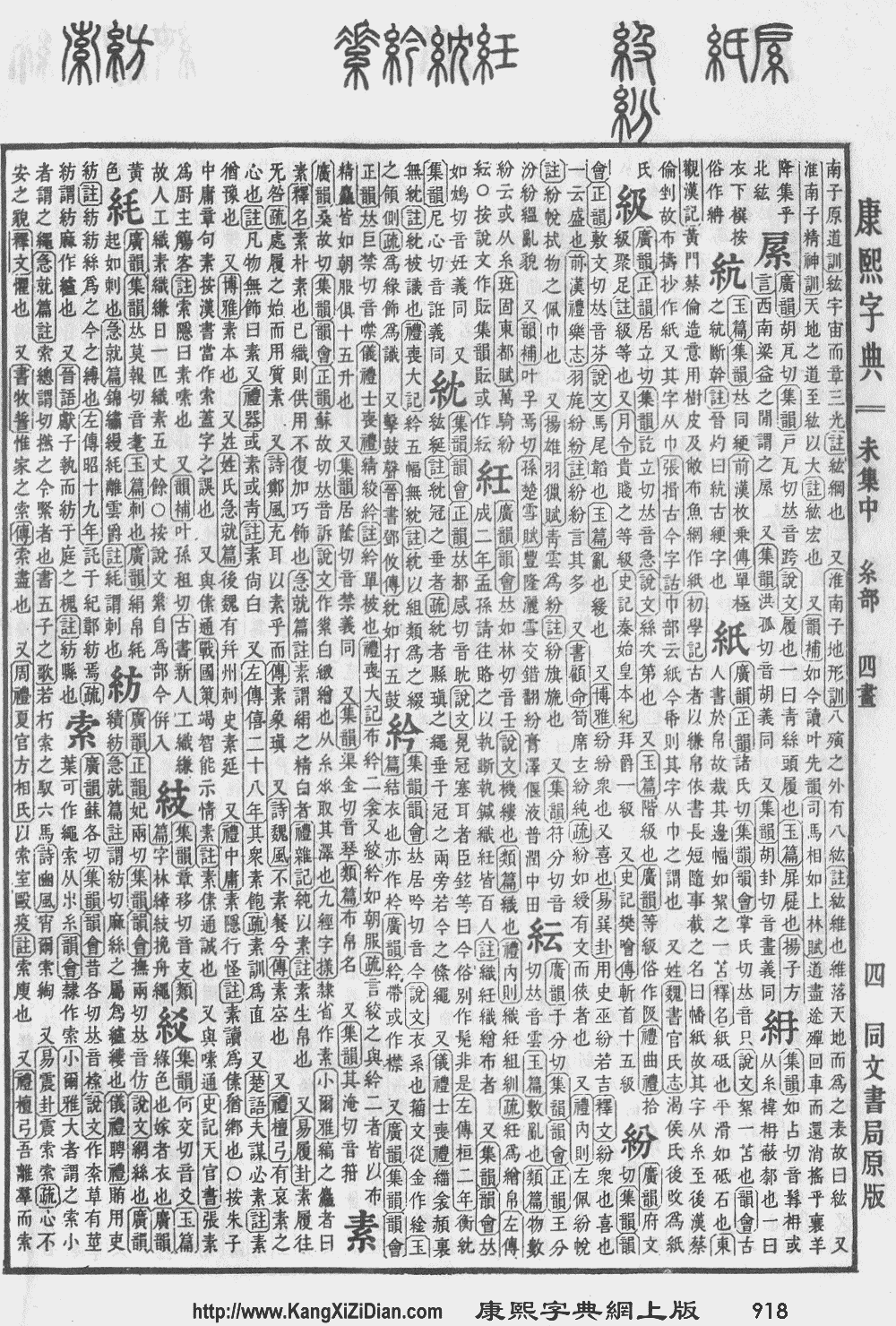
- KangXi: page 918, character 4
- Dai Kanwa Jiten: character 27293
- Dae Jaweon: page 1347, character 13
- Hanyu Da Zidian: volume 5, page 3375, character 12
- Unihan data for U+7D19
Chinese
| trad. | 紙 | |
|---|---|---|
| simp. | 纸 | |
Glyph origin
| Historical forms of the character 紙 | |
|---|---|
| Shuowen Jiezi (compiled in Han) | Liushutong (compiled in Ming) |
| Small seal script | Transcribed ancient scripts |
 |
 |
| Characters in the same phonetic series (氏) (Zhengzhang, 2003) | |
|---|---|
| Old Chinese | |
| 氏 | *skeŋ, *kje, *ɡjeʔ |
| 衹 | *kje, *ɡe |
| 紙 | *kjeʔ |
| 帋 | *kjeʔ |
| 扺 | *kjeʔ |
| 坁 | *kjeʔ |
| 汦 | *kjeʔ, *tjil |
| 忯 | *ɡje, *ɡe |
| 眂 | *ɡje, *ɡils |
| 舐 | *ɦljeʔ |
| 芪 | *ɡe |
| 祇 | *ɡe |
| 疧 | *ɡe |
| 軝 | *ɡe |
| 蚔 | *ɡe |
Phono-semantic compound (形聲, OC *kjeʔ) : semantic 糸 (“silk”) + phonetic 氏 (OC *skeŋ, *kje, *ɡjeʔ).
Etymology
Unknown. It has been connected to Vietnamese giấy (< Proto-Vietic *k-cajʔ).
Pronunciation
Definitions
紙
- paper (Classifier: 張/张)
- 自古書契多編以竹簡,其用縑帛者謂之為紙。縑貴而簡重,並不便於人。倫乃造意,用樹膚、麻頭及敝布、魚網以為紙。元興元年奏上之,帝善其能,自是莫不從用焉,故天下咸稱「蔡侯紙」。 [Classical Chinese, trad.]
- From: The Book of the Later Han, circa 5th century CE
- Zìgǔ shūqì duō biān yǐ zhújiǎn, qí yòng jiānbó zhě wèi zhī wéi zhǐ. Jiān guì ér jiǎn zhòng, bìng bù biàn yú rén. Lún nǎi zàoyì, yòng shùfū, mátóu jí bìbù, yúwǎng yǐ wéi zhǐ. Yuánxìng yuánnián zòu shàng zhī, dì shàn qí néng, zì shì mò bù cóng yòng yān, gù tiānxià xián chēng “Cài hóu zhǐ”. [Pinyin]
- In ancient times writings and inscriptions were generally made on tablets of bamboo or on pieces of silk called zhi. But silk being costly and bamboos heavy they were not convenient to use. Cai Lun then initiated the idea of making paper from the bark of trees, remnants of hemp, rags of cloth and fishing nets. He submitted the process to the emperor in the first year of Yuanxing and received praise for his ability. From this time, paper has been in use everywhere and is universally called "the paper of Marquis Cai".
自古书契多编以竹简,其用缣帛者谓之为纸。缣贵而简重,并不便于人。伦乃造意,用树肤、麻头及敝布、鱼网以为纸。元兴元年奏上之,帝善其能,自是莫不从用焉,故天下咸称“蔡侯纸”。 [Classical Chinese, simp.]
- Classifier for document and letters.
- Short for 紙錢/纸钱 (zhǐqián, “paper made to resemble money and burnt as an offering to the dead”).
- (Mandarin, neologism, slang) Eye dialect spelling of 子.
- 胖紙 / 胖纸 ― pàngzhǐ ― fatty
Compounds
Derived terms from 紙
|
|
|
Descendants
Japanese
Kanji
紙
Alternative forms
Readings
Compounds
References
|
- Source: EDICT and KANJIDIC files licensed by the Electronic Dictionaries Research Group.
Etymology
| Kanji in this term |
|---|
| 紙 |
| かみ Grade: 2 |
| kun’yomi |
Pronunciation
Noun
- paper
- 2006 December 9, Sorachi, Hideaki, “第百十九訓 四人揃えばいろんな知恵 [Lesson 119: Four Heads Are Better Than One]”, in 銀魂 [Silver Soul], volume 14 (fiction, in Japanese), Tokyo: Shueisha, →ISBN:
- 紙…神 誰よりも早く 紙を手に入れた者がこの勝負勝つ
- Kami… Dare yori mo hayaku kami o te ni ireta mono ga kono shōbu katsu
- Paper… is also God. Whoever gets his hands on some first, wins.
- 紙…神 誰よりも早く 紙を手に入れた者がこの勝負勝つ
-
Derived terms
- 紙パック (kamipakku)
References
Korean
Hanja
紙 • (ji) (hangeul 지)
- This term needs a translation to English. Please help out and add a translation, then remove the text
{{rfdef}}.
Vietnamese
Han character
- This term needs a translation to English. Please help out and add a translation, then remove the text
{{rfdef}}.
This article is issued from
Wiktionary.
The text is licensed under Creative Commons - Attribution - Sharealike.
Additional terms may apply for the media files.