舐
| ||||||||
Translingual
Han character
舐 (radical 135 舌+4, 10 strokes, cangjie input 竹口竹女心 (HRHVP), four-corner 22640, composition ⿰舌氏)
References
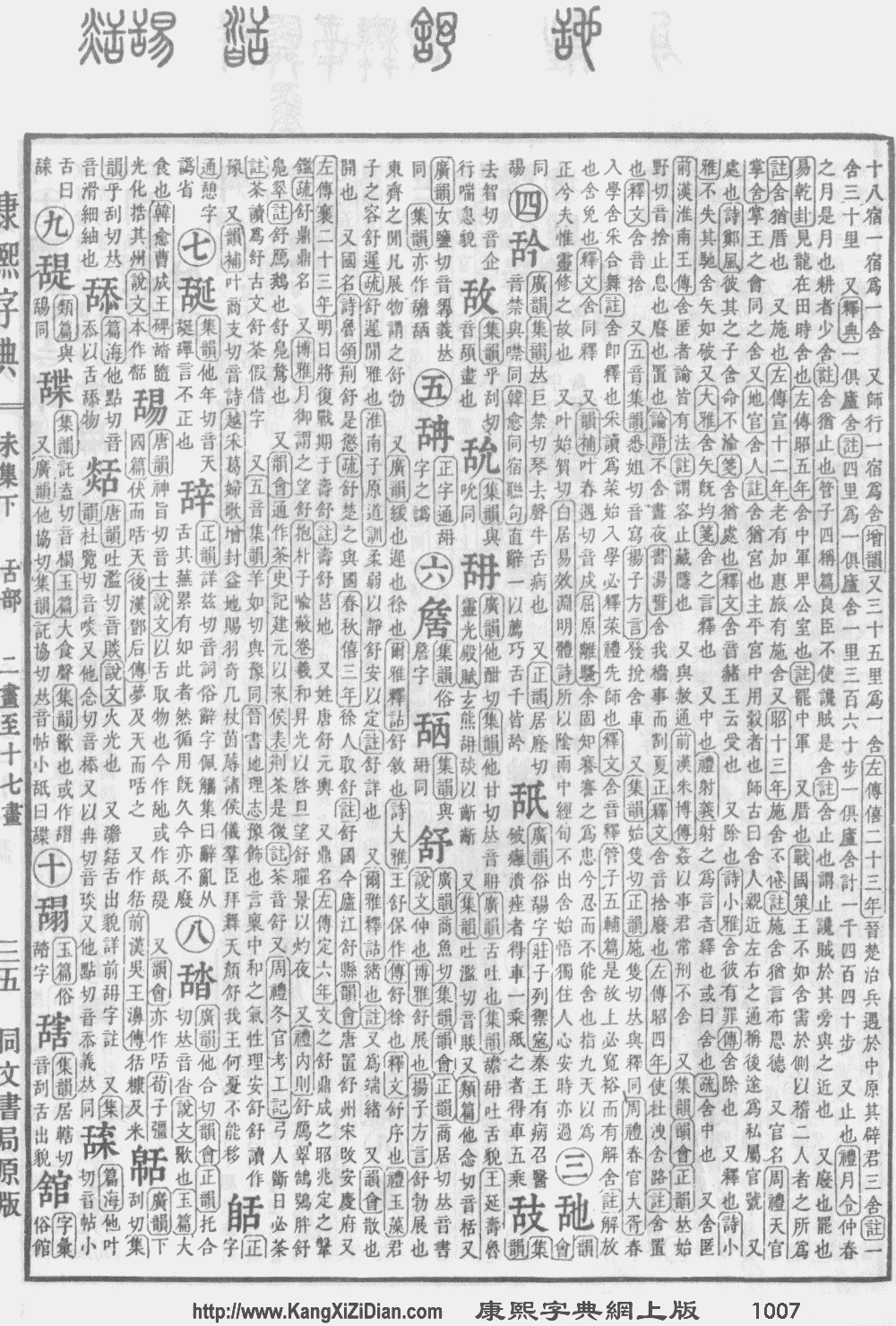
- KangXi: page 1007, character 3
- Dai Kanwa Jiten: character 30283
- Dae Jaweon: page 1464, character 5
- Hanyu Da Zidian: volume 5, page 2943, character 7
- Unihan data for U+8210
Chinese
| simp. and trad. |
舐 | |
|---|---|---|
| alt. forms | 舓 𦧇 𦧺 Cantonese vernacular | |
Glyph origin
| Characters in the same phonetic series (氏) (Zhengzhang, 2003) | |
|---|---|
| Old Chinese | |
| 氏 | *skeŋ, *kje, *ɡjeʔ |
| 衹 | *kje, *ɡe |
| 紙 | *kjeʔ |
| 帋 | *kjeʔ |
| 扺 | *kjeʔ |
| 坁 | *kjeʔ |
| 汦 | *kjeʔ, *tjil |
| 忯 | *ɡje, *ɡe |
| 眂 | *ɡje, *ɡils |
| 舐 | *ɦljeʔ |
| 芪 | *ɡe |
| 祇 | *ɡe |
| 疧 | *ɡe |
| 軝 | *ɡe |
| 蚔 | *ɡe |
Phono-semantic compound (形聲, OC *ɦljeʔ) : semantic 舌 + phonetic 氏 (OC *skeŋ, *kje, *ɡjeʔ).
The glyphs recorded in Shuowen are 舓 (with phonetic 易 (OC *leːɡs, *leɡ)) and 𦧇 (with phonetic 也 (OC *laːlʔ)).
Etymology 1
From Proto-Sino-Tibetan *m/s/g-ljak (“to lick; tongue”). The Cantonese vernacular reading laai2 preserves the Old Chinese initial *l-.
Pronunciation
Definitions
舐
Compounds
|
|
|
Etymology 2
| For pronunciation and definitions of 舐 – see 舔 (“(Cantonese) to lick”). (This character, 舐, is a variant form of 舔.) |
References
- (Cantonese) 粵音資料集叢
Japanese
Kanji
舐
- This term needs a translation to English. Please help out and add a translation, then remove the text
{{rfdef}}.
Readings
Korean
Hanja
舐 • (ji) (hangeul 지, revised ji, McCune–Reischauer chi, Yale ci)
- This term needs a translation to English. Please help out and add a translation, then remove the text
{{rfdef}}.
Vietnamese
Han character
- This term needs a translation to English. Please help out and add a translation, then remove the text
{{rfdef}}.
References
This article is issued from
Wiktionary.
The text is licensed under Creative Commons - Attribution - Sharealike.
Additional terms may apply for the media files.