並
| ||||||||
| ||||||||
Translingual
Han character
並 (radical 1, 一+7, 8 strokes, cangjie input 廿廿金 (TTC), four-corner 80102, composition ⿱䒑业)
Derived characters
References
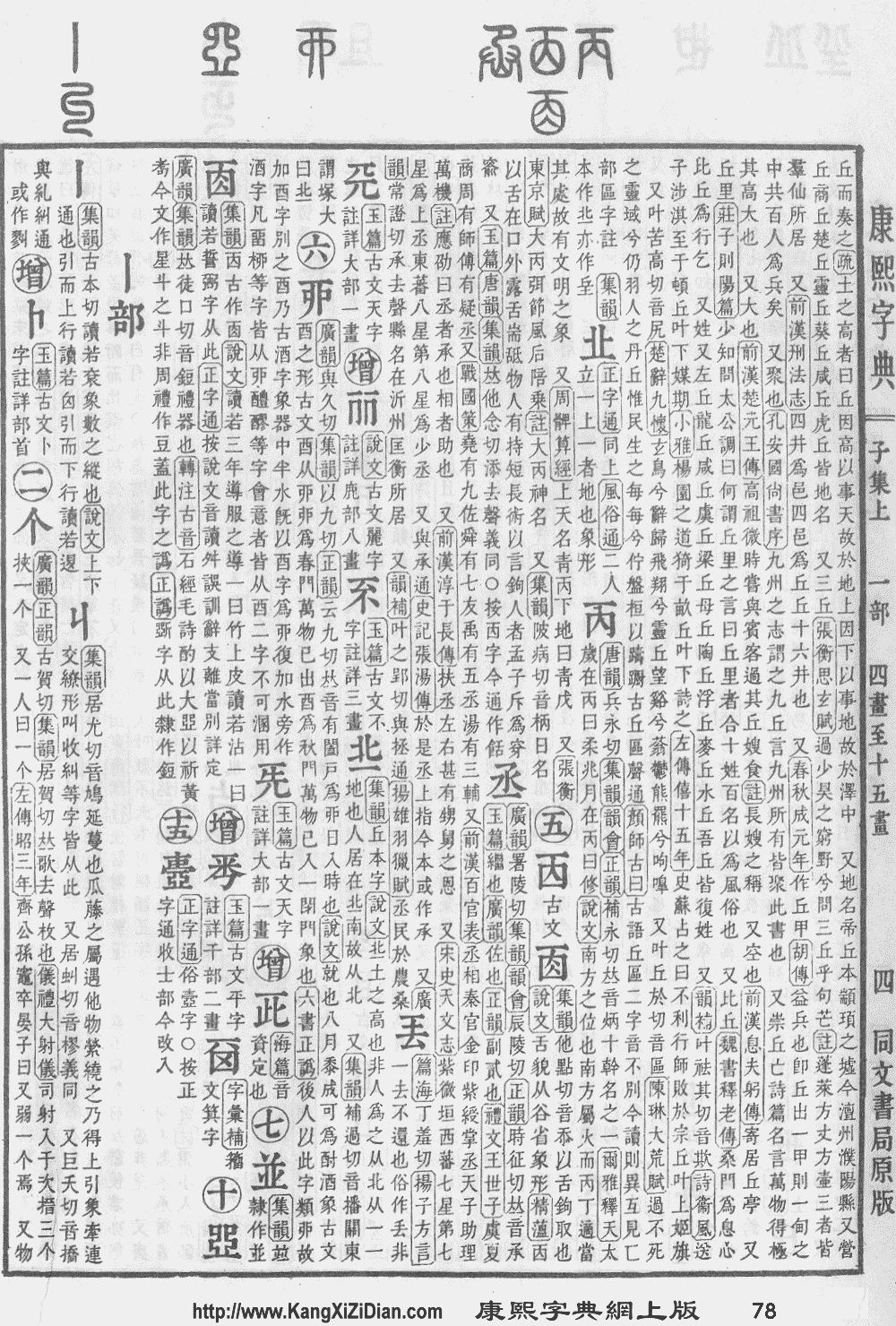
- KangXi: page 78, character 14
- Dai Kanwa Jiten: character 54
- Dae Jaweon: page 157, character 25
- Hanyu Da Zidian: volume 1, page 246, character 2
- Unihan data for U+4E26
- Unihan data for U+FA70
Chinese
| trad. | 並 | |
|---|---|---|
| simp. | 并* | |
| alt. forms | 竝 𡘋 | |
Glyph origin
| Historical forms of the character 並 | ||||||||||||||||||||||||||||||||
|---|---|---|---|---|---|---|---|---|---|---|---|---|---|---|---|---|---|---|---|---|---|---|---|---|---|---|---|---|---|---|---|---|
| Shang | Western Zhou | Warring States | Shuowen Jiezi (compiled in Han) | Liushutong (compiled in Ming) | ||||||||||||||||||||||||||||
| Bronze inscriptions | Oracle bone script | Bronze inscriptions | Bronze inscriptions | Chu Slip and silk script | Ancient script | Small seal script | Transcribed ancient scripts | |||||||||||||||||||||||||
 |
 |
 |
 |
 |
 |
 |
 | |||||||||||||||||||||||||
|||||||
|
References: Mostly from Richard Sears' Chinese Etymology site (authorisation),
| ||||||||||||||||||||||||||||||||


| Characters in the same phonetic series (並) (Zhengzhang, 2003) | |
|---|---|
| Old Chinese | |
| 湴 | *breːms |
| 跰 | *preŋs, *beːn |
| 並 | *beːŋʔ |
| 竝 | *beːŋʔ |
From the clerical script (隸書) of 竝 (OC *beːŋʔ).
Pronunciation 1
Definitions
並
- to be side by side; to be in a row
- simultaneously; at the same time
- Used before a negative for emphasis; actually; in fact
- and; moreover; furthermore
- (Min Nan) than
- (Zhangzhou Min Nan) to compete; to match one's strength with
- (Taiwanese Min Nan) the most
- (~母) (phonology) a Middle Chinese initial and the 'Phags-pa script letter ꡌ (p-)
Compounds
Derived terms from 並
|
|
|
Pronunciation 2
Definitions
並
- † Alternative form of 傍 (bàng, “to be near; approaching”).
Japanese
| 並 | |
| 竝 |
Kanji
並
(grade 6 “Kyōiku” kanji, shinjitai kanji, kyūjitai form 竝)
Readings
- Goon: びょう (byō)←びやう (byau, historical)
- Kan’on: へい (hei, Jōyō)
- Kun: ならべる (naraberu, 並べる, Jōyō); ならぶ (narabu, 並ぶ, Jōyō); なみ (nami, 並, Jōyō); ならびに (narabini, 並びに, Jōyō)
- Goon: ぼう (bō)←ばう (bau, historical)
- Kan’on: ほう (hō)←はう (fau, historical)
- Kun: よる (yoru, 並る); そう (sou, 並う)←そふ (sofu, historical); つらなる (tsuranaru, 並なる)
As a variant of 伴, and as in 同竝:[1]
See also
Noun
Compounds
Suffix
Alternative forms
References
Korean
Hanja
並 • (byeong, bang, ban)
References
Vietnamese
Han character
並 (tịnh)
- This term needs a translation to English. Please help out and add a translation, then remove the text
{{rfdef}}.
References
This article is issued from
Wiktionary.
The text is licensed under Creative Commons - Attribution - Sharealike.
Additional terms may apply for the media files.