貴
| ||||||||
Translingual
Han character
貴 (radical 154 貝+5, 12 strokes, cangjie input 中一月山金 (LMBUC), four-corner 50806, composition ⿱𠀐貝)
Derived characters
Descendants
References
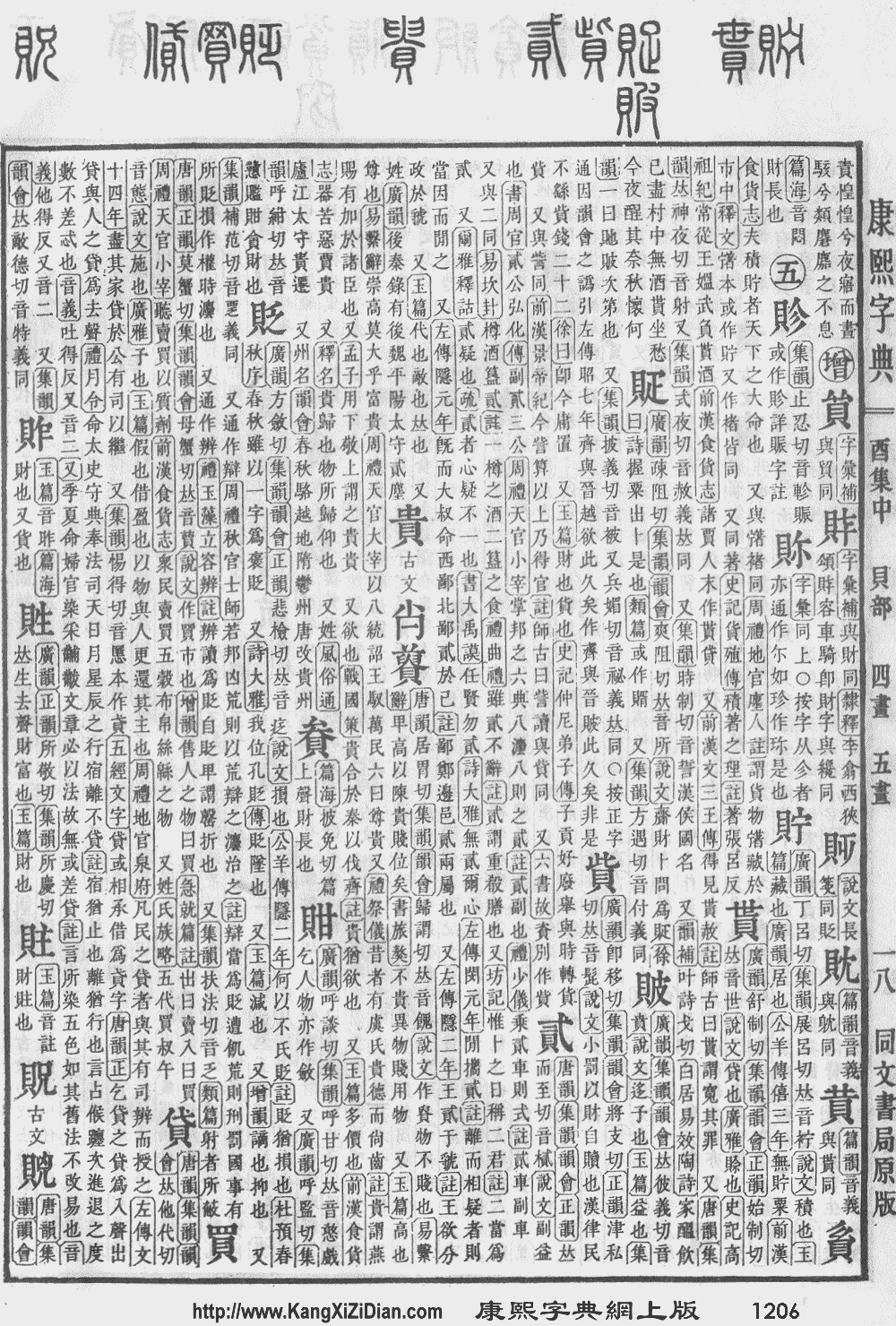
- KangXi: page 1206, character 15
- Dai Kanwa Jiten: character 36704
- Dae Jaweon: page 1669, character 5
- Hanyu Da Zidian: volume 6, page 3632, character 9
- Unihan data for U+8CB4
Chinese
| trad. | 貴 | |
|---|---|---|
| simp. | 贵 | |
| alt. forms | 䝿 | |
Glyph origin
| Characters in the same phonetic series (貴) (Zhengzhang, 2003) | |
|---|---|
| Old Chinese | |
| 藬 | *l'uːl |
| 僓 | *l̥ʰuːlʔ, *ɡluːds |
| 頹 | *l'uːl |
| 穨 | *l'uːl |
| 蘈 | *l'uːl |
| 隤 | *l'uːl |
| 墤 | *l'uːl, *kʰruːds |
| 尵 | *l'uːl, *r'uːl |
| 蹪 | *l'uːl |
| 瀢 | *l'uːlʔ, *lulʔ |
| 鞼 | *kluːl, *ɡruls |
| 膭 | *kluːl, *ɡluːls |
| 憒 | *kluːds |
| 靧 | *ɡluːds |
| 潰 | *ɡluːls |
| 繢 | *ɡluːds |
| 嬇 | *ɡluːds, *kʰruːds |
| 殨 | *ɡluːds |
| 闠 | *ɡluːds |
| 簣 | *kʰruːds, *ɡruds |
| 嘳 | *kʰruːds, *kʰruds |
| 蕢 | *kʰruːds, *ɡruds |
| 聵 | *ŋɡruːds |
| 樻 | *kʰruds, *ɡruds |
| 䙡 | *kʰruds, *kʰluds |
| 匱 | *ɡruds |
| 臾 | *ɡruds, *lo |
| 饋 | *ɡruls |
| 櫃 | *ɡruds |
| 遺 | *lul, *luls |
| 壝 | *lul, *lulʔ |
| 瞶 | *luls, *kluls |
| 貴 | *kluds |
Phono-semantic compound (形聲, OC *kluds) : phonetic 臾 (OC *ɡruds, *lo) + semantic 貝 (“money cowrie”).
Pronunciation
Definitions
貴
- expensive; costly
- precious; valuable
- superior; noble
- (honorific, for deity, person or establishment) your
Compounds
|
|
|
Japanese
Kanji
- expensive (たかい)
- worthful, precious (たかい, とうとい, たっとい)
- superior, aristocratic (たかい, とうとい, たっとい, えらい, あてやか)
- to esteem (とうとぶ, たっとぶ)
Readings
- Goon: き (ki, Jōyō)
- Kan’on: き (ki, Jōyō)
- Kun: あて (ate, 貴); あてぶ (atebu, 貴ぶ); あてはか (atehaka, 貴はか); あてばむ (atebamu, 貴ばむ); あてやか (ateyaka, 貴やか); たかい (takai, 貴い); とうとい (tōtoi, 貴い, Jōyō); たっとい (tattoi, 貴い, Jōyō); えらい (erai, 貴い); とうとぶ (tōtobu, 貴ぶ, Jōyō); とうとむ (tōtomu, 貴む); たっとぶ (tattobu, 貴ぶ, Jōyō); たっとむ (tattomu, 貴む)
- Nanori: あてし (ateshi); き (ki); きさき (kisaki); きよ (kiyo); ぎ (gi); ただし (tadashi); たかし (takashi); もとむ (motomu); よし (yoshi)
Compounds
Etymology 1
| Kanji in this term |
|---|
| 貴 |
| き Grade: 6 |
| on’yomi |
From Middle Chinese 貴 (kjwɨjH, literally “precious, noble, superior”).
Pronunciation
Prefix
- (archaic) added to nouns related to people to indicate superiority
- 貴公子、貴婦人、貴賓
- kikōshi, kifujin, kihin
- [young] nobleman, noblewoman, superior guest
- 貴公子、貴婦人、貴賓
- (archaic) added to nouns to indicate respect and possession: your
- 貴店
- kiten
- your [honorable] store
- 貴店
Derived terms
- 貴様 (kisama): you (derogatory: the original “superior” meaning degraded over time, becoming ironic, and then insulting)
Suffix
- added after nouns related to people to express love and respect
Usage notes
This suffix meaning appears from roughly the Edo period.
Derived terms
Etymology 2
| Kanji in this term |
|---|
| 貴 |
| あて Grade: 6 |
| kun’yomi |
Unknown. Possibly cognate with 当て (ate, “aim; expectation, hope”), the 連用形 (ren'yōkei, “continuative or stem form”) of verb 当てる (ateru, “to face one thing towards another; to make something hit a target”).
Pronunciation
Adjective
貴 (hiragana あて, rōmaji ate)
- (archaic) noble, aristocratic, high-born
- (archaic) refined, elegant
Noun
貴 (hiragana あて, rōmaji ate)
- (archaic) one's own father (by extension of the “noble” meaning)
- 1028-1107: 栄花物語 (Eiga Monogatari, “Tale of Splendor”)
- 貴は麿をば恋しとは思ひ給はぬか
- Ate wa maro oba koishi to wa omohitamahanu ka
- Doesn't father think I'm his darling?
- 貴は麿をば恋しとは思ひ給はぬか
- 1028-1107: 栄花物語 (Eiga Monogatari, “Tale of Splendor”)
Derived terms
Etymology 3
| Kanji in this term |
|---|
| 貴 |
| むち Grade: 6 |
| kun’yomi |
Possibly a compound of 身 (mu, “body”) + 霊 (chi, “spirit, essence, soul”).[1] Alternatively, may be an alteration of 睦 (mutsu, “friendly, harmonious”, affix not used in isolation),[1] probably caused by fusion with the Old Japanese emphatic nominal particle い (i) in a manner similar to the alteration between kamu (combining form) and kami (standalone form) for 神 (“god, spirit”), or kutsu (combining form) and kuchi (standalone form) for 口 (“mouth”).
Pronunciation
Noun
Derived terms
- 汝 (namuchi)
Etymology 4
Used as ateji in various names.
Proper noun
貴 (hiragana あてし, rōmaji Ateshi)
- A male given name
Proper noun
- A male given name
- A surname.
Proper noun
貴 (hiragana たかし, rōmaji Takashi)
- A male given name
Proper noun
貴 (hiragana ただし, rōmaji Tadashi)
- A male given name
Proper noun
貴 (hiragana もとむ, rōmaji Motomu)
- A male given name
Proper noun
貴 (hiragana きさき, rōmaji Kisaki)
- A surname.
References
- 1 2 1988, 国語大辞典(新装版) (Kokugo Dai Jiten, Revised Edition) (in Japanese), Tōkyō: Shogakukan
Korean
Hanja
貴 • (gwi) (hangeul 귀, revised gwi, McCune–Reischauer kwi, Yale kwi)
- This term needs a translation to English. Please help out and add a translation, then remove the text
{{rfdef}}.
Vietnamese
Han character
- This term needs a translation to English. Please help out and add a translation, then remove the text
{{rfdef}}.