称
See also: 稱
| ||||||||
Translingual
| Japanese | 称 |
|---|---|
| Simplified | 称 |
| Traditional | 稱 |
Glyph origin
Variant of 稱.
Han character
称 (radical 115 禾+5, 10 strokes, cangjie input 竹木弓火 (HDNF), composition ⿰禾尔(GTKV) or ⿰禾尓(J))
Derived characters
- 𠦿, 𨃾, 𢋉, 𠺰
References
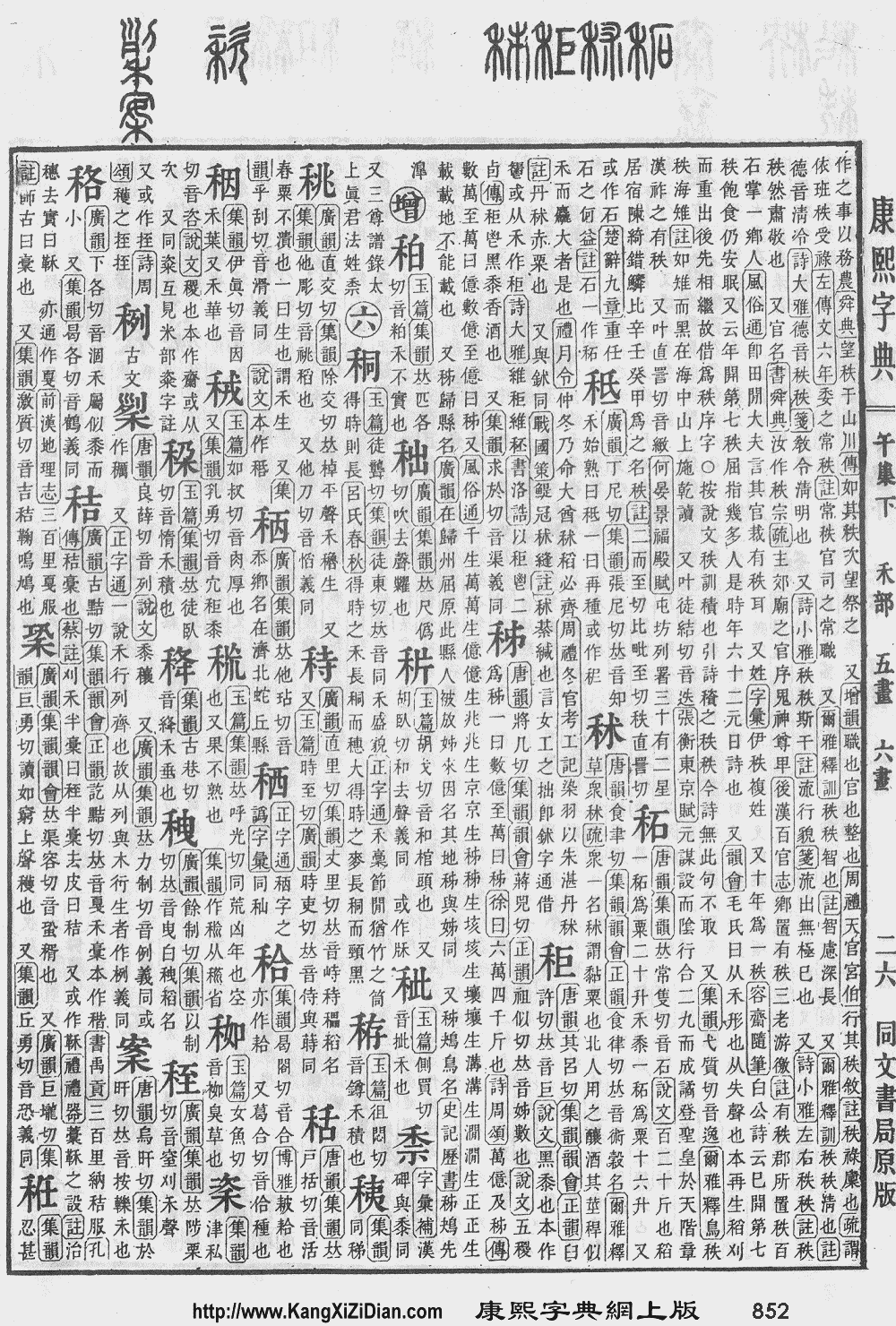
- KangXi: not present, would follow page 852, character 10
- Dai Kanwa Jiten: character 25016
- Dae Jaweon: page 1276, character 14
- Hanyu Da Zidian: volume 4, page 2601, character 4
- Unihan data for U+79F0
Chinese
| For pronunciation and definitions of 称 – see 稱 (“to weigh; to call; to name; etc.”). (This character, 称, is the simplified and variant form of 稱.) |
Notes:
|
Japanese
| 称 | |
| 稱 |
Kanji
称
(common “Jōyō” kanji, shinjitai kanji, kyūjitai form 稱)
- This term needs a translation to English. Please help out and add a translation, then remove the text
{{rfdef}}.
Readings
- Goon: しょう (shō, Jōyō)
- Kan’on: しょう (shō, Jōyō)
- Kun: はかる (hakaru, 称る); となえる (tonaeru, 称える); たたえる (tataeru, 称える); あげる (ageru, 称げる)
Korean
Hanja
称 • (ching) (hangeul 칭, revised ching, McCune–Reischauer ch'ing, Yale ching)
- This term needs a translation to English. Please help out and add a translation, then remove the text
{{rfdef}}.
This article is issued from
Wiktionary.
The text is licensed under Creative Commons - Attribution - Sharealike.
Additional terms may apply for the media files.