筆
| ||||||||
Translingual
| Japanese | 筆 |
|---|---|
| Simplified | 笔 |
| Traditional | 筆 |
Han character
筆 (radical 118 竹+6, 12 strokes, cangjie input 竹中手 (HLQ), four-corner 88507, composition ⿱⺮聿)
References
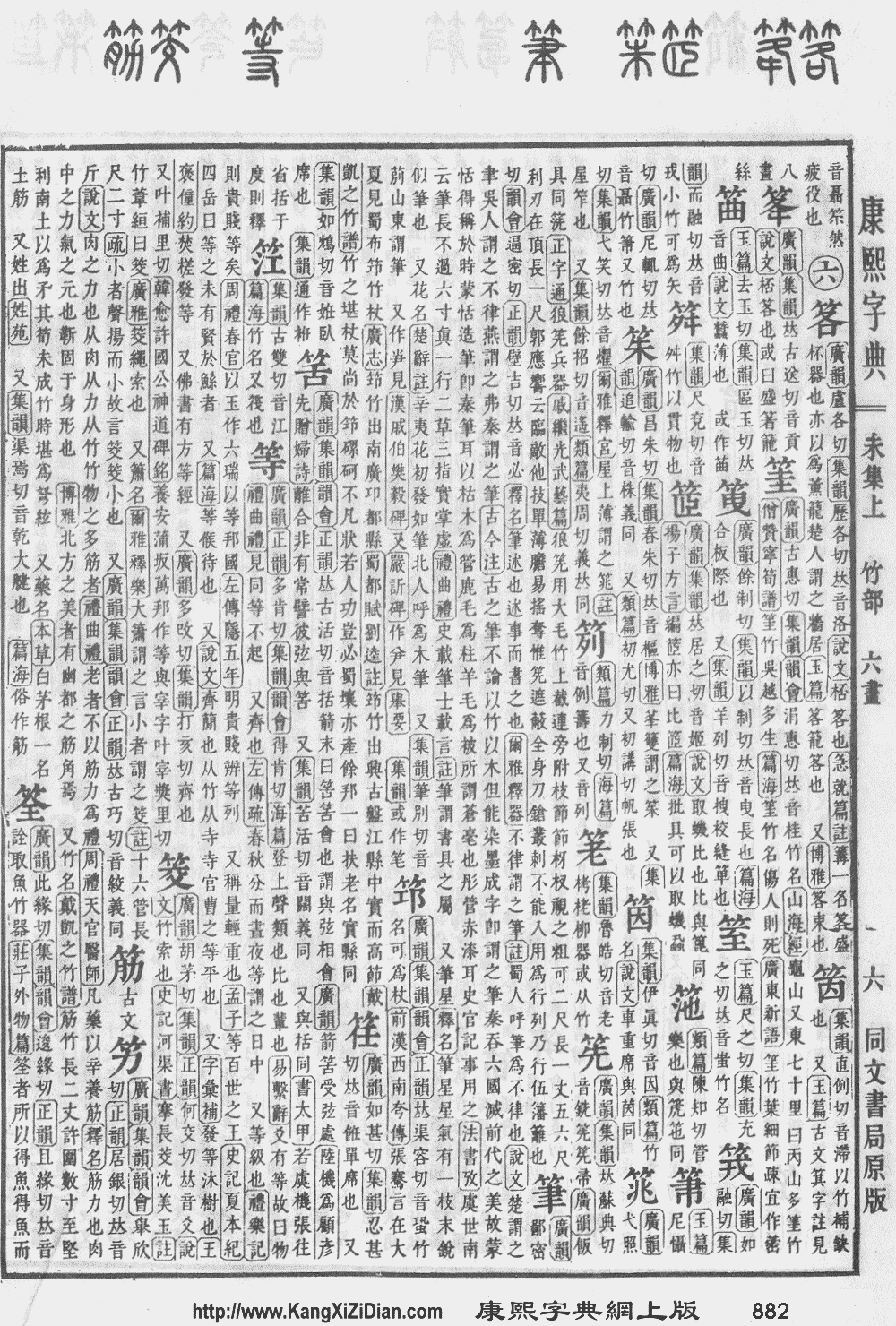
- KangXi: page 882, character 19
- Dai Kanwa Jiten: character 25987
- Dae Jaweon: page 1310, character 27
- Hanyu Da Zidian: volume 5, page 2970, character 9
- Unihan data for U+7B46
Chinese
| trad. | 筆 | |
|---|---|---|
| simp. | 笔 | |
Glyph origin
| Characters in the same phonetic series (聿) (Zhengzhang, 2003) | |
|---|---|
| Old Chinese | |
| 筆 | *prud |
| 潷 | *prud |
| 硉 | *ruːd |
| 律 | *rud |
| 葎 | *b·rud |
| 聿 | *b·lud |
| 銉 | *lud |
Phono-semantic compound (形聲, OC *prud) : semantic 竹 (“bamboo”) + phonetic 聿 (OC *b·lud, “writing brush”) – a hand holding a brush 聿. The bamboo (竹) refers to the material of traditional Chinese brushes.
Etymology
Benedict (1972) surmises that this might be a loan from Austro-Tai into Sino-Tibetan; cf. Proto-Austronesian *bulut (“hairy filaments of certain plants, husk”) (Cebuano bulut).
Pronunciation
Definitions
筆
Compounds
|
|
|
Descendants
Others
- → Buryat: ᠪᠢᠷ (ᠪᠢᠷ) / биирэ (biire)
- → Khmer: ពិត (pɨt, “small Chinese-style writing brush”)
- → Korean: 붓 (but, “writing brush”)
- → Manchu: ᡶᡳ (fi, “brush”), ᠪᡳᡨᡥᡝ (bithe, “book”), ᠪᡳᡨᡥᡝᠰᡳ (bithesi, “scribe”)
- → Chinese: 筆帖式/笔帖式 (“scribe during the Qing Dynasty”)
- → Mongolian: ᠪᠢᠷ (bir) / бийр (bijr)
- → Tibetan: པིར (pir, “writing brush, pen”)
- → Turkic:
Japanese
Kanji
Readings
Compounds
Etymology 1
| Kanji in this term |
|---|
| 筆 |
| ふで Grade: 3 |
| kun’yomi |
Shift in pronunciation from funde below.[1] Now the most common pronunciation in modern Japanese.
Pronunciation
Noun
- a writing brush, a painting brush, a pen
- writing:
- the act of writing
- something written
- handwriting, how someone writes
Usage notes
The pen sense is more commonly expressed using the English-derived term ペン (pen).
Etymology 2
| Kanji in this term |
|---|
| 筆 |
| ふんで Grade: 3 |
| kun’yomi |
Shift in pronunciation from fumite below. Listed with this reading in the 観智院 (Kanchi-in) edition of the 11th- or 12th-century 類聚名義抄 (Ruiju Myōgishō) dictionary.[1]
Superseded by the fude reading above in modern Japanese.
Pronunciation
Noun
筆 (hiragana ふんで, rōmaji funde)
Etymology 3
| Kanji in this term |
|---|
| 筆 |
| ふみて Grade: 3 |
| kun’yomi |
Compound of 文 (fumi, “writing”) + 手 (te, “hand”). Appears with this reading in the Man'yōshū, circa 759.
Superseded by the fude reading above in modern Japanese.
Pronunciation
Noun
筆 (hiragana ふみて, rōmaji fumite)
Etymology 4
| Kanji in this term |
|---|
| 筆 |
| ひつ Grade: 3 |
| on’yomi |
/pitu/ → /fitu/ → /hitu/
From Middle Chinese 筆 ( pit , “writing brush”). Compare modern Hakka and Min Nan pit, Mandarin bǐ.
Pronunciation
Noun
References
Korean
Hanja
筆 • (pil) (hangeul 필, McCune–Reischauer p'il, Yale phil)
Vietnamese
Han character
筆 (bút)
- This term needs a translation to English. Please help out and add a translation, then remove the text
{{rfdef}}.