犬
| ||||||||
Translingual
| Stroke order | |||
|---|---|---|---|
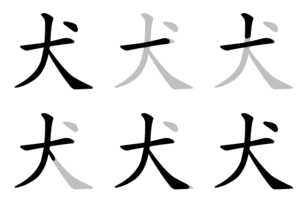 | |||
Alternative forms
- 犭 (when used as a left Chinese radical)
Although the alternative form clearly shows only three strokes, it is still counted as four strokes when using a Chinese dictionary. Compare 氵 from 水 (“water”), 扌 from 手 (“hand”), and 忄 from 心 (“heart”), all of which are a 3-stroke form from a 4-stroke character.
Han character
犬 (radical 94, 犬+0, 4 strokes, cangjie input 戈大 (IK), four-corner 43030, composition ⿻大丶)
- Kangxi radical #94, ⽝.
Derived characters
References
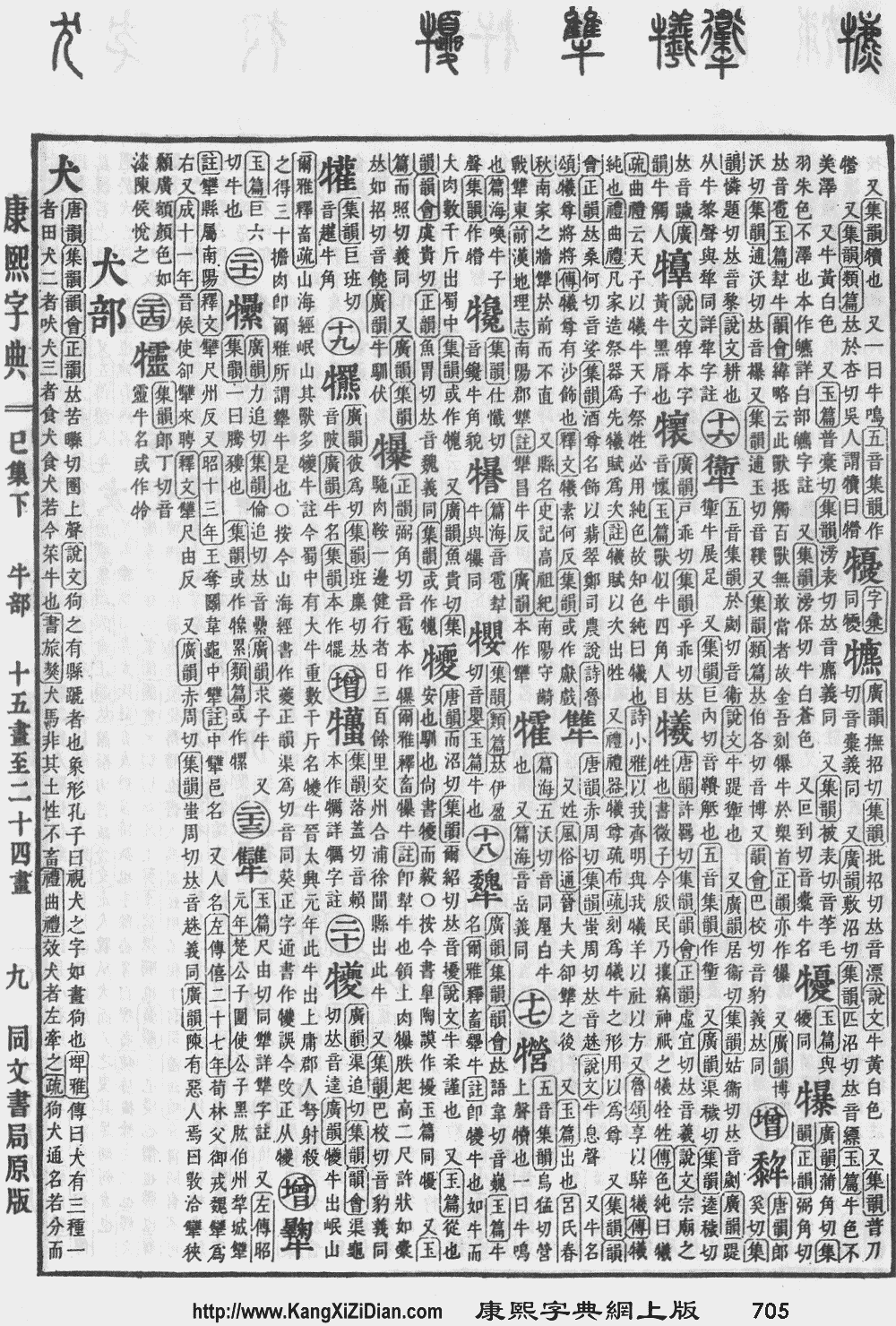
- KangXi: page 705, character 27
- Dai Kanwa Jiten: character 20234
- Dae Jaweon: page 1118, character 14
- Hanyu Da Zidian: volume 2, page 1331, character 1
- Unihan data for U+72AC
Chinese
| simp. and trad. |
犬 | |
|---|---|---|
Glyph origin
| Historical forms of the character 犬 | |||||
|---|---|---|---|---|---|
| Shang | Western Zhou | Warring States | Shuowen Jiezi (compiled in Han) | Liushutong (compiled in Ming) | |
| Bronze inscriptions | Oracle bone script | Bronze inscriptions | Chu Slip and silk script | Small seal script | Transcribed ancient scripts |
 |
 |
 |
 |
 |
 |
| Characters in the same phonetic series (犬) (Zhengzhang, 2003) | |
|---|---|
| Old Chinese | |
| 猚 | *ŋreːl, *rulʔ |
| 畎 | *kʷeːnʔ |
| 汱 | *kʷeːnʔ |
| 甽 | *kljuns, *kʷeːnʔ |
| 犬 | *kʰʷeːnʔ |
Pictogram (象形) .
Etymology
From Proto-Sino-Tibetan *d-kʷəj-n (“dog”).
This common Sino-Tibetan word has been replaced by 狗 (OC *koːʔ) in most dialects except Min Dong, such as Fuzhou kēng. In other dialects, this word is mainly found in compounds and not used alone.
Pronunciation
Definitions
犬
Synonyms
Compounds
|
|
|
Descendants
Japanese
Kanji
Readings
Compounds
- 一犬 (ikken): one dog
- 雌犬 (mesuinu)
- 雄犬 (oinu), 牡犬 (oinu)
- 家犬 (ieinu)
- 野犬 (yaken)
- 子犬 (koinu), 小犬 (koinu), 仔犬 (koinu)
- 愛犬 (aiken)
- 犬ちゃん (inu-chan)
- 秋田犬 (Akita inu), 秋田犬 (Akita ken)
- 土佐犬 (Tosa inu), 土佐犬 (Tosa inu)
- 柴犬 (Shiba inu), 柴犬 (Shiba ken)
- 猟犬 (ryōken)
- 狛犬 (komainu)
- 狩猟犬 (shuryōken)
- 警察犬 (keisatsuken)
- 攻撃犬 (kōgekiken)
- 三頭犬 (santōken)
- 老犬 (rōken): old dog
- 豚犬 (tonken): pig and dog; fool; my child
- 犬吠 (kenbai): the barking of a dog, or the sound thereof
Etymology
| Kanji in this term |
|---|
| 犬 |
| いぬ Grade: 1 |
| kun’yomi |
From Old Japanese. Derivation uncertain. Various theories exist, including derivation from ancient verb 往ぬ (inu, “to leave, to be gone”), from the way a dog will guard the house while the master is away; from a compound of 家 (ie, “house, home”) + 寝 (nu, “to sleep”, ancient monosyllabic form of modern 寝る neru); from ancient Japanese 狗 (enu, “puppy, dog”), itself of uncertain derivation; or as a borrowing from some other unknown language.
Pronunciation
Alternative forms
Noun
References
Korean
Hanja
Synonyms
- 개 (gae)
Derived terms
- 犬公 (견공, gyeongong) (personification)
- 犬馬 (견마, gyeonma) dog and horse
- 犬儒 (견유, gyeonyu) cynic
- 犬猿 (견원, gyeonwon) dog and monkey
- 猛犬 (맹견, maenggyeon) fierce dog
- 愛犬 (애견, aegyeon) pet dog
- 鬪犬 (투견, tugyeon) fighting dog
Miyako
Etymology
Cognate with Old Japanese 犬 (inu).
Kanji
Noun
Northern Amami-Oshima
Etymology
Cognate with Old Japanese 犬 (inu).
Kanji
Noun
Okinawan
Kanji
Etymology
Cognate with Old Japanese 犬 (inu).
Pronunciation
IPA(key): [ʔiŋ̍]
Noun
Compounds
Southern Amami-Oshima
Etymology
Cognate with Old Japanese 犬 (inu).
Kanji
Noun
Vietnamese
Han character
犬 (khuyển, chó)
- This term needs a translation to English. Please help out and add a translation, then remove the text
{{rfdef}}.