太陰
See also: 太阴
Chinese
too (much); very; extremely; highest; greatest |
(of weather) overcast; Yin; feminine; moon; cloudy; negative (electric.); shady | ||
|---|---|---|---|
| trad. (太陰) | 太 | 陰 | |
| simp. (太阴) | 太 | 阴 | |
Pronunciation
Adjective
太陰
Noun
太陰
- the moon (largest natural satellite of planet Earth)
Synonyms
- 月亮 (yuèliàng)
See also
Japanese
Etymology 1
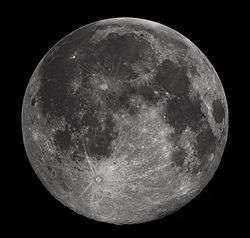
太陰 (taiin): the moon.
| Kanji in this term | |
|---|---|
| 太 | 陰 |
| たい Grade: 2 |
いん Grade: S |
| on’yomi | |
From Middle Chinese 太陰 (tʰɑiᴴ ʔˠiɪm, “the moon”, literally “great dark, great yin”). Compare 太陽 (taiyō, “the sun”, literally “great light, great yang”). The kan'on reading, so either a later borrowing or a later development within Japan.
Pronunciation
Noun
太陰 (hiragana たいいん, rōmaji taiin)
- great yin, ⚏
- the moon
Synonyms
Antonyms
- 太陽 (taiyō): great yang, ⚌
Derived terms
Derived terms
- 太陰暦 (taiinreki): lunar calendar
- 太陽太陰暦 (taiyō-taiinreki): lunisolar calendar
Etymology 2
| Kanji in this term | |
|---|---|
| 太 | 陰 |
| たい Grade: 2 |
おん Grade: S |
| on’yomi | |
From Middle Chinese 太陰. The goon reading, so likely the initial borrowing.
Pronunciation
Proper noun
太陰 (hiragana たいおん, rōmaji Taion)
- short for 太陰神 (Taionjin), goddess of the moon and one of the eight central gods in the Onmyōdō religion
Usage notes
This reading appears to be less common than Daion below.[1][2][3]
Etymology 3
| Kanji in this term | |
|---|---|
| 太 | 陰 |
| だい Grade: 2 |
おん Grade: S |
| on’yomi | |
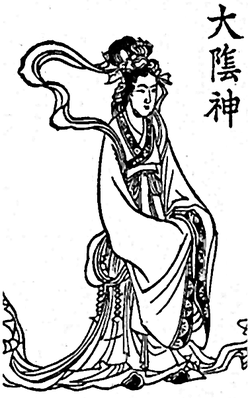
Sound shift from Taion above, replacing the standard goon and kan'on reading of tai for 太 with the kan'yōon of dai.[2] Probably influenced by the dai reading of the character 大, which is also sometimes used to spell this name, as seen in the illustration at right.
Pronunciation
Proper noun
太陰 (hiragana だいおん, rōmaji Daion)
References
This article is issued from
Wiktionary.
The text is licensed under Creative Commons - Attribution - Sharealike.
Additional terms may apply for the media files.